
Bank of America drops blunt message on the economy
Understand this faster with AI


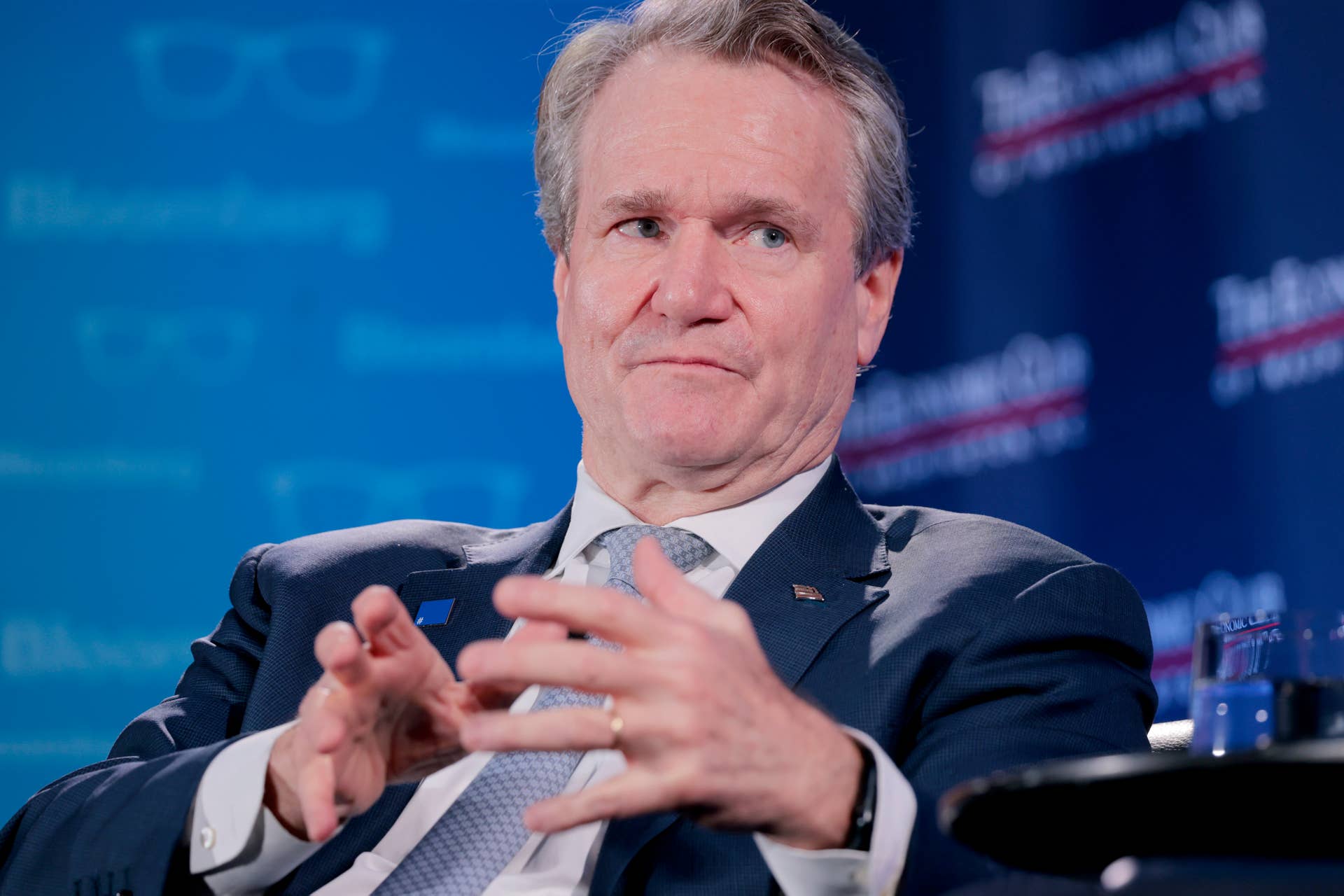
It seems as though the markets are bracing for an AI-induced economic collapse, but Bank of America isn’t buying that doomsday narrative.In a fresh note, the bank’s economists reject the idea that AI will obliterate white-collar jobs, thereby crushing aggregate demand, according to Seeking Alpha.At the core of their argument is the belief that AI technology boosts productivity, which, in turn, grows the economy rather than shrinking it.Mr. Market’s uneasiness of late has plenty to do with a viral Feb. 22, 2026, memo from Citrini Research titled “The 2028 Global Intelligence Crisis,” co-authored by Alap Shah.Shah laid out an imminent (as early as 2028) AI-driven dystopian outlook for the economy, envisioning a “Ghost GDP” scenario. In that bleak future, productivity and headline growth remain as robust as ever, but consumer spending tanks on the back of a white-collar employment debacle.The report coincided with a steep risk-off day in U.S. stocks, per The Motley Fool.On Feb. 23, the Dow dropped 1.66% (about 800 points), while the S&P 500 slid 1.04% and the Nasdaq dropped 1.13% as “AI disruption” fears continued to gain steam.In addition, here’s how the markets have fared so far this month.Dow Jones (DJIA): -1.02% (from 49,407.66 on Feb. 2, 2026, to 48,904.78 on Mar. 2, 2026)S&P 500 (SP500): -1.36% (from 6,976.44 on Feb. 2, 2026, to 6,881.62 on Mar. 2, 2026)Nasdaq Composite (NASDAQCOM): -3.57% (from 23,592.11 on Feb. 2, 2026, to 22,748.86 on Mar. 2, 2026) Source: Federal Reserve Bank of St. Louis, FRED Economic Data Stock market pundits such as CNBC’s Jim Cramer pushed back against what he called a “science fiction” narrative, calling out what he sees as the market’s irrational anxiety, as explained in a piece I wrote.Claudio Irigoyen and Antonio Gabriel of BofA Securities concur with Cramer’s take and feel that the story is being told backward.BofA sees more of a transition than a collapse, warning investors not to mix the market's psychology with economic reality. Bank of America challenges fears of an AI-driven economic collapse.Photo by Bloomberg on Getty Images Bank of America sees reinvention, not recessionBofA’s economists believe the current AI panic misrepresents how economies evolve.The popular bear case assumes that AI effectively replaces white-collar workers, damaging consumer demand (70% of the economic engine) and bottom-line strength, and that the economy thereby spirals into a depression. However, that logic basically ignores more than a century of economic history, said BofA’s analysts. “Most likely the AI shock will be another case of Schumpeterian creative destruction.” MoreEconomic Analysis:Ernst & Young drops blunt reality check on the economyFederal Reserve official blasts latest interest-rate pauseIMF drops blunt warning on US economyHarvard Business School explains the phenomenon, which entails innovation blowing up older industries while building new ones in their place. History shows us that mechanized agriculture displaced millions of farm jobs, constricting that sector to just 40% of U.S. employment in the early 1900s to about 1% today. Nevertheless, the overall GDP grew at a remarkable pace as new industries surfaced.In fact, BofA argues that AI will help deliver meaningful productivity gains, functioning more like a supply shock.That essentially means that the technology will help lower unit costs, ease prices over time, and effectively lift real incomes in the process. The economists feel it’s ill-advised to imagine a scenario in which capital owners are better off while the broader economy sinks.AI is augmenting work more than eliminating itWhat’s interesting is that despite all the talk about technological disruption, the recent labor-market softness isn’t clearly AI-driven.Piper Sandler’s chief global economist Nancy Lazar offered a similar sharp take on the economy, as I previously reported.She rejected the idea that AI is essentially hollowing out the labor market, calling the recent tech-related layoffs “a drop in the bucket,” roughly 100,000 over three years.Also, Lazar noted that historically low initial jobless claims (about 212,000, according to Reuters) and improving small-business hiring intentions underscore a labor backdrop that’s stabilizing.The data back up BofA’s claims.The topline labor picture still looks “normal-cooling”:January payrollsjumped by 130,000 while unemployment was at 4.3%, with the gains spearheaded by industries including health care, social assistance, and construction (not the epicenters of “AI displacement”).AI is not a common reason for layoffs: Challenger, Gray, & Christmas counted 108,435 planned job cuts in January, but just 7,624 (7% of the total) were attributed to AI. Weakness is linked to “hiring friction” rather than layoffs:Dallas Fed data show that total U.S. employment is up 2.5% since fall 2022, while the majority of AI-exposed sectors have dropped 1% since late 2022. However, it points out that the under-25s experienced low job-finding rates, not layoffs.Though it’s clear that disruption won’t be painful, it does mean workers will effectively switch roles, with some sectors likely to shrink while others emerge. AI fears echo old trade debatesBofA’s economists draw a parallel between current AI anxiety and past trade wars. Free trade displaced several sectors but ultimately lowered prices and boosted efficiency, which is exactly what AI could do.BofA says policymakers can effectively support displaced workers without choking off innovation, and, in macro terms, the long-run impact of productivity gains will result in healthier output and stronger living standards.Also, though we could see some premium being knocked off on raw analytical intelligence, it could be offset by the increase in demand for skills such as judgment and emotional intelligence. Moreover, as far as markets are concerned, they argue that with valuations stretched and a crowded AI trade, sentiment can flip quickly. “Everybody is happily long as long as everybody else is happily long,” they write. In such environments, the weakest of signals could spark selling.Related: Goldman Sachs resets Nvidia stock forecast after earnings
Source Information
Discussion
0 professional contributions
Sign in to join this professional discussion.
Be the first to add a constructive contribution.