About
Microsoft Quantum is Microsoft's quantum computing division. It is pursuing a topological qubit approach using Majorana zero modes, aiming to build fault-tolerant quantum computers with error rates fundamentally lower than conventional qubit technologies. Microsoft operates Azure Quantum, a cloud platform providing access to hardware from IonQ, Quantinuum, and Rigetti alongside quantum-inspired optimization and quantum development tools. Microsoft's Station Q research lab at the University of California Santa Barbara, led by theorist Michael Freedman, has developed topological quantum computing theory for more than two decades. A new quantum research lab in Lyngby, Denmark received more than $140M in investment. In February 2025, Microsoft announced the Majorana 1 chip, the first quantum processor powered by a topological core. The chip uses a new material called a topoconductor, an indium arsenide-aluminium heterostructure, to create Majorana zero modes, which Microsoft says are intrinsically more stable than conventional qubits. The announcement generated significant debate in the quantum community. Microsoft demonstrated fermion parity measurements consistent with topological behaviour, but the demonstration does not yet constitute verified logical qubit operation through error-corrected computation, which requires full topological qubit gates and quantum error correction. In July 2025, Microsoft announced the Majorana 1 chip as the first hardware implementation of a tetron qubit device using Majorana zero modes, published in peer-reviewed form. Per verification rules, topological qubits require demonstrated error-corrected computation, and Majorana 1 does not yet meet this threshold as of April 2026. Microsoft also partnered with Atom Computing and QuNorth on Magne, targeting a next-generation quantum computer by late 2026 with 50 logical qubits and more than 1,200 physical qubits, positioned as the world's first commercially available Level 2 quantum compute
Quantum Specifications
| Qubit Technology | Topological |
| Physical Qubits | 8 |
| Error Correction | Not-yet-demonstrated |
| Quantum Focus | hardware |
Backed By
Research Partners
Frequently Asked Questions
Related News
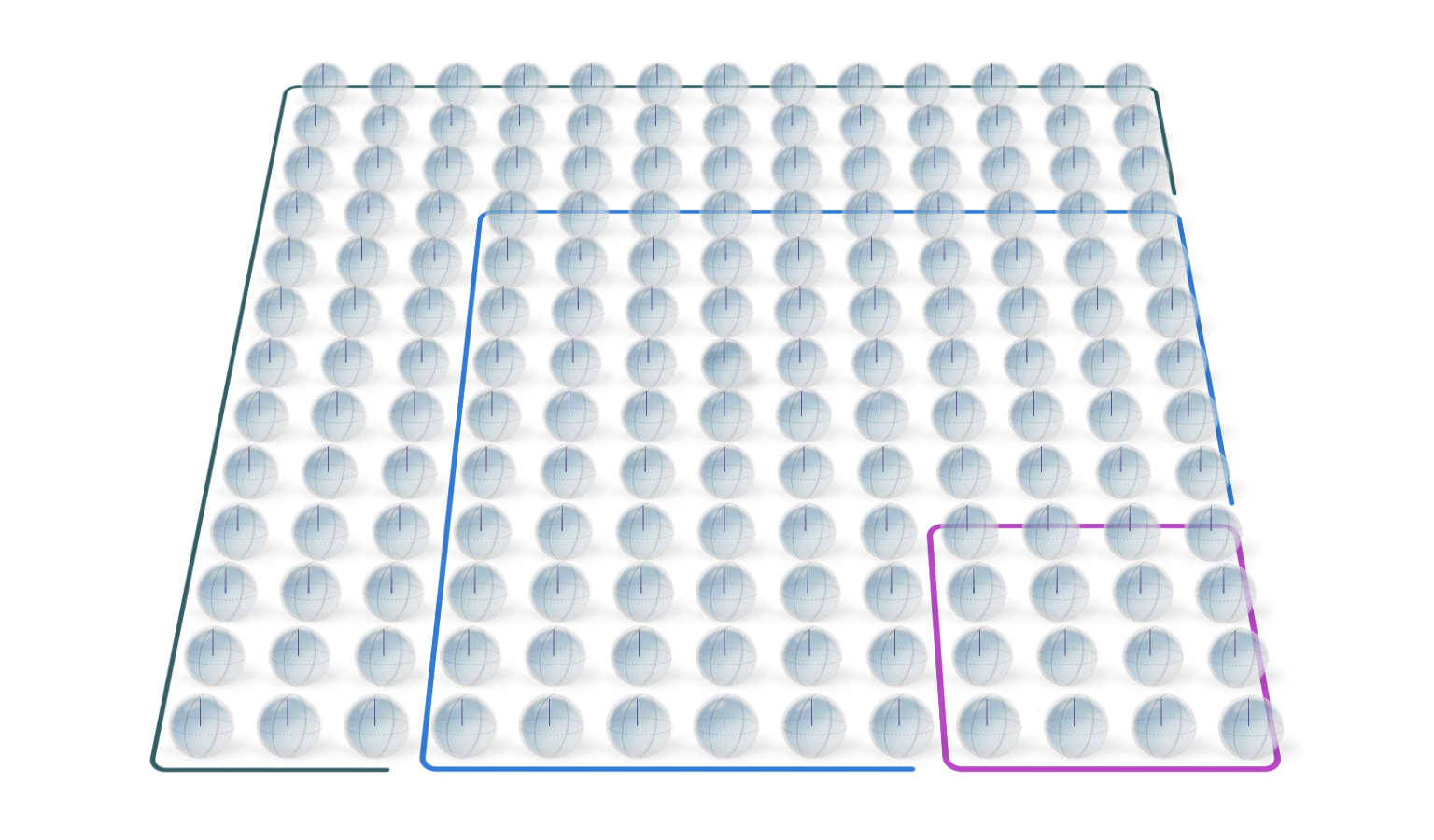
Microsoft Quantum, QOLAB Propose Higher Bar For ‘Scalable’ Logical Qubits

How Microsoft Quantum Cuts Quantum Program Costs With Quantum Resource Estimator

Former Microsoft Quantum CTO’s New Chinese-Based Startup Lands Pre-A Funding

Microsoft Quantum Funds Research In Topological Architecture - Quantum Zeitgeist
Microsoft Quantum Funds Research in Topological Architecture