
Claim: Tianyan Cloud Platform Integrates Photonic Tianyan-P2000 in World First for Dual Quantum Advantage
Summarize this article with:


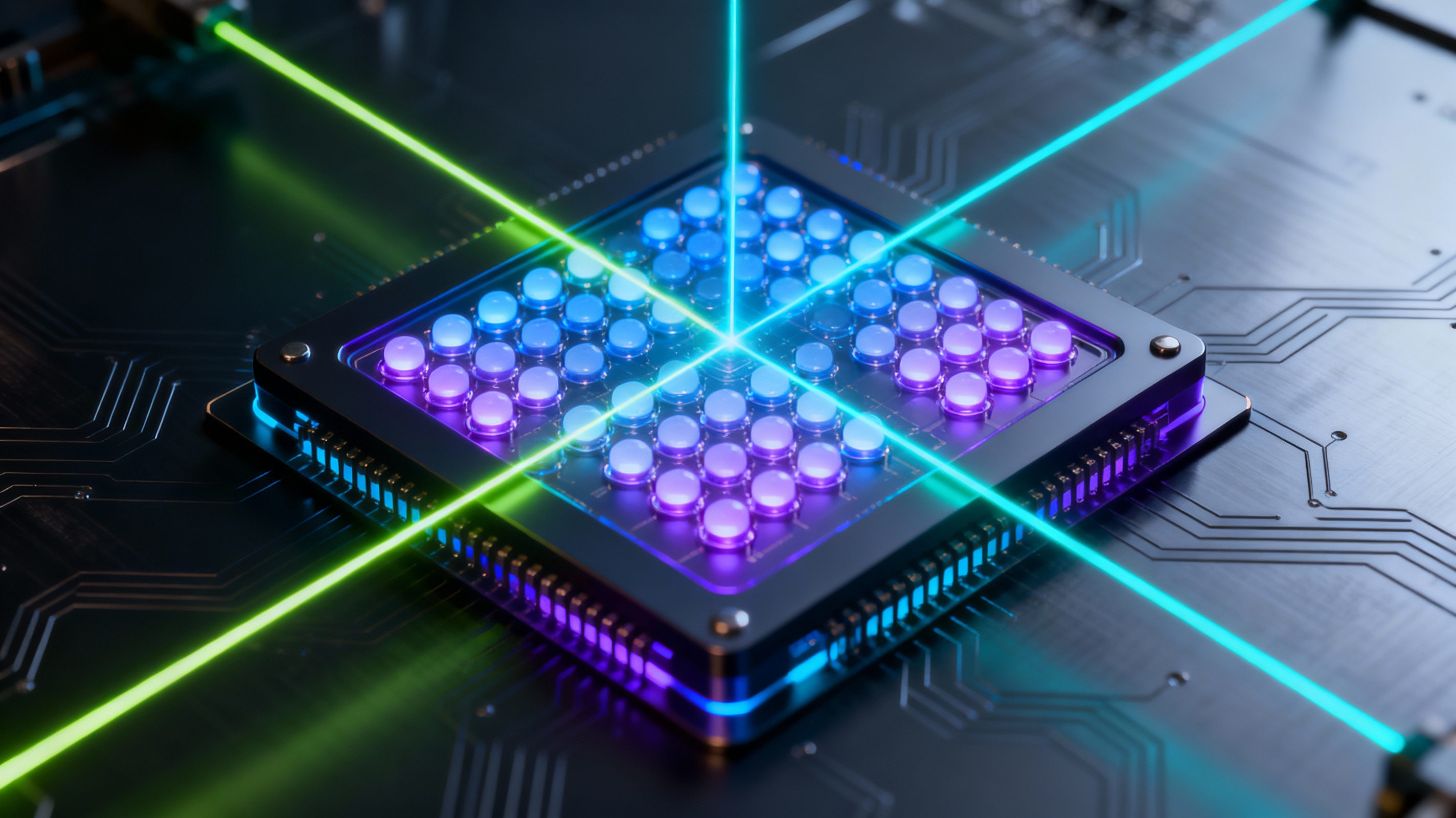
Dual Technology Milestone: The Tianyan cloud platform is claimed to be the world’s first to provide quantum computational advantage services through both photonic and superconducting quantum computing technologies.Photonic Performance Benchmark: Tianyan-P2000 is said to control up to 2,682 photons and completes complex computations in 29 microseconds that would take classical supercomputers an estimated 16 billion years.Expanded Global Access: The platform now supports graph data analysis, drug discovery, spectral computation, and machine vision for users in more than 60 countries.China Telecom Quantum Group reports it has integrated the Tianyan-P2000 photonic quantum computer into its Tianyan cloud platform, establishing the first cloud service worldwide to deliver quantum computational advantage through both photonic and superconducting technologies. The system was jointly developed with Jiuzhang (Jinan) Quantum Technology under the guidance of the Chinese Academy of Sciences’ Center for Excellence in Quantum Information and Quantum Physics. It is based on the same core architecture as the Jiuzhang 4.0 prototype, whose results were published in Nature in May 2026.The Tianyan-P2000 uses photonic qubits that function at room temperature, removing the requirement for dilution refrigerators needed by superconducting systems. The design provides longer coherence times, lower noise, reduced operating costs, and native compatibility with fiber-optic infrastructure.The processor supports 1,500 input modes and 5,220 output modes, with a maximum of 2,682 controllable photons. In benchmark testing on a high-complexity task in the Gaussian boson sampling domain, the system completed the computation in 29 microseconds. Researchers estimate the same task would require approximately 16 billion years on the world’s most powerful classical supercomputers.Technical specifications: 1,500 input modes, 5,220 output modes, up to 2,682 controllable photonsKey advantages: Room-temperature operation, extended coherence, fiber integration, lower noise and costDevelopment partners: Jiuzhang (Jinan) Quantum Technology and Chinese Academy of Sciences Center for Excellence in Quantum Information and Quantum PhysicsThe addition of Tianyan-P2000 expands the Tianyan platform, which previously hosted five superconducting quantum computers. The service has recorded more than 50 million visits, processed over 4 million experimental tasks, and serves users across more than 60 countries and regions. New applications now available include graph data analysis, drug discovery, spectral computation, and machine vision.Access requires an application and approval. Billing has not yet started. Quantum control engineer Liu Chunwang noted that China is currently the only country to have demonstrated quantum computational advantage through both photonic and superconducting approaches on a cloud platform. Senior product manager Huang Wenya stated that Tianyan is now the world’s first cloud platform capable of providing such services through both technologies.Find out more here.Further articles, reports, and the latest quantum computing news may be found at The Qubit Report.This week’s quantum computing weekly round-up shows governments locking in hard PQC deadlines while photonic and silicon hardware teams deliver working integrations with NVIDIA infrastructure. The U.S. Department of Energy’s Fermilab and Qblox have finalized a Cooperative Research and Development Agreement (CRADA) to commercialize the QICK Platform. This open-source quantum Forescout has launched new Post-Quantum Cryptography (PQC) dashboards powered by patented technology to analyze quantum-exposure risk across IT, OT, IoT, and IoMT environments. The agentless Sign up to receive our newsletter and other reports.We keep your data private and share your data only with third parties that make this service possible. Read our privacy policy for more info.Check your inbox or spam folder to confirm your subscription. Our MissionContact UsPrivacy PolicyWebsite Terms of UseCopyright 2017-2026 | The Qubit Report | All Rights Reserved