All News

Stay updated with the latest quantum computing developments from around the world

India National Quantum Mission

Explore India's ₹6,003 Crore quantum initiative - 4 thematic hubs, leading startups, and latest developments

4 articles found
Sort By:
QNu Labs Achieves 8,000 Secure Bits Per Second QKDquantum-computing

QNu Labs Achieves 8,000 Secure Bits Per Second QKD

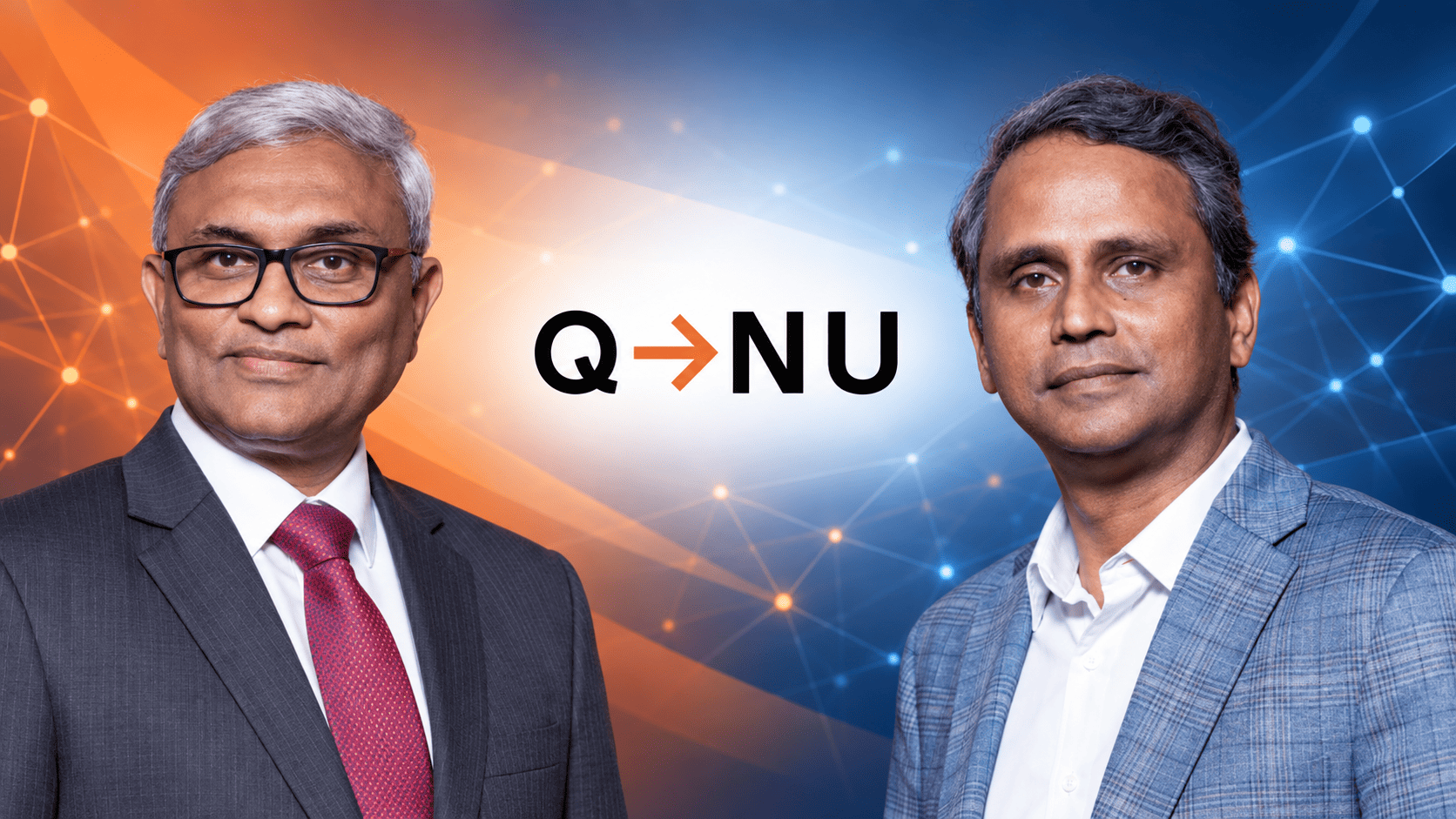
QNu Labs has demonstrated secure key generation at a rate of 8,000 bits per second using its ARMOS Quantum Key Distribution (QKD) platform at typical metropolitan distances, a speed capable of supporting real-time encryption for sensitive data. Independent validation by VIAVI Solutions confirms ARMOS can maintain this secure communication over 200 kilometers of standard telecom fiber, achieving 40 decibels of loss without signal amplification, which surpasses limitations of many existing QKD systems. A key finding of the study is the system’s ability to coexist with existing 10 Gbps networks, eliminating the need for costly infrastructure overhauls. “As the industry moves closer to a quantum-driven reality, the need for proven, deployment-ready security solutions becomes critical,” said Sunil Gupta, Co-founder and Chief Executive Officer, QNu Labs, highlighting the significance of this advancement toward scalable quantum-safe communication. ARMOS QKD Achieves 200 KM Range with Sub-4% Error Rates The ARMOS Quantum Key Distribution (QKD) system has demonstrated secure communication across distances up to 200 kilometers of standard telecom fiber, a feat validated by an independent study conducted with VIAVI Solutions. This achievement addresses a significant limitation of many QKD implementations, as the system maintained secure key generation without relying on signal amplification, even with 40 decibels of signal loss. At these extended ranges, ARMOS sustained a key generation rate of approximately 200 secure bits per second, proving reliable operation under varied network conditions. The platform’s operational resilience was further demonstrated through autonomous recovery from simulated fiber cuts within minutes, maintaining stable key generation without manual intervention. Under controlled conditions, ARMOS achieved key generation rates of up to 8,000 secure bits per second at typical metro distances of around 50 kilometers, enabling real-time encryption for high

Quantum ZeitgeistLoading...0
India’s National Quantum Mission Achieves 1,000-km Milestone via QNu Labs and VIAVI Validationquantum-computing

India’s National Quantum Mission Achieves 1,000-km Milestone via QNu Labs and VIAVI Validation

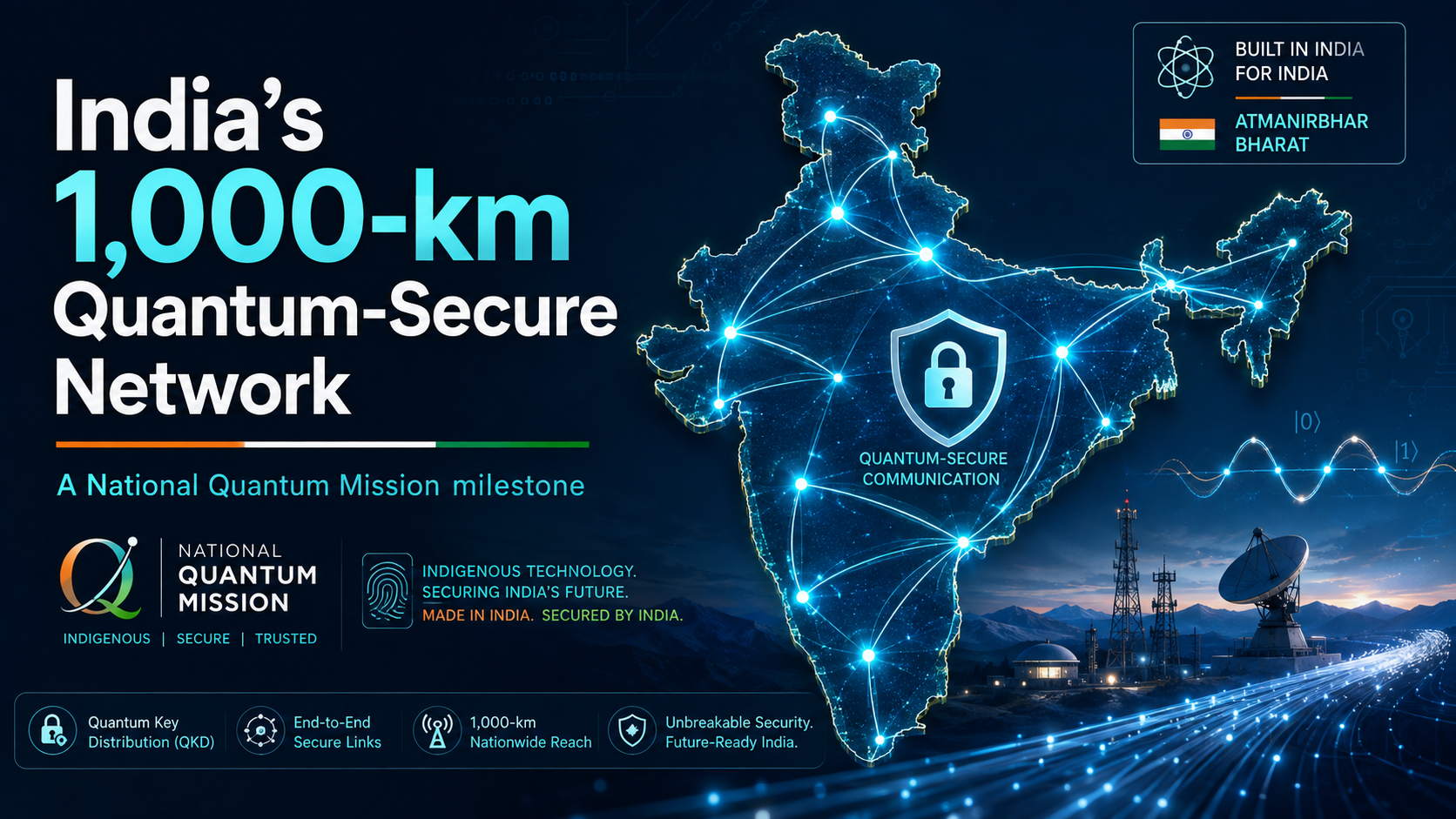
India’s National Quantum Mission Achieves 1,000-km Milestone via QNu Labs and VIAVI Validation The National Quantum Mission (NQM) has reached a pivotal technical landmark with the successful demonstration of a 1,000-km quantum communication network, one of the longest in the world. Announced by Union Minister for Science & Technology Dr. Jitendra Singh during a review of the Department of Science and Technology (DST), this achievement comes less than two years after the mission’s October 2024 launch. The milestone significantly outpaces the original eight-year roadmap, which aimed for a 2,000-km reach, and establishes a secure national backbone for defense, financial systems, and critical infrastructure using entirely indigenous technology. The 1,000-km network was enabled by QNu Labs, a startup supported under the NQM that specializes in quantum-safe cybersecurity. To ensure the reliability of this infrastructure, QNu Labs conducted an independent validation study with VIAVI Solutions using the industry-standard MAP-300 test platform. This study established that the underlying ARMOS Quantum Key Distribution (QKD) platform can achieve secure key generation over distances of up to 200 km on standard telecom fiber (40 dB loss) without signal amplification. By chaining these high-performance links, the NQM has been able to scale toward its current 1,000-km benchmark. A critical technical breakthrough highlighted in the validation is the ability of the quantum signal to coexist with 10 Gbps classical data traffic on the same fiber. Utilizing a proprietary decoy-state Differential Phase Shift (DPS) protocol, the ARMOS platform effectively doubles the transmission range of conventional QKD systems while maintaining a Quantum Bit Error Rate (QBER) below 4%. At typical metro distances, the system achieves generation rates of 8,000 bits per second, providing the high-speed entropy required to secure real-time, high-value data flows without requiring a costly redesign of

Quantum Computing ReportLoading...0
Nu Quantum secures $60 million Series A investment - Data Center Dynamicsquantum-computing

Nu Quantum secures $60 million Series A investment - Data Center Dynamics

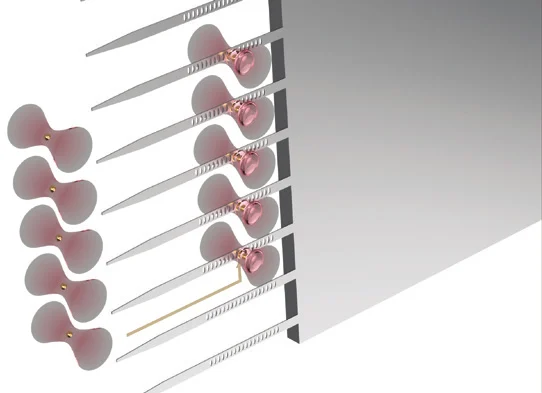
Nu Quantum secures $60 million Series A investment Money to accelerate development of quantum networking tech December 12, 2025 By Dan Swinhoe Have your say Facebook Twitter LinkedIn Reddit Email Share UK quantum computing firm Nu Quantum has secured $60 million in new investment.The company this week closed its oversubscribed Series A funding round led by National Grid Partners, including participation from Gresham House Ventures and Morpheus Ventures. – Nu Quantum Nu said the round also featured continued support from existing investors Amadeus Capital Partners, IQ Capital, Ahren Capital, Cambridge Enterprise Ventures, East Innovate, NSSIF, and Sumitomo (Presidio Ventures).The company claimed it is the largest financing round ever raised by a pure-play quantum networking company, and the largest quantum Series A in the UK to date.Founded in 2018 as a spin-out of the University of Cambridge, Nu Quantum is looking to develop a photonic optical switching technology that interconnects quantum processors into a more powerful distributed quantum computer. The company has developed 19-inch rack-mount Quantum Networking Units (QNUs).The funding will be used accelerate Nu Quantum’s goal to reach fault tolerance by interconnecting quantum processors into a more powerful distributed quantum computer, and go towards the firm’s next phase of product development and deployment.Dr. Carmen Palacios-Berraquero, founder and CEO of Nu Quantum, said: “When we launched seven years ago, very few were thinking about networked or distributed quantum computing as a strategy for scaling, but we saw it as one of the most urgent and challenging outstanding problems in the industry, and set out to solve it. We’ve made great strides in shaping the market and the technology since then."As we’ve grown, I’m proud we have created a culture defined by fearless innovation, and fuelled by collaboration and diversity under a shared mission to accelerate quantum computing for good.

Google News – Quantum ComputingLoading...0
India’s Startups Unveil 64-Qubit Processor, Quantum Networkquantum-computing

India’s Startups Unveil 64-Qubit Processor, Quantum Network

Bengaluru-based QpiAI and QNu Labs, both supported by the I-Hub Quantum Technology Foundation at IISER Pune, have jointly advanced India’s quantum capabilities with the development of novel technologies announced November 12, 2025. QpiAI unveiled Kaveri 64, a 64-qubit quantum processor leveraging the principles of superposition and entanglement for accelerated computation, while QNu Labs established the nation’s first large-scale quantum key distribution (QKD) network. Successfully tested over a 500km optical fiber link with the Indian Army’s Southern Command, the QKD network utilizes quantum mechanics to enable demonstrably secure communication, impervious to conventional and future quantum computing-based eavesdropping attempts. These innovations directly support India’s National Quantum Mission goals for quantum leadership by 2031. Quantum Processor Development: Kaveri 64 India’s quantum computing landscape received a significant boost with the unveiling of Kaveri 64, a 64-qubit processor developed by QpiAI. This marks the first domestically produced quantum processor of this scale. Utilizing the principles of superposition and entanglement, Kaveri 64 promises computational speeds exceeding those of classical computers for specific tasks. QpiAI anticipates commercial availability by late 2026, targeting research institutions, enterprises, and governmental organizations – potentially revolutionizing fields like drug discovery and materials science. The core innovation of Kaveri 64 lies in its qubit architecture, enabling parallel computation – processing multiple possibilities simultaneously. Unlike classical bits limited to 0 or 1, qubits can exist as both concurrently. This capability dramatically increases processing power for complex problems. While still in its early stages, the 64-qubit scale represents a crucial step toward fault-tolerant quantum computing, requiring significant advancements in error correction to realize its full potential. Complementing t

Quantum ZeitgeistLoading...0