
General
General quantum computing news
 general
DigitalXForce Launches AI and Quantum Risk Management Platform
Insider Brief DigitalXForce has launched its Enterprise TRiSCM platform, combining trust, risk, security, compliance, AI governance, and quantum risk management into a unified operating model. The platform introduces AI TRiSCM for managing AI-related trust, risk, security, and compliance across generative AI, agentic AI, and AI supply chains. DigitalXForce also unveiled Q-ROC, a Quantum Risk Operations Center designed to help organizations assess quantum-related risks and post-quantum readiness. PRESS RELEASE — DigitalXForce today announced the launch of the industry’s first Enterprise TRiSCM™ (Trust, Risk, and Security Management) platform designed for the AI and Quantum era, introducing a new operating model for organizations to manage Trust, Risk, Security and Compliance through continuous assurance, operational intelligence and autonomous risk operation. The DigitalXForce Enterprise TRiSCM Platform brings together AI-powered governance, Enterprise Security & Risk Posture Management (ESPRM), Automated GRC, Operational Resilience, Digital Trust Intelligence and the newly introduced Quantum Risk Operations Center (Q-ROC) into one unified platform designed to operationalize Digital Trust. As enterprises accelerate adoption of Generative AI, Agentic AI, multi-cloud architectures, connected ecosystems and emerging quantum technologies, existing governance and security operating models are becoming increasingly fragmented and reactive. DigitalXForce was built to address this shift. Enterprise TRiSCM represents the evolution beyond traditional Governance, Risk and Compliance (GRC), security posture management and isolated governance workflows by enabling continuous trust assurance across technology, operations, ecosystems and business processes “Organizations today are not struggling because they lack data—they are struggling because trust itself has become fragmented,” said Lalit Ahluwalia, Founder and CEO of DigitalXForce. “Traditional GRC platforms
Quantum DailyLoading...0

 general
SEALSQ QS7001 Post-Quantum Secure Element Obtains NIST SP 800-90B Entropy Source Validation
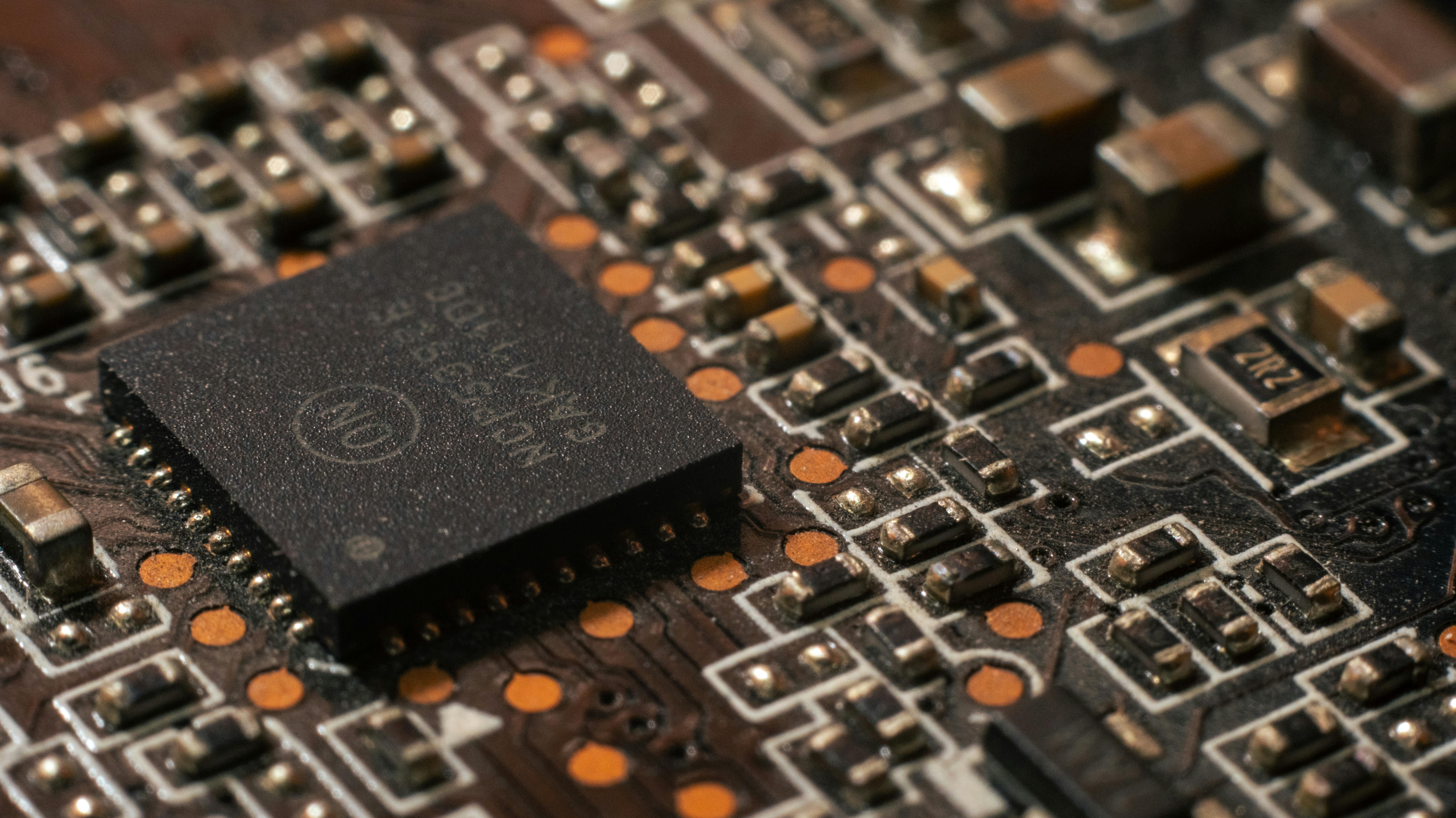
SEALSQ QS7001 Post-Quantum Secure Element Obtains NIST SP 800-90B Entropy Source Validation Post-quantum semiconductor provider SEALSQ Corp has secured the National Institute of Standards and Technology (NIST) Entropy Source Validation (ESV) Certificate #E333 for its QS7001 Post-Quantum Secure Element. Evaluated under the NIST SP 800-90B standard by accredited laboratory SERMA Safety and Security, this validation confirms the performance parameters of the chip’s internal random bit generation hardware. Because a verified baseline of physical unpredictability is a mandatory architectural requirement under modern cryptographic assessment frameworks, completing this evaluation serves as a core technical prerequisite for the hardware platform as it advances toward formal FIPS 140-3 and Common Criteria EAL5+ security certifications. Stochastic Modeling of Ring Oscillator Hardware Entropy The architectural layer validated inside the QS7001 utilizes a hardware noise mechanism built from a series of interconnected ring oscillators. To translate the raw thermal jitter and phase noise of these silicon components into standardized, bias-free cryptographic keys, engineering teams at SEALSQ’s facility in Meyreuil, France, working alongside their chip design subsidiary IC’ALPS, developed a rigorous mathematical stochastic model to continuously track physical noise source behaviors. This verified design has received an “Open for Reuse” status on the NIST Cryptographic Module Validation Program (CMVP) registry, allowing SEALSQ to port the exact ring-oscillator block into future hardware iterations, custom ASICs, and integrated partner modules without re-executing standalone lower-level entropy evaluations. Regulatory Procurement and Target Enterprise Deployments Securing validated physical entropy is an essential step in SEALSQ’s compliance roadmap for the QS7001, which is designed around a secure 32-bit RISC-V microcontroller core optimized to execute lattice-based post-quantum pr
Quantum Computing ReportLoading...0 general
NATO DIANA Announces Six New Challenges to Tackle Evolving Defense And Security Needs
Insider Brief NATO DIANA has opened applications for its 2027 accelerator cohort, seeking dual-use technology solutions across six defence and security challenge areas, with submissions due July 3, 2026. Selected innovators will receive €100,000 in funding, access to more than 200 testing centres across Europe and North America, and support from mentors, military end-users, industry partners, and investors. The six challenge areas are human survivability, multidomain autonomy of uncrewed systems, sensing and data processing for intelligence and surveillance, operational resilience in contested environments, responsive logistics, and scalable air-defence countermeasures. PRESS RELEASE — NATO DIANA has launched six new challenges aimed at finding game-changing solutions that help build a safer future for the Alliance. Innovators can submit their proposals for DIANA’s challenges until 12:00 UTC +1/BST on Friday 3 July 2026. Selected innovators will become part of DIANA’s 2027 cohort of innovators, participating in a six-month accelerator programme that will begin in January 2027. These innovators will help identify and adopt solutions that can deliver cutting-edge technologies to Allied Armed Forces faster – strengthening NATO’s operational edge Innovators can submit proposals for one of six challenge areas, including: Human Survivability Multidomain Autonomy of Uncrewed Systems Multidomain Sensing and Advanced Data Processing for Intelligence and Surveillance Operational Resilience in Contested Environments Responsive Logistics Scalable and Adaptable Countermeasures for Air Defence DIANA formulates its challenges based on the priorities of NATO and its nations, the latest trends in emerging and disruptive technologies, and market potential. Through these challenges, DIANA aims to accelerate the development and adoption of cutting-edge technologies – turning innovation into capabilities that lead to real-world impact. Selected innovators wil
Quantum DailyLoading...0 general
Question: what happens when you apply a Hadamard gate to a qubits that's in arbitrary superposition?
I know that applying Hadamard gate to |0> causes it to become |+> and applying it to |1> causes it to become |->. My question is what happens when the qubits is in a arbitrary superposition like α|0> + β|1>. submitted by /u/Lower-Bug5563 [link] [comments]
Reddit r/QuantumComputing (RSS)Loading...0 general
Ho sviluppato un modello di gravità quantistica emergente che risolve la Catastrofe del Vuoto. Ecco il repository open-source
Ciao a tutti, Negli ultimi tempi ho lavorato a un modello teorico che interpreta lo spaziotempo non come un continuum, ma come una rete emergente di bit di informazione quantistica. La parte più interessante è che l'applicazione di un operatore di accoppiamento dinamico (\hat{\lambda}) al modello permette di calcolare la densità di energia del vuoto con una precisione che si allinea ai dati di Planck/Hubble, risolvendo la famosa 'Catastrofe del Vuoto' di 120 ordini di grandezza. Ho appena caricato la teoria completa (con formalismo matematico e controprove termodinamiche) e il codice di simulazione in Qiskit su GitHub. Mi piacerebbe ricevere feedback critici da chi mastica fisica teorica o informatica quantistica. Il progetto è open-source. Link: https://github.com/provadevidd-bot/quantum-space-time-network Ogni suggerimento o test del codice è ben accetto. submitted by /u/Remarkable-Care-7232 [link] [comments]
Reddit r/QuantumComputing (RSS)Loading...0 general
Q.ANT Expands Photonic AI Computing Through IONOS Partnership
Insider Brief Q.ANT partnered with IONOS to bring photonic AI computing into a commercial cloud environment. The collaboration will make Q.ANT’s photonic Native Processing Server available through IONOS infrastructure for enterprise AI workloads. Q.ANT said its photonic co-processors aim to improve AI computing efficiency and reduce energy consumption compared with conventional processor architectures. PRESS RELEASE — Q.ANT, a pioneer in commercial photonic computing, today announced a collaboration with IONOS — a major European cloud and hosting provider serving approximately 6.8 million customers across 17 markets in Europe and North America — to make Q.ANT’s Native Processing Server (NPS) accessible to commercial customers through IONOS’ cloud infrastructure and customer ecosystem. The agreement brings photonic AI acceleration into a commercial cloud environment, following earlier production deployments at two of Europe’s leading supercomputing centers. The deployment combines IONOS’ cloud infrastructure expertise with Q.ANT’s photonic processor technology, marking a commercial inflection point as hyperscalers and enterprises race to meet AI’s mounting energy demands. By 2027, individual server racks in advanced data centers could draw as much electricity as 65 households, and data center electricity demand could reach 3% of total global energy consumption by 2030. Q.ANT’s photonic processor improves energy efficiency and processing power by replacing electrons with light. A Co-Processor for the GPU Era At the heart of the NPS is Q.ANT’s second-generation Native Processing Unit (NPU), a photonic AI accelerator built on the company’s proprietary Thin-Film Lithium Niobate (TFLN) platform. In independent evaluation at Germany’s Leibniz Supercomputing Centre (LRZ), the second-generation NPU demonstrated up to a 50x performance increase over Q.ANT’s first generation. Q.ANT’
Quantum InsiderLoading...0
 general
Italtel and Quantum Bridge Technologies Form Strategic International Post-Quantum Security Partnership
Italtel and Quantum Bridge Technologies Form Strategic International Post-Quantum Security Partnership Italtel, an Italian multinational system integrator, has entered into a strategic international partnership with Canadian cybersecurity developer Quantum Bridge Technologies Inc. (QBT). Formally established at the Embassy of Canada in Rome, the joint initiative focuses on the commercial deployment of quantum-safe network architectures to secure sensitive communication systems against advanced cryptanalytic threats. The collaboration combines Italtel’s long-standing infrastructure engineering capabilities across the European telecommunications, banking, and public utility vertical markets with QBT’s specialized cryptographic software portfolio. Backed by the Trade Commissioner Service under the Government of Canada’s National Quantum Strategy, the agreement outlines a unified go-to-market framework encompassing joint technical co-innovation, product evaluation hosting, and the deployment of production-grade implementations. Technical Architecture & Specifications / Operational Implementation The technical deployment focuses on integrating QBT’s patented Distributed Symmetric Key Establishment (DSKE) technology directly into legacy and next-generation multi-vendor wide area network (WAN) and local area network (LAN) architectures. DSKE bypasses traditional public-key infrastructures (PKI) by utilizing symmetric cryptography, secret sharing, and distributed entropy pools to generate pre-shared random data across decentralized cryptographic security hubs. The resulting architecture establishes a hardware-agnostic, defense-in-depth security model that enforces cryptographic agility—enabling network operators to seamlessly update and substitute active cryptographic primitives without replacing physical routing components. Operational implementation targets the secure high-throughput interconnection of geographically distributed data centers, providing mathematical au
Quantum Computing ReportLoading...0