
Today's biggest science news: 'Little Foot' potential unknown human ancestor | Geminids peak | Comet 3I/ATLAS closest approach
Summarize this article with:


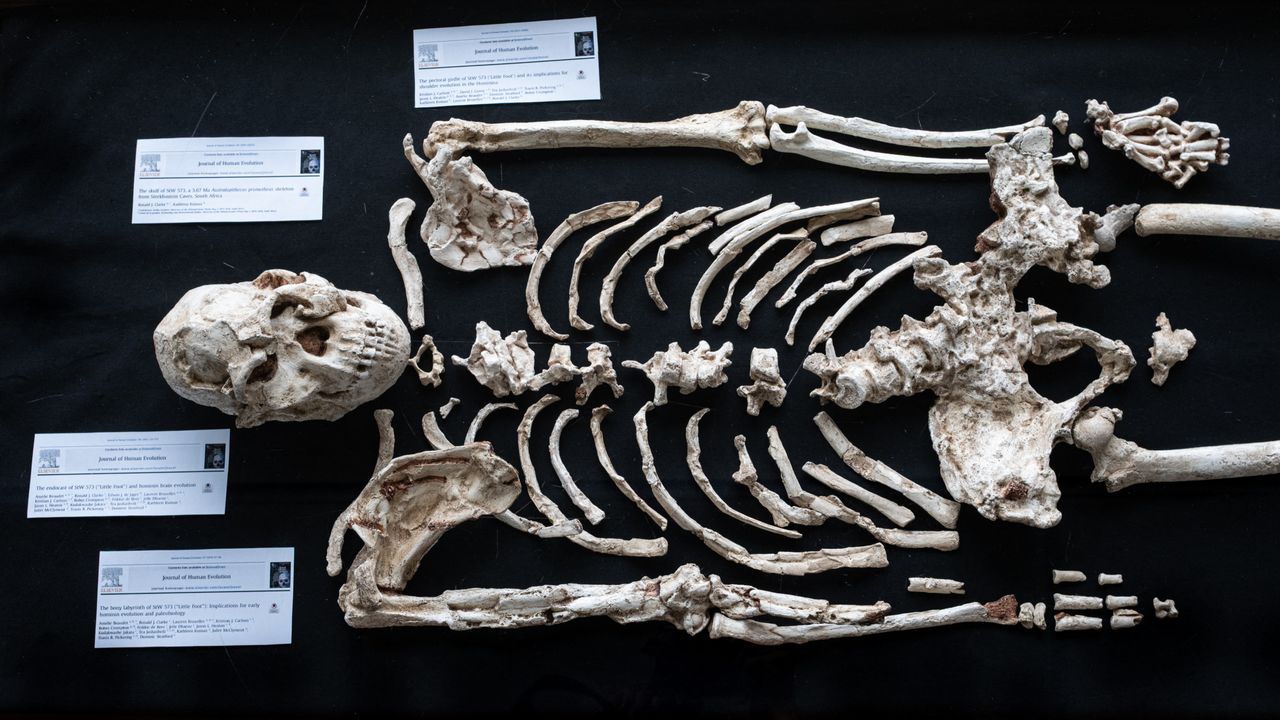
Here's the biggest science news you need to know. A research team suspects that the hominin fossil "Little Foot" is an unknown human ancestor.The Geminid meteor shower peaked over the weekend.Interstellar comet 3I/ATLAS makes its closest approach to Earth this week. Latest science news Refresh Get notified of updates 2025-12-15T12:55:50.754Z Live Science weekend news roundup Here are some of the best Live Science stories from the weekend: Scientists finally sequence the vampire squid's huge genome, revealing secrets of the 'living fossil'2,000-year-old shipwreck may be Egyptian 'pleasure barge' from last dynasty of pharaohsBrutal lion attack 6,200 years ago severely injured teenager — but somehow he survived, skeleton found in Bulgaria reveals 2025-12-15T09:31:24.720Z Little FootGood morning, science fans! Thank you for your patience last week while we worked through some technical issues. I'm pleased to report that the science news blog is back!We're kicking off this week's blog coverage with a story about human evolution. A team of researchers believes that the hominin fossil "Little Foot" is an unknown human ancestor, the Guardian reports.Little Foot is a near-complete Australopithecus skeleton — the most complete ever discovered — from South Africa. Researchers first unveiled the small ancient human in 2017, but precisely where it sits on our family tree has been the subject of scientific debate. A reproduction of Little Foot is on display at the Sterkfontein caves' exhibit, located within the Cradle of Humankind UNESCO World Heritage Site in South Africa. (Image credit: EMMANUEL CROSET/AFP via Getty Images)Some have proposed that Little Foot is a previously unknown species and should be given the name Australopithecus prometheus. However, A. prometheus is a recycled name that was initially meant for another South African fossil discovered in 1948, but fell out of favour after researchers decided that the fossil was likely from the known species Australopithecus africanus. Another possibility was that Little Foot was also A. africanus.The new claims derive from a study published last month in the American Journal of Biological Anthropology. Here, the research team argues that neither A. prometheus nor A. africanus is an appropriate classification for Little Foot.The classification of human fossils is often contested, so I'm keen to see how other anthropologists react to the new study and will follow up with more information as it emerges.Patrick Pester