
Firefighter Gear May Hide Chemicals Linked to Serious Health Risks
Summarize this article with:


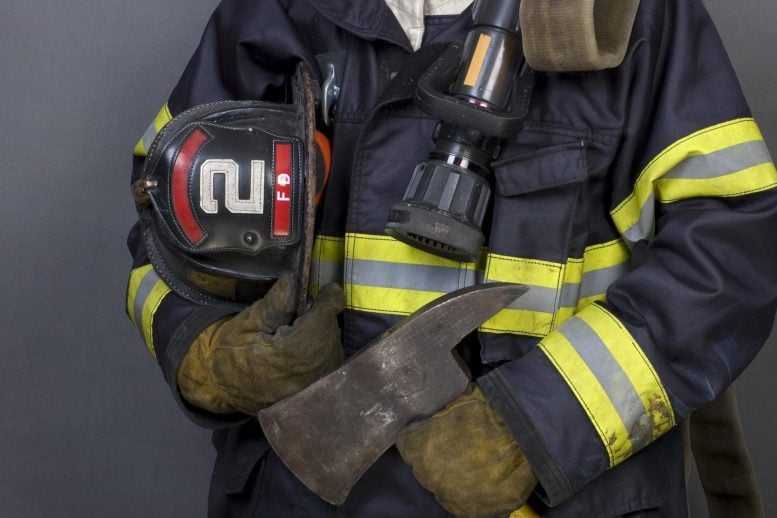
New research shows that firefighter turnout gear often contains brominated flame retardants, even in products advertised as PFAS-free. These chemicals may pose health risks and raise questions about what trade-offs are being made in the name of fire safety. Credit: Shutterstock Firefighter turnout gear is designed to protect against extreme heat and hazards, but new research suggests some of that protection may come with hidden health risks. A new study published today (December 16) in Environmental Science & Technology Letters reports that some firefighter protective clothing contains chemicals known as brominated flame retardants, substances that may pose health risks to firefighters.
This research is the first published U.S. study to closely examine and document the presence of brominated flame retardants in firefighter turnout gear, which is worn during emergency responses. The results could help fire departments make more informed choices about whether to continue using existing gear or replace it. Structural firefighters — those working in the built environment — rely on turnout gear made up of three layers. These include a flame resistant outer shell, a middle moisture barrier that blocks germs while allowing airflow, and an inner layer designed to reduce overheating. According to lead author Heather Stapleton, Ronie-Richele Garcia-Johnson Distinguished Professor at Duke University’s Nicholas School of the Environment, these protective features are partly achieved through chemical treatments applied by manufacturers to meet strict National Fire Protection Association standards. Concerns Over PFAS and What Comes Next For years, firefighters have raised concerns about the use of PFAS in turnout gear. These chemicals help repel oil and water and can also provide flame resistance. Studies in both humans and animals have linked PFAS exposure to a range of health issues, including certain cancers. While no research has directly connected PFAS treated turnout gear to specific health problems in firefighters, manufacturers have been steadily reducing their use of these substances. Several states have also passed laws that will ban the purchase of PFAS treated turnout gear beginning in 2027. As PFAS are phased out, questions have grown about which alternative chemicals might be used instead. Manufacturers generally do not publicly disclose the specific chemical treatments applied to turnout gear. “There was a rumor that one of the turnout gear manufacturers might be using brominated flame retardants in the non-PFAS treated textiles,” Stapleton said. “Because some brominated flame retardants have known toxicity, I requested a sample of the gear in question to test.” Brominated Flame Retardants and Health Risks Brominated flame retardants are commonly added to fabrics and consumer products to reduce how easily they burn. Exposure to these chemicals has been linked to health problems such as cancer, thyroid disorders, and effects on brain development. Stapleton’s initial testing confirmed the presence of brominated flame retardants in the sampled turnout gear. That discovery led to a larger study conducted with researchers from North Carolina State University’s Wilson College of Textiles and the International Association of Fire Fighters.
The team set out to examine how often PFAS and brominated flame retardants appear in turnout gear produced across different years. Peeling Back the Layers The researchers analyzed nine sets of used turnout gear manufactured between 2013 and 2020, along with three sets made in 2024 that were marketed as non-PFAS treated. Using two analytical methods, they tested each layer of the gear for both PFAS and brominated flame retardants. This approach allowed them to measure total chemical content as well as the portion that could rub off during use, referred to as “extractable” levels. “We wanted to know which chemicals were intentionally applied during manufacturing, and we wanted to know what was likely to leach out over time, which could raise the risk of exposure through skin absorption or inhalation,” Stapleton said. As anticipated, PFAS were detected in all gear manufactured between 2013 and 2020. In contrast, gear produced in 2024 showed only low or non-detectable extractable PFAS levels, supporting manufacturer claims that these garments were not treated with PFAS. The small amounts detected were likely picked up from the environment during use, according to the authors. Every set of turnout gear also contained brominated flame retardants, with extractable levels generally higher than those measured for PFAS. Unexpected Findings in PFAS-Free Gear The highest extractable levels of brominated flame retardants were found in gear marketed as non-PFAS treated, particularly in the moisture barrier. This pattern suggests that manufacturers intentionally added brominated flame retardants to meet flammability standards, likely as a replacement for a PFAS previously used in moisture barriers, Stapleton explained. Among the chemicals identified, decabromodiphenyl ethane, or DBDPE, appeared at the highest extractable concentrations. Although no U.S. studies have examined the health effects of DBDPE exposure, the research team pointed to a 2019 study of workers at a chemical manufacturing facility in China. That study found links between DBDPE exposure, altered thyroid hormone levels, and signs of thyroid disease. “I was really surprised that the manufacturers used DBDPE in turnout gear,” Stapleton said. “It has similar properties as a toxic chemical called decaBDE that has been largely phased out globally, raising questions about its safety.” Fire Exposure Versus Manufacturing Choices For turnout gear made between 2013 and 2020, the outer shell typically showed higher extractable levels of brominated flame retardants than the inner layers. Stapleton said this likely reflects buildup from smoke and soot encountered during fires. “When building materials burn, they can release brominated flame retardants into the air that stick to gear and don’t wash out very well,” she explained. However, the detection of these chemicals within internal layers indicates that some manufacturers had incorporated brominated flame retardants into turnout gear treatments years earlier, even before PFAS began to be phased out, the authors noted. Weighing the Costs While researchers have not yet determined firefighters’ exact exposure levels or the long-term health effects associated with these chemicals, the findings give fire departments new information to weigh when assessing protective gear. “Turnout gear is really expensive — one set costs thousands of dollars — and firefighters often use these garments for many years. Fire departments must consider both the financial and personal safety costs of keeping or replacing gear,” said coauthor R. Bryan Ormond, an associate professor at the Wilson College of Textiles and director of NC State’s Milliken Textile Protection and Comfort Center, who studies trade-offs in protective clothing performance. Stapleton noted that some manufacturers are now offering turnout gear that avoids both PFAS and brominated flame retardants. She encouraged fire departments to push for clearer disclosure about chemical treatments used in protective equipment. “We know firefighters receive higher exposure to multiple chemicals from all the hazards they face during their duty, and they shouldn’t have to worry about receiving additional chemical exposures from their gear,” said Stapleton, who also leads a study on cancer incidence in firefighters. “These first responders are a critically important component of our public safety and deserve to be respected and protected.” Reference: 16 December 2025, Environmental Science & Technology Letters. Funding: This project was supported by the North Carolina Collaboratory at the University of North Carolina at Chapel Hill, with funding appropriated by the North Carolina General Assembly (to HMS and BO). HMS also wishes to thank Michael and Annie Falk for establishing the Falk Exposomics Laboratory.