
Zurich Instruments Launches the ZQCS Quantum Control System to Master the Long-Lived Logical Qubit Challenge
Understand this faster with AI


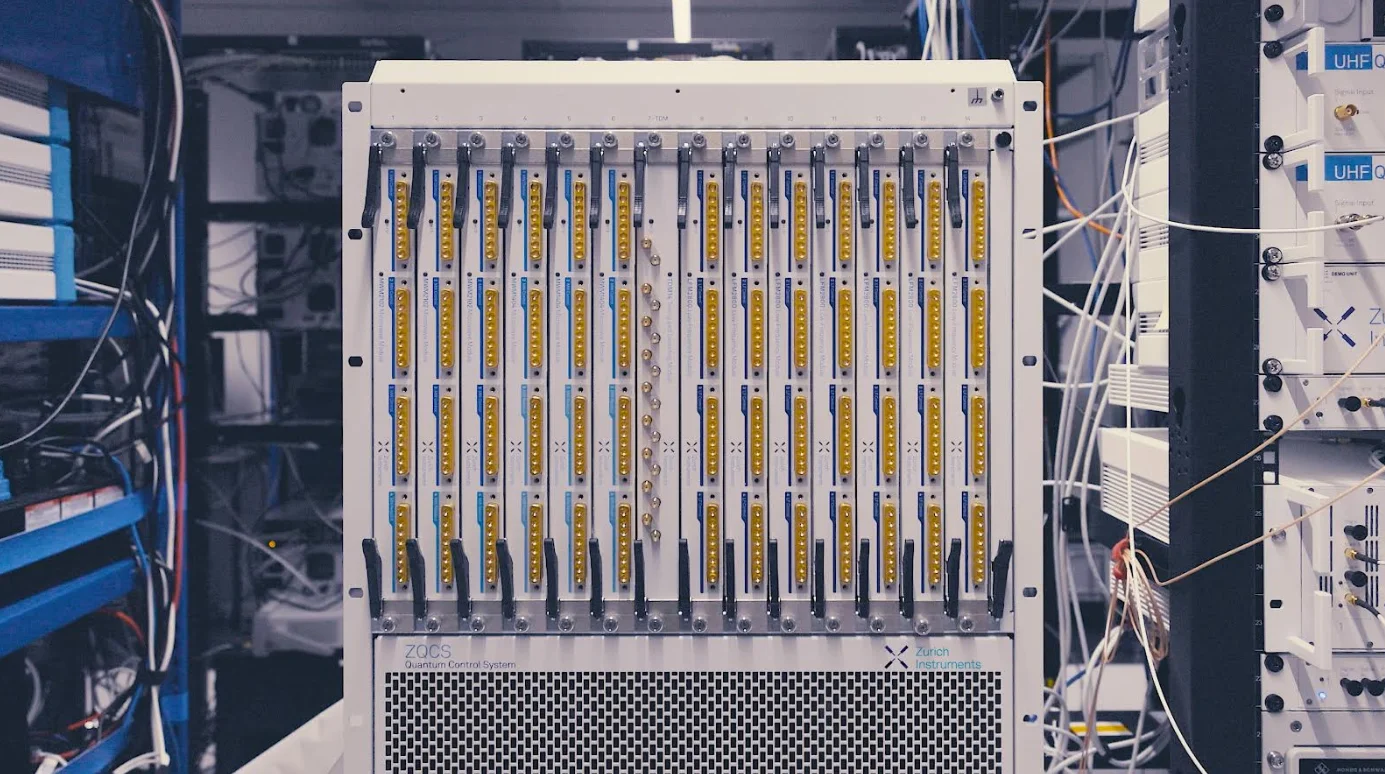
Insider Brief Zurich Instruments introduced the ZQCS Quantum Control System, a platform designed to operate large-scale quantum computers and support the development of long-lived logical qubits. The system integrates scalable RF control electronics, deterministic real-time networking, and FPGA-based processing to coordinate thousands of control channels and support quantum error correction experiments. Built on a modular AdvancedTCA architecture and powered by LabOne Q software, ZQCS is designed to scale from small research setups to multi-rack systems integrated with HPC resources such as GPUs and CPUs. PRESS RELEASE — Zurich Instruments announced the ZQCS Quantum Control System, a next‑generation platform to operate large-scale quantum computers. It is engineered to tackle the pivotal challenge on the path to fault‑tolerant quantum computing: building long‑lived logical qubits. Physical qubits are fragile; noise and drift can erase quantum information in microseconds. The remedy is to use logical qubits, which encode quantum information across many physical qubits, thereby enabling error correction. This approach elevates the control system from a mere pulse generator to the stabilizing core of the quantum computer: it must coordinate hundreds to thousands of channels while producing ultra‑stable pulses, and close real-time feedback loops at microsecond timescales. These requirements are at the core of the field’s main challenges – scaling to several thousand qubits, pushing gate fidelities to five nines and beyond, and mastering quantum error correction. The ZQCS is the control system built to meet these needs, uniting scalable direct‑RF electronics, deterministic real‑time networking, and powerful software. “We designed the ZQCS end‑to‑end for the logical‑qubit era – starting from the analog front end, through the real‑time fabric, to software – so researchers and system builders can address scale, fidelity, and error correction together,” says Andrea Orzati, CEO at Zurich Instruments. ZQCS uses a modular AdvancedTCA architecture scaling seamlessly from a single shelf to multi‑shelf systems and delivering more than a thousand channels per 19‑inch rack. The system is ready for the integration into HPC environments, offering water-cooled enclosures for optimal heat management and thermal stability. For QEC research without boundaries and hybrid quantum-classical workflows, each shelf integrates a programmable FPGA and a low‑latency, high‑bandwidth link to classical computing resources such as GPUs and CPUs. With its first‑Nyquist‑zone, direct‑RF front end and market-leading signal‑to‑noise ratio, the ZQCS lets researchers optimize quantum fidelities without limits imposed by the control. A synchronization scheme optimized to execute large quantum programs maintains a distributed wall clock for deterministic timing across every signal. The ZQCS is powered by Zurich Instruments’ LabOne Q software, spanning pulse‑, gate‑, and workflow‑level interfaces supporting automation for calibration and tune‑up. “We’re excited to see the first ZQCS installations come online, powering quantum error‑correction experiments, and helping our partners scale from hundreds to thousands of qubits,” says Sebastian Krinner, Product Manager. “This is a major step in our long‑term commitment to help the community reach fault tolerance.”The launch affirms Zurich Instruments’ capability and commitment to deliver the quantum control technology of the logical‑qubit era, backed by deep domain expertise and the long-term stability offered by its parent company, Rohde & Schwarz.
Mohib Ur Rehman LinkedIn Mohib has been tech-savvy since his teens, always tearing things apart to see how they worked. His curiosity for cybersecurity and privacy evolved from tinkering with code and hardware to writing about the hidden layers of digital life. Now, he brings that same analytical curiosity to quantum technologies, exploring how they will shape the next frontier of computing. Share this article:
Tags
Source Information
Discussion
0 professional contributions
Sign in to join this professional discussion.
Be the first to add a constructive contribution.