
Wire Codes
Understand this faster with AI


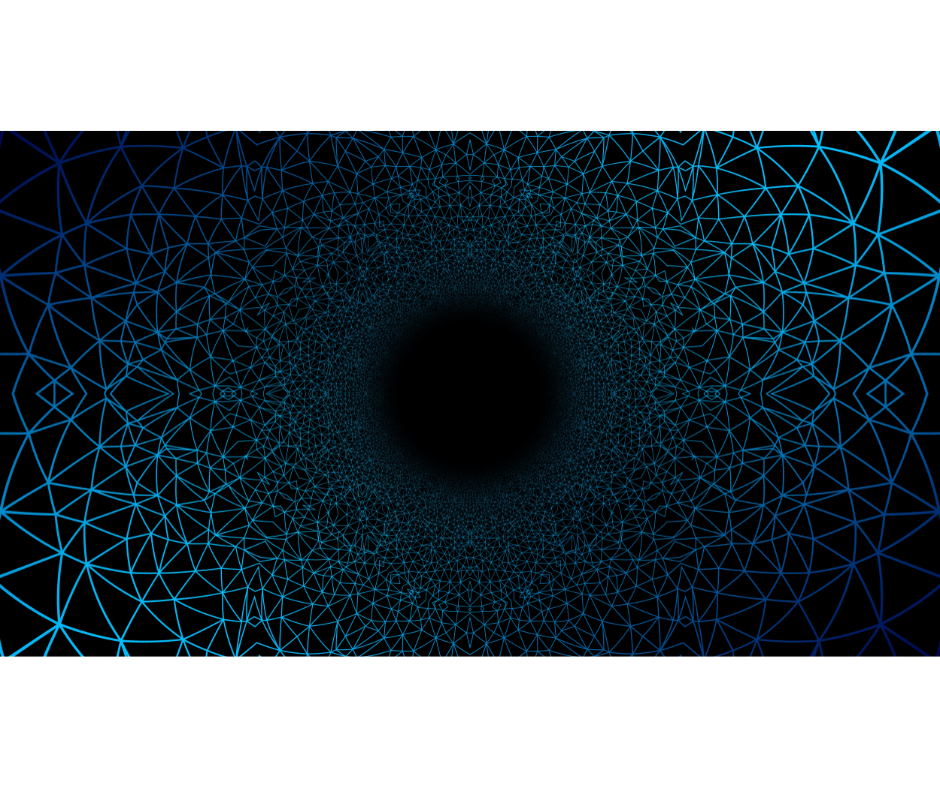
AbstractQuantum information is fragile and must be protected by a quantum error-correcting code for large-scale practical applications. Recently, highly efficient quantum codes have been discovered which require a high degree of spatial connectivity. This raises the question of how to realize these codes with minimal overhead under physical hardware connectivity constraints. Here, we introduce a general recipe to transform any quantum stabilizer code into a subsystem code that has local interactions, with weight and degree three, on a given graph. We call the subsystem codes produced by our recipe wire codes, and their code parameters depend on the input code and the given graph. Wire codes can be adapted to have a local implementation on any graph that supports a low-density embedding of the input Tanner graph, with an overhead that depends on the embedding. In particular, applying our results to a stabilizer code and a subdivision of its own Tanner graph, yields a quantum weight reduction procedure with a multiplicative qubit overhead and distance reduction that are linear in the input check degree and weight, respectively. Applying our results to hypercubic lattices leads to a construction of local subsystem codes with optimal scaling code parameters in any fixed spatial dimension. Similarly, applying our results to families of expanding graphs leads to local codes on these graphs with code parameters that depend on the degree of expansion. Our results constitute a general method to construct low-overhead subsystem codes on general graphs, which can be applied to adapt highly efficient quantum error correction procedures to hardware with restricted connectivity.Featured image: A wire code based on the quantum [[5,1,3]] code.Popular summaryQuantum low-density parity-check codes present a promising and efficient path to utility-scale quantum computation. However, their implementation demands a high degree of connectivity which is a challenge to realize in leading hardware platforms. In this work, we introduce wire codes which allow arbitrary quantum codes to be implemented using the connectivity constraints of a given hardware platform at a modest overhead cost. Our mapping produces local quantum subsystem codes with optimal code parameter scaling on hypercubic lattices. Wire codes are a promising tool for adapting highly connected quantum code constructions to implementations on a wide range of hardware.► BibTeX data@article{Baspin2026wirecodes, doi = {10.22331/q-2026-04-24-2083}, url = {https://doi.org/10.22331/q-2026-04-24-2083}, title = {Wire {C}odes}, author = {Baspin, Nou{\'{e}}dyn and Williamson, Dominic}, journal = {{Quantum}}, issn = {2521-327X}, publisher = {{Verein zur F{\"{o}}rderung des Open Access Publizierens in den Quantenwissenschaften}}, volume = {10}, pages = {2083}, month = apr, year = {2026} }► References [1] Peter W. Shor. ``Scheme for reducing decoherence in quantum computer memory''. Physical Review A 52, R2493 (1995). https://doi.org/10.1103/PhysRevA.52.R2493 [2] A. M. Steane. ``Error correcting codes in quantum theory''. Phys. Rev. Lett. 77, 793–797 (1996). https://doi.org/10.1103/PhysRevLett.77.793 [3] P.W. Shor. ``Fault-tolerant quantum computation''. In Proceedings of 37th Conference on Foundations of Computer Science. Pages 56–65. (1996). https://doi.org/10.1109/SFCS.1996.548464 [4] Daniel Gottesman. ``Stabilizer codes and quantum error correction'' (1997). arXiv:quant-ph/9705052. arXiv:quant-ph/9705052 [5] D. Aharonov and M. Ben-Or. ``Fault-tolerant quantum computation with constant error''. In Proceedings of the Twenty-Ninth Annual ACM Symposium on Theory of Computing. Page 176–188. STOC '97New York, NY, USA (1997). Association for Computing Machinery. https://doi.org/10.1145/258533.258579 [6] Emanuel Knill, Raymond Laflamme, and Wojciech H. Zurek. ``Resilient quantum computation''. Science 279, 342–345 (1998). https://doi.org/10.1126/science.279.5349.342 [7] A Yu Kitaev. ``Quantum computations: algorithms and error correction''.
Russian Mathematical Surveys 52, 1191–1249 (1997). https://doi.org/10.1070/rm1997v052n06abeh002155 [8] John Preskill. ``Reliable quantum computers''. Proceedings of the Royal Society A: Mathematical, Physical and Engineering Sciences 454, 385–410 (1998). arXiv:9705031. https://doi.org/10.1098/rspa.1998.0167 arXiv:9705031 [9] John Preskill. ``Fault-tolerant quantum computation''. In Proceedings of 37th Conference on Foundations of Computer Science. Pages 56–65. WORLD SCIENTIFIC (1997). arXiv:9712048. https://doi.org/10.1109/SFCS.1996.548464 arXiv:9712048 [10] A.Yu. Kitaev. ``Fault-tolerant quantum computation by anyons''. Annals of Physics 303, 2–30 (2003). https://doi.org/10.1016/S0003-4916(02)00018-0 [11] S. B. Bravyi and A. Yu. Kitaev. ``Quantum codes on a lattice with boundary'' (1998). arXiv:quant-ph/9811052. arXiv:quant-ph/9811052 [12] Eric Dennis, Alexei Kitaev, Andrew Landahl, and John Preskill. ``Topological quantum memory''. Journal of Mathematical Physics 43, 4452–4505 (2002). arXiv:https://pubs.aip.org/aip/jmp/article-pdf/43/9/4452/19183135/4452_1_online.pdf. https://doi.org/10.1063/1.1499754 arXiv:https://pubs.aip.org/aip/jmp/article-pdf/43/9/4452/19183135/4452\_1\_online.pdf [13] Robert Raussendorf and Jim Harrington. ``Fault-tolerant quantum computation with high threshold in two dimensions''. Phys. Rev. Lett. 98, 190504 (2007). https://doi.org/10.1103/PhysRevLett.98.190504 [14] Google Quantum AI. ``Quantum error correction below the surface code threshold''. Nature 638, 920–926 (2025). arXiv:2408.13687. https://doi.org/10.1038/s41586-024-08449-y arXiv:2408.13687 [15] David Poulin. ``Stabilizer formalism for operator quantum error correction''. Phys. Rev. Lett. 95, 230504 (2005). https://doi.org/10.1103/PhysRevLett.95.230504 [16] Dave Bacon. ``Operator quantum error-correcting subsystems for self-correcting quantum memories''. Phys. Rev. A 73, 012340 (2006). https://doi.org/10.1103/PhysRevA.73.012340 [17] H. Bombin, M. Kargarian, and M. A. Martin-Delgado. ``Interacting anyonic fermions in a two-body color code model''. Physical Review B - Condensed Matter and Materials Physics 80 (2009). arXiv:0811.0911. https://doi.org/10.1103/PhysRevB.80.075111 arXiv:0811.0911 [18] H. Bombin. ``Topological Subsystem Codes''. Physical Review A - Atomic, Molecular, and Optical Physics 81 (2009). arXiv:0908.4246. https://doi.org/10.1103/physreva.81.032301 arXiv:0908.4246 [19] Sergey Bravyi. ``Subsystem codes with spatially local generators''. Physical Review A 83 (2011). https://doi.org/10.1103/physreva.83.012320 [20] Sergey Bravyi and Jeongwan Haah. ``Quantum self-correction in the 3d cubic code model''.
Physical Review Letters 111 (2013). https://doi.org/10.1103/physrevlett.111.200501 [21] Tyler D. Ellison, Yu-An Chen, Arpit Dua, Wilbur Shirley, Nathanan Tantivasadakarn, and Dominic J. Williamson. ``Pauli topological subsystem codes from Abelian anyon theories''. Quantum 7, 1137 (2023). https://doi.org/10.22331/q-2023-10-12-1137 [22] Natalie C. Brown, Michael Newman, and Kenneth R. Brown. ``Handling Leakage with Subsystem Codes''. New Journal of Physics 21 (2019). arXiv:1903.03937v1. https://doi.org/10.1088/1367-2630/ab3372 arXiv:1903.03937v1 [23] Nikolas P. Breuckmann and Jens Niklas Eberhardt. ``Quantum low-density parity-check codes''. PRX Quantum 2, 040101 (2021). https://doi.org/10.1103/PRXQuantum.2.040101 [24] Pavel Panteleev and Gleb Kalachev. ``Asymptotically good Quantum and locally testable classical LDPC codes''. In Proceedings of the Annual ACM Symposium on Theory of Computing. Pages 375 – 388. (2022). https://doi.org/10.1145/3519935.3520017 [25] Nikolas P. Breuckmann and Jens N. Eberhardt. ``Balanced product quantum codes''. IEEE Transactions on Information Theory 67, 6653–6674 (2021). https://doi.org/10.1109/TIT.2021.3097347 [26] Anthony Leverrier and Gilles Zémor. ``Quantum tanner codes'' (2022) arXiv:2202.13641. arXiv:2202.13641 [27] Irit Dinur, Min Hsiu Hsieh, Ting Chun Lin, and Thomas Vidick. ``Good Quantum LDPC Codes with Linear Time Decoders''. In Proceedings of the Annual ACM Symposium on Theory of Computing. Pages 905 – 918. (2023). https://doi.org/10.1145/3564246.3585101 [28] Sergey Bravyi and Barbara Terhal. ``A no-go theorem for a two-dimensional self-correcting quantum memory based on stabilizer codes''. New Journal of Physics 11, 043029 (2009). https://doi.org/10.1088/1367-2630/11/4/043029 [29] Sergey Bravyi, David Poulin, and Barbara Terhal. ``Tradeoffs for reliable quantum information storage in 2d systems''. Phys. Rev. Lett. 104, 050503 (2010). https://doi.org/10.1103/PhysRevLett.104.050503 [30] Steven T. Flammia, Jeongwan Haah, Michael J. Kastoryano, and Isaac H. Kim. ``Limits on the storage of quantum information in a volume of space''. Quantum 1, 4 (2017). https://doi.org/10.22331/q-2017-04-25-4 [31] Dave Bacon, Steven T. Flammia, Aram W. Harrow, and Jonathan Shi. ``Sparse quantum codes from quantum circuits''. In Proceedings of the Forty-Seventh Annual ACM Symposium on Theory of Computing. Page 327–334. STOC '15New York, NY, USA (2015). Association for Computing Machinery. https://doi.org/10.1145/2746539.2746608 [32] Elia Portnoy. ``Local quantum codes from subdivided manifolds'' (2023) arXiv:2303.06755. arXiv:2303.06755 [33] Ting-Chun Lin, Adam Wills, and Min-Hsiu Hsieh. ``Geometrically local quantum and classical codes from subdivision'' (2023). arXiv:2309.16104. arXiv:2309.16104 [34] Dominic J. Williamson and Nouédyn Baspin. ``Layer codes''. Nature Communications 15 (2024). arXiv:2309.16503. https://doi.org/10.1038/s41467-024-53881-3 arXiv:2309.16503 [35] Xingjian Li, Ting-Chun Lin, and Min-Hsiu Hsieh. ``Transform Arbitrary Good Quantum LDPC Codes into Good Geometrically Local Codes in Any Dimension'' (2024). arXiv:2408.01769. arXiv:2408.01769 [36] Nouédyn Baspin. ``On combinatorial structures in linear codes'' (2023). arXiv:2309.16411. arXiv:2309.16411 [37] Fernando Pastawski, Beni Yoshida, Daniel Harlow, and John Preskill. ``Holographic quantum error-correcting codes: toy models for the bulk/boundary correspondence''. Journal of High Energy Physics 2015, 149 (2015). https://doi.org/10.1007/JHEP06(2015)149 [38] Pavel Panteleev and Gleb Kalachev. ``Quantum ldpc codes with almost linear minimum distance''. IEEE Transactions on Information Theory 68, 213–229 (2022). https://doi.org/10.1109/TIT.2021.3119384 [39] C. D. Thompson and H. T. Kung. ``Sorting on a mesh-connected parallel computer''. Communications of the ACM 20, 263–271 (1977). https://doi.org/10.1145/359461.359481 [40] Quantinuum. ``A Race Track Trapped-Ion Quantum Processor''. Physical Review X 13 (2023). arXiv:2305.03828v2. https://doi.org/10.1103/PhysRevX.13.041052 arXiv:2305.03828v2 [41] Simon J. Evered, Dolev Bluvstein, Marcin Kalinowski, Sepehr Ebadi, Tom Manovitz, Hengyun Zhou, Sophie H. Li, Alexandra A. Geim, Tout T. Wang, Nishad Maskara, Harry Levine, Giulia Semeghini, Markus Greiner, Vladan Vuletic, and Mikhail D. Lukin. ``High-fidelity parallel entangling gates on a neutral atom quantum computer''. Nature 622, 268–272 (2023). arXiv:2304.05420v1. https://doi.org/10.1038/s41586-023-06481-y arXiv:2304.05420v1 [42] Simon Storz, Josua Schär, Anatoly Kulikov, Paul Magnard, Philipp Kurpiers, Janis Lütolf, Theo Walter, Adrian Copetudo, Kevin Reuer, Abdulkadir Akin, Jean Claude Besse, Mihai Gabureac, Graham J. Norris, Andrés Rosario, Ferran Martin, José Martinez, Waldimar Amaya, Morgan W. Mitchell, Carlos Abellan, Jean Daniel Bancal, Nicolas Sangouard, Baptiste Royer, Alexandre Blais, and Andreas Wallraff. ``Loophole-free Bell inequality violation with superconducting circuits''. Nature 2023 617:7960 617, 265–270 (2023). https://doi.org/10.1038/s41586-023-05885-0 [43] PsiQuantum. ``A manufacturable platform for photonic quantum computing''. Nature 641, 876–883 (2025). arXiv:2404.17570. https://doi.org/10.1038/s41586-025-08820-7 arXiv:2404.17570 [44] Nouédyn Baspin and Anirudh Krishna. ``Connectivity constrains quantum codes''. Quantum 6, 711 (2022). https://doi.org/10.22331/q-2022-05-13-711 [45] Nouédyn Baspin, Venkatesan Guruswami, Anirudh Krishna, and Ray Li. ``Improved rate-distance trade-offs for quantum codes with restricted connectivity''. Quantum Science and Technology (2024). https://doi.org/10.1088/2058-9565/ad8370 [46] Nouédyn Baspin and Anirudh Krishna. ``Quantifying nonlocality: How outperforming local quantum codes is expensive''. Phys. Rev. Lett. 129, 050505 (2022). https://doi.org/10.1103/PhysRevLett.129.050505 [47] Trithep Devakul and Dominic J. Williamson. ``Fractalizing quantum codes''. Quantum 5 (2021). arXiv:2009.01252. https://doi.org/10.22331/q-2021-04-22-438 arXiv:2009.01252 [48] M. B. Hastings. ``Weight reduction for quantum codes'' (2016). arXiv:1611.03790. arXiv:1611.03790 [49] M. B. Hastings. ``On quantum weight reduction'' (2023). arXiv:2102.10030. arXiv:2102.10030 [50] Eric Sabo, Lane G. Gunderman, Benjamin Ide, Michael Vasmer, and Guillaume Dauphinais. ``Weight-reduced stabilizer codes with lower overhead''. PRX Quantum 5, 040302 (2024). https://doi.org/10.1103/PRXQuantum.5.040302 [51] Harriet Apel and Nouédyn Baspin. ``Simulating ldpc code hamiltonians on 2d lattices'' (2023). arXiv:2308.13277. arXiv:2308.13277 [52] Craig Gidney and Dave Bacon. ``Less bacon more threshold'' (2023). arXiv:2305.12046. arXiv:2305.12046 [53] Julia Wildeboer, Thomas Iadecola, and Dominic J. Williamson. ``Symmetry-Protected Infinite-Temperature Quantum Memory from Subsystem Codes''. PRX Quantum 3 (2021). arXiv:2110.05710. https://doi.org/10.1103/PRXQuantum.3.020330 arXiv:2110.05710 [54] Julia Chuzhoy. ``Routing in undirected graphs with constant congestion''. SIAM Journal on Computing 45, 1490–1532 (2016). https://doi.org/10.1137/130910464 [55] Corollary 6 of https://courses.grainger.illinois.edu/cs598csc/fa2024/Notes/lec-well-linked-decomp.pdf (2024). https://courses.grainger.illinois.edu/cs598csc/fa2024/Notes/lec-well-linked-decomp.pdf [56] Dominic J. Williamson and Theodore J. Yoder. ``Low-overhead fault-tolerant quantum computation by gauging logical operators''. Nature Physics 22, 598 – 603 (2026). arXiv:2410.02213. https://doi.org/10.1038/s41567-026-03220-8 arXiv:2410.02213 [57] Benjamin Ide, Manoj G. Gowda, Priya J. Nadkarni, and Guillaume Dauphinais. ``Fault-Tolerant Logical Measurements via Homological Measurement''. Physical Review X 15 (2025). arXiv:2410.02753. https://doi.org/10.1103/PhysRevX.15.021088 arXiv:2410.02753 [58] Muyuan Li, Daniel Miller, and Kenneth R. Brown. ``Direct measurement of Bacon-Shor code stabilizers''. Physical Review A 98 (2018). arXiv:1804.01127v1. https://doi.org/10.1103/PhysRevA.98.050301 arXiv:1804.01127v1 [59] Matt McEwen, Dave Bacon, and Craig Gidney. ``Relaxing Hardware Requirements for Surface Code Circuits using Time-dynamics''. Quantum 7 (2023). arXiv:2302.02192v2. https://doi.org/10.22331/q-2023-11-07-1172 arXiv:2302.02192v2 [60] Nicolas Delfosse and Adam Paetznick. ``Spacetime codes of Clifford circuits'' (2023). arXiv:2304.05943. arXiv:2304.05943 [61] Benjamin Rodatz, Boldizsár Poór, and Aleks Kissinger. ``Fault Tolerance by Construction'' (2025). arXiv:2506.17181. arXiv:2506.17181 [62] Julio C. Magdalena de la Fuente. ``Dynamical weight reduction of Pauli measurements'' (2024). arXiv:2410.12527. arXiv:2410.12527 [63] Benjamin Rodatz, Boldizsár Poór, and Aleks Kissinger. ``Floquetifying stabiliser codes with distance-preserving rewrites'' (2024). arXiv:2410.17240. arXiv:2410.17240Cited by[1] Noah Berthusen, Shi Jie Samuel Tan, Eric Huang, and Daniel Gottesman, "Adaptive Syndrome Extraction", PRX Quantum 6 3, 030307 (2025). [2] M. Sohaib Alam, Jun Zen, and Thomas R. Scruby, "Bacon-Shor Board Games", arXiv:2504.02749, (2025). [3] Junyu Fan, Matthew Steinberg, Alexander Jahn, Chunjun Cao, and Sebastian Feld, "Biased-Noise Thresholds of Zero-Rate Holographic Codes with Tensor-Network Decoding", arXiv:2408.06232, (2024). [4] Samuel Dai, Ray Li, and Eugene Tang, "Optimal Locality and Parameter Tradeoffs for Subsystem Codes", arXiv:2503.22651, (2025). [5] Lily Wang, Andy Zeyi Liu, Ray Li, Aleksander Kubica, and Shouzhen Gu, "Check-weight-constrained quantum codes: Bounds and examples", arXiv:2601.15446, (2026). [6] Andrew C. Yuan, Nouédyn Baspin, and Dominic J. Williamson, "Quantum Weight Reduction with Layer Codes", arXiv:2603.04883, (2026). The above citations are from SAO/NASA ADS (last updated successfully 2026-04-24 08:45:36). The list may be incomplete as not all publishers provide suitable and complete citation data.Could not fetch Crossref cited-by data during last attempt 2026-04-24 08:45:35: Could not fetch cited-by data for 10.22331/q-2026-04-24-2083 from Crossref. This is normal if the DOI was registered recently.This Paper is published in Quantum under the Creative Commons Attribution 4.0 International (CC BY 4.0) license. Copyright remains with the original copyright holders such as the authors or their institutions. AbstractQuantum information is fragile and must be protected by a quantum error-correcting code for large-scale practical applications. Recently, highly efficient quantum codes have been discovered which require a high degree of spatial connectivity. This raises the question of how to realize these codes with minimal overhead under physical hardware connectivity constraints. Here, we introduce a general recipe to transform any quantum stabilizer code into a subsystem code that has local interactions, with weight and degree three, on a given graph. We call the subsystem codes produced by our recipe wire codes, and their code parameters depend on the input code and the given graph. Wire codes can be adapted to have a local implementation on any graph that supports a low-density embedding of the input Tanner graph, with an overhead that depends on the embedding. In particular, applying our results to a stabilizer code and a subdivision of its own Tanner graph, yields a quantum weight reduction procedure with a multiplicative qubit overhead and distance reduction that are linear in the input check degree and weight, respectively. Applying our results to hypercubic lattices leads to a construction of local subsystem codes with optimal scaling code parameters in any fixed spatial dimension. Similarly, applying our results to families of expanding graphs leads to local codes on these graphs with code parameters that depend on the degree of expansion. Our results constitute a general method to construct low-overhead subsystem codes on general graphs, which can be applied to adapt highly efficient quantum error correction procedures to hardware with restricted connectivity.Featured image: A wire code based on the quantum [[5,1,3]] code.Popular summaryQuantum low-density parity-check codes present a promising and efficient path to utility-scale quantum computation. However, their implementation demands a high degree of connectivity which is a challenge to realize in leading hardware platforms. In this work, we introduce wire codes which allow arbitrary quantum codes to be implemented using the connectivity constraints of a given hardware platform at a modest overhead cost. Our mapping produces local quantum subsystem codes with optimal code parameter scaling on hypercubic lattices. Wire codes are a promising tool for adapting highly connected quantum code constructions to implementations on a wide range of hardware.► BibTeX data@article{Baspin2026wirecodes, doi = {10.22331/q-2026-04-24-2083}, url = {https://doi.org/10.22331/q-2026-04-24-2083}, title = {Wire {C}odes}, author = {Baspin, Nou{\'{e}}dyn and Williamson, Dominic}, journal = {{Quantum}}, issn = {2521-327X}, publisher = {{Verein zur F{\"{o}}rderung des Open Access Publizierens in den Quantenwissenschaften}}, volume = {10}, pages = {2083}, month = apr, year = {2026} }► References [1] Peter W. Shor. ``Scheme for reducing decoherence in quantum computer memory''. Physical Review A 52, R2493 (1995). https://doi.org/10.1103/PhysRevA.52.R2493 [2] A. M. Steane. ``Error correcting codes in quantum theory''. Phys. Rev. Lett. 77, 793–797 (1996). https://doi.org/10.1103/PhysRevLett.77.793 [3] P.W. Shor. ``Fault-tolerant quantum computation''. In Proceedings of 37th Conference on Foundations of Computer Science. Pages 56–65. (1996). https://doi.org/10.1109/SFCS.1996.548464 [4] Daniel Gottesman. ``Stabilizer codes and quantum error correction'' (1997). arXiv:quant-ph/9705052. arXiv:quant-ph/9705052 [5] D. Aharonov and M. Ben-Or. ``Fault-tolerant quantum computation with constant error''. In Proceedings of the Twenty-Ninth Annual ACM Symposium on Theory of Computing. Page 176–188. STOC '97New York, NY, USA (1997). Association for Computing Machinery. https://doi.org/10.1145/258533.258579 [6] Emanuel Knill, Raymond Laflamme, and Wojciech H. Zurek. ``Resilient quantum computation''. Science 279, 342–345 (1998). https://doi.org/10.1126/science.279.5349.342 [7] A Yu Kitaev. ``Quantum computations: algorithms and error correction''.
Russian Mathematical Surveys 52, 1191–1249 (1997). https://doi.org/10.1070/rm1997v052n06abeh002155 [8] John Preskill. ``Reliable quantum computers''. Proceedings of the Royal Society A: Mathematical, Physical and Engineering Sciences 454, 385–410 (1998). arXiv:9705031. https://doi.org/10.1098/rspa.1998.0167 arXiv:9705031 [9] John Preskill. ``Fault-tolerant quantum computation''. In Proceedings of 37th Conference on Foundations of Computer Science. Pages 56–65. WORLD SCIENTIFIC (1997). arXiv:9712048. https://doi.org/10.1109/SFCS.1996.548464 arXiv:9712048 [10] A.Yu. Kitaev. ``Fault-tolerant quantum computation by anyons''. Annals of Physics 303, 2–30 (2003). https://doi.org/10.1016/S0003-4916(02)00018-0 [11] S. B. Bravyi and A. Yu. Kitaev. ``Quantum codes on a lattice with boundary'' (1998). arXiv:quant-ph/9811052. arXiv:quant-ph/9811052 [12] Eric Dennis, Alexei Kitaev, Andrew Landahl, and John Preskill. ``Topological quantum memory''. Journal of Mathematical Physics 43, 4452–4505 (2002). arXiv:https://pubs.aip.org/aip/jmp/article-pdf/43/9/4452/19183135/4452_1_online.pdf. https://doi.org/10.1063/1.1499754 arXiv:https://pubs.aip.org/aip/jmp/article-pdf/43/9/4452/19183135/4452\_1\_online.pdf [13] Robert Raussendorf and Jim Harrington. ``Fault-tolerant quantum computation with high threshold in two dimensions''. Phys. Rev. Lett. 98, 190504 (2007). https://doi.org/10.1103/PhysRevLett.98.190504 [14] Google Quantum AI. ``Quantum error correction below the surface code threshold''. Nature 638, 920–926 (2025). arXiv:2408.13687. https://doi.org/10.1038/s41586-024-08449-y arXiv:2408.13687 [15] David Poulin. ``Stabilizer formalism for operator quantum error correction''. Phys. Rev. Lett. 95, 230504 (2005). https://doi.org/10.1103/PhysRevLett.95.230504 [16] Dave Bacon. ``Operator quantum error-correcting subsystems for self-correcting quantum memories''. Phys. Rev. A 73, 012340 (2006). https://doi.org/10.1103/PhysRevA.73.012340 [17] H. Bombin, M. Kargarian, and M. A. Martin-Delgado. ``Interacting anyonic fermions in a two-body color code model''. Physical Review B - Condensed Matter and Materials Physics 80 (2009). arXiv:0811.0911. https://doi.org/10.1103/PhysRevB.80.075111 arXiv:0811.0911 [18] H. Bombin. ``Topological Subsystem Codes''. Physical Review A - Atomic, Molecular, and Optical Physics 81 (2009). arXiv:0908.4246. https://doi.org/10.1103/physreva.81.032301 arXiv:0908.4246 [19] Sergey Bravyi. ``Subsystem codes with spatially local generators''. Physical Review A 83 (2011). https://doi.org/10.1103/physreva.83.012320 [20] Sergey Bravyi and Jeongwan Haah. ``Quantum self-correction in the 3d cubic code model''.
Physical Review Letters 111 (2013). https://doi.org/10.1103/physrevlett.111.200501 [21] Tyler D. Ellison, Yu-An Chen, Arpit Dua, Wilbur Shirley, Nathanan Tantivasadakarn, and Dominic J. Williamson. ``Pauli topological subsystem codes from Abelian anyon theories''. Quantum 7, 1137 (2023). https://doi.org/10.22331/q-2023-10-12-1137 [22] Natalie C. Brown, Michael Newman, and Kenneth R. Brown. ``Handling Leakage with Subsystem Codes''. New Journal of Physics 21 (2019). arXiv:1903.03937v1. https://doi.org/10.1088/1367-2630/ab3372 arXiv:1903.03937v1 [23] Nikolas P. Breuckmann and Jens Niklas Eberhardt. ``Quantum low-density parity-check codes''. PRX Quantum 2, 040101 (2021). https://doi.org/10.1103/PRXQuantum.2.040101 [24] Pavel Panteleev and Gleb Kalachev. ``Asymptotically good Quantum and locally testable classical LDPC codes''. In Proceedings of the Annual ACM Symposium on Theory of Computing. Pages 375 – 388. (2022). https://doi.org/10.1145/3519935.3520017 [25] Nikolas P. Breuckmann and Jens N. Eberhardt. ``Balanced product quantum codes''. IEEE Transactions on Information Theory 67, 6653–6674 (2021). https://doi.org/10.1109/TIT.2021.3097347 [26] Anthony Leverrier and Gilles Zémor. ``Quantum tanner codes'' (2022) arXiv:2202.13641. arXiv:2202.13641 [27] Irit Dinur, Min Hsiu Hsieh, Ting Chun Lin, and Thomas Vidick. ``Good Quantum LDPC Codes with Linear Time Decoders''. In Proceedings of the Annual ACM Symposium on Theory of Computing. Pages 905 – 918. (2023). https://doi.org/10.1145/3564246.3585101 [28] Sergey Bravyi and Barbara Terhal. ``A no-go theorem for a two-dimensional self-correcting quantum memory based on stabilizer codes''. New Journal of Physics 11, 043029 (2009). https://doi.org/10.1088/1367-2630/11/4/043029 [29] Sergey Bravyi, David Poulin, and Barbara Terhal. ``Tradeoffs for reliable quantum information storage in 2d systems''. Phys. Rev. Lett. 104, 050503 (2010). https://doi.org/10.1103/PhysRevLett.104.050503 [30] Steven T. Flammia, Jeongwan Haah, Michael J. Kastoryano, and Isaac H. Kim. ``Limits on the storage of quantum information in a volume of space''. Quantum 1, 4 (2017). https://doi.org/10.22331/q-2017-04-25-4 [31] Dave Bacon, Steven T. Flammia, Aram W. Harrow, and Jonathan Shi. ``Sparse quantum codes from quantum circuits''. In Proceedings of the Forty-Seventh Annual ACM Symposium on Theory of Computing. Page 327–334. STOC '15New York, NY, USA (2015). Association for Computing Machinery. https://doi.org/10.1145/2746539.2746608 [32] Elia Portnoy. ``Local quantum codes from subdivided manifolds'' (2023) arXiv:2303.06755. arXiv:2303.06755 [33] Ting-Chun Lin, Adam Wills, and Min-Hsiu Hsieh. ``Geometrically local quantum and classical codes from subdivision'' (2023). arXiv:2309.16104. arXiv:2309.16104 [34] Dominic J. Williamson and Nouédyn Baspin. ``Layer codes''. Nature Communications 15 (2024). arXiv:2309.16503. https://doi.org/10.1038/s41467-024-53881-3 arXiv:2309.16503 [35] Xingjian Li, Ting-Chun Lin, and Min-Hsiu Hsieh. ``Transform Arbitrary Good Quantum LDPC Codes into Good Geometrically Local Codes in Any Dimension'' (2024). arXiv:2408.01769. arXiv:2408.01769 [36] Nouédyn Baspin. ``On combinatorial structures in linear codes'' (2023). arXiv:2309.16411. arXiv:2309.16411 [37] Fernando Pastawski, Beni Yoshida, Daniel Harlow, and John Preskill. ``Holographic quantum error-correcting codes: toy models for the bulk/boundary correspondence''. Journal of High Energy Physics 2015, 149 (2015). https://doi.org/10.1007/JHEP06(2015)149 [38] Pavel Panteleev and Gleb Kalachev. ``Quantum ldpc codes with almost linear minimum distance''. IEEE Transactions on Information Theory 68, 213–229 (2022). https://doi.org/10.1109/TIT.2021.3119384 [39] C. D. Thompson and H. T. Kung. ``Sorting on a mesh-connected parallel computer''. Communications of the ACM 20, 263–271 (1977). https://doi.org/10.1145/359461.359481 [40] Quantinuum. ``A Race Track Trapped-Ion Quantum Processor''. Physical Review X 13 (2023). arXiv:2305.03828v2. https://doi.org/10.1103/PhysRevX.13.041052 arXiv:2305.03828v2 [41] Simon J. Evered, Dolev Bluvstein, Marcin Kalinowski, Sepehr Ebadi, Tom Manovitz, Hengyun Zhou, Sophie H. Li, Alexandra A. Geim, Tout T. Wang, Nishad Maskara, Harry Levine, Giulia Semeghini, Markus Greiner, Vladan Vuletic, and Mikhail D. Lukin. ``High-fidelity parallel entangling gates on a neutral atom quantum computer''. Nature 622, 268–272 (2023). arXiv:2304.05420v1. https://doi.org/10.1038/s41586-023-06481-y arXiv:2304.05420v1 [42] Simon Storz, Josua Schär, Anatoly Kulikov, Paul Magnard, Philipp Kurpiers, Janis Lütolf, Theo Walter, Adrian Copetudo, Kevin Reuer, Abdulkadir Akin, Jean Claude Besse, Mihai Gabureac, Graham J. Norris, Andrés Rosario, Ferran Martin, José Martinez, Waldimar Amaya, Morgan W. Mitchell, Carlos Abellan, Jean Daniel Bancal, Nicolas Sangouard, Baptiste Royer, Alexandre Blais, and Andreas Wallraff. ``Loophole-free Bell inequality violation with superconducting circuits''. Nature 2023 617:7960 617, 265–270 (2023). https://doi.org/10.1038/s41586-023-05885-0 [43] PsiQuantum. ``A manufacturable platform for photonic quantum computing''. Nature 641, 876–883 (2025). arXiv:2404.17570. https://doi.org/10.1038/s41586-025-08820-7 arXiv:2404.17570 [44] Nouédyn Baspin and Anirudh Krishna. ``Connectivity constrains quantum codes''. Quantum 6, 711 (2022). https://doi.org/10.22331/q-2022-05-13-711 [45] Nouédyn Baspin, Venkatesan Guruswami, Anirudh Krishna, and Ray Li. ``Improved rate-distance trade-offs for quantum codes with restricted connectivity''. Quantum Science and Technology (2024). https://doi.org/10.1088/2058-9565/ad8370 [46] Nouédyn Baspin and Anirudh Krishna. ``Quantifying nonlocality: How outperforming local quantum codes is expensive''. Phys. Rev. Lett. 129, 050505 (2022). https://doi.org/10.1103/PhysRevLett.129.050505 [47] Trithep Devakul and Dominic J. Williamson. ``Fractalizing quantum codes''. Quantum 5 (2021). arXiv:2009.01252. https://doi.org/10.22331/q-2021-04-22-438 arXiv:2009.01252 [48] M. B. Hastings. ``Weight reduction for quantum codes'' (2016). arXiv:1611.03790. arXiv:1611.03790 [49] M. B. Hastings. ``On quantum weight reduction'' (2023). arXiv:2102.10030. arXiv:2102.10030 [50] Eric Sabo, Lane G. Gunderman, Benjamin Ide, Michael Vasmer, and Guillaume Dauphinais. ``Weight-reduced stabilizer codes with lower overhead''. PRX Quantum 5, 040302 (2024). https://doi.org/10.1103/PRXQuantum.5.040302 [51] Harriet Apel and Nouédyn Baspin. ``Simulating ldpc code hamiltonians on 2d lattices'' (2023). arXiv:2308.13277. arXiv:2308.13277 [52] Craig Gidney and Dave Bacon. ``Less bacon more threshold'' (2023). arXiv:2305.12046. arXiv:2305.12046 [53] Julia Wildeboer, Thomas Iadecola, and Dominic J. Williamson. ``Symmetry-Protected Infinite-Temperature Quantum Memory from Subsystem Codes''. PRX Quantum 3 (2021). arXiv:2110.05710. https://doi.org/10.1103/PRXQuantum.3.020330 arXiv:2110.05710 [54] Julia Chuzhoy. ``Routing in undirected graphs with constant congestion''. SIAM Journal on Computing 45, 1490–1532 (2016). https://doi.org/10.1137/130910464 [55] Corollary 6 of https://courses.grainger.illinois.edu/cs598csc/fa2024/Notes/lec-well-linked-decomp.pdf (2024). https://courses.grainger.illinois.edu/cs598csc/fa2024/Notes/lec-well-linked-decomp.pdf [56] Dominic J. Williamson and Theodore J. Yoder. ``Low-overhead fault-tolerant quantum computation by gauging logical operators''. Nature Physics 22, 598 – 603 (2026). arXiv:2410.02213. https://doi.org/10.1038/s41567-026-03220-8 arXiv:2410.02213 [57] Benjamin Ide, Manoj G. Gowda, Priya J. Nadkarni, and Guillaume Dauphinais. ``Fault-Tolerant Logical Measurements via Homological Measurement''. Physical Review X 15 (2025). arXiv:2410.02753. https://doi.org/10.1103/PhysRevX.15.021088 arXiv:2410.02753 [58] Muyuan Li, Daniel Miller, and Kenneth R. Brown. ``Direct measurement of Bacon-Shor code stabilizers''. Physical Review A 98 (2018). arXiv:1804.01127v1. https://doi.org/10.1103/PhysRevA.98.050301 arXiv:1804.01127v1 [59] Matt McEwen, Dave Bacon, and Craig Gidney. ``Relaxing Hardware Requirements for Surface Code Circuits using Time-dynamics''. Quantum 7 (2023). arXiv:2302.02192v2. https://doi.org/10.22331/q-2023-11-07-1172 arXiv:2302.02192v2 [60] Nicolas Delfosse and Adam Paetznick. ``Spacetime codes of Clifford circuits'' (2023). arXiv:2304.05943. arXiv:2304.05943 [61] Benjamin Rodatz, Boldizsár Poór, and Aleks Kissinger. ``Fault Tolerance by Construction'' (2025). arXiv:2506.17181. arXiv:2506.17181 [62] Julio C. Magdalena de la Fuente. ``Dynamical weight reduction of Pauli measurements'' (2024). arXiv:2410.12527. arXiv:2410.12527 [63] Benjamin Rodatz, Boldizsár Poór, and Aleks Kissinger. ``Floquetifying stabiliser codes with distance-preserving rewrites'' (2024). arXiv:2410.17240. arXiv:2410.17240Cited by[1] Noah Berthusen, Shi Jie Samuel Tan, Eric Huang, and Daniel Gottesman, "Adaptive Syndrome Extraction", PRX Quantum 6 3, 030307 (2025). [2] M. Sohaib Alam, Jun Zen, and Thomas R. Scruby, "Bacon-Shor Board Games", arXiv:2504.02749, (2025). [3] Junyu Fan, Matthew Steinberg, Alexander Jahn, Chunjun Cao, and Sebastian Feld, "Biased-Noise Thresholds of Zero-Rate Holographic Codes with Tensor-Network Decoding", arXiv:2408.06232, (2024). [4] Samuel Dai, Ray Li, and Eugene Tang, "Optimal Locality and Parameter Tradeoffs for Subsystem Codes", arXiv:2503.22651, (2025). [5] Lily Wang, Andy Zeyi Liu, Ray Li, Aleksander Kubica, and Shouzhen Gu, "Check-weight-constrained quantum codes: Bounds and examples", arXiv:2601.15446, (2026). [6] Andrew C. Yuan, Nouédyn Baspin, and Dominic J. Williamson, "Quantum Weight Reduction with Layer Codes", arXiv:2603.04883, (2026). The above citations are from SAO/NASA ADS (last updated successfully 2026-04-24 08:45:36). The list may be incomplete as not all publishers provide suitable and complete citation data.Could not fetch Crossref cited-by data during last attempt 2026-04-24 08:45:35: Could not fetch cited-by data for 10.22331/q-2026-04-24-2083 from Crossref. This is normal if the DOI was registered recently.This Paper is published in Quantum under the Creative Commons Attribution 4.0 International (CC BY 4.0) license. Copyright remains with the original copyright holders such as the authors or their institutions.
Tags
Source Information
Discussion
0 professional contributions
Sign in to join this professional discussion.
Be the first to add a constructive contribution.