
SAS Survey Finds Industry Leaders Intrigued About Quantum AI, But Remain Uncertain About Real-World Uses
Understand this faster with AI


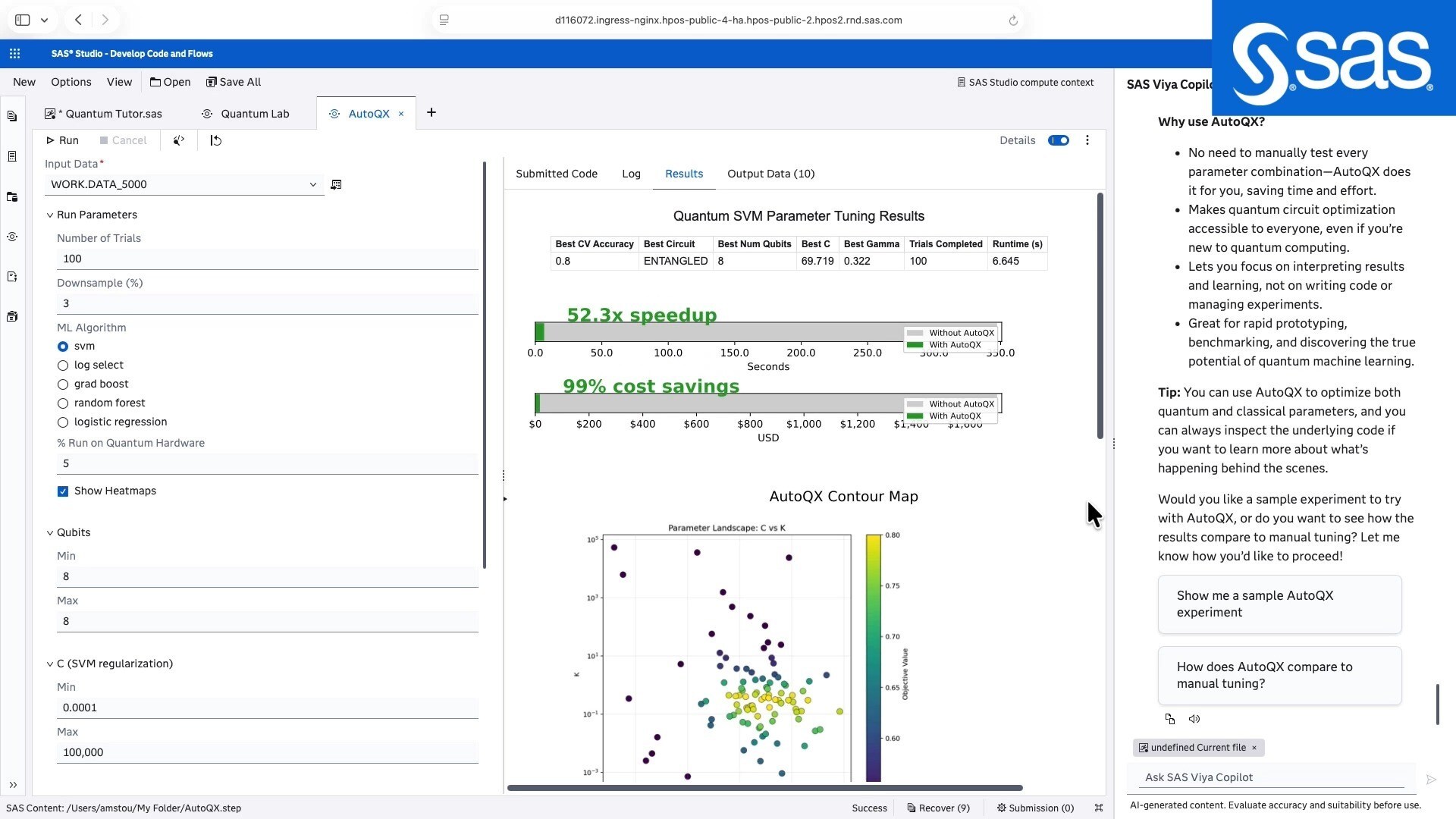
Insider Brief A SAS survey of more than 500 global leaders found that uncertainty about real-world applications is now the top barrier to quantum AI adoption, surpassing cost. Organizations remain interested in quantum AI but face challenges including high implementation costs, limited expertise, unclear regulations, and a lack of available solutions. SAS plans to address these barriers with its upcoming Quantum Lab platform, which enables users to test classical, quantum, and hybrid approaches while reducing experimentation costs and complexity. SAS reports that interest in quantum AI remains high, but uncertainty about real-world applications has overtaken cost as the top barrier to adoption, even as the company positions new tools to lower entry hurdles. Organizations are beginning to test quantum computing’s near-term value through hybrid approaches that combine classical and quantum systems, according to a new survey released by SAS. The findings suggest that while the technology is still emerging, businesses are actively exploring ways to extract practical gains before large-scale quantum hardware becomes widely available. The survey, based on responses from more than 500 global industry leaders, shows an evolution in sentiment from 2025 to 2026. According to the news release, uncertainty around practical, real-world uses now ranks as the top barrier to adoption, followed by high implementation costs and a shortage of trained personnel. In the prior year, cost was the leading concern. SAS, a U.S.-based software company that develops data analytics and AI, defines quantum AI as the use of machine learning techniques on quantum hardware, often in combination with classical computing systems. In practice this hybrid approach can reduce processing times for certain tasks from hours to minutes, improve model efficiency with smaller datasets and help stabilize results over time, according to the news release. Understanding the Barriers The survey indicates that the market that is moving from early curiosity toward cautious evaluation. While cost remains a factor, the news release indicates that organizations are increasingly focused on whether quantum AI can deliver measurable results in real-world scenarios. Other barriers cited in the survey include limited availability of solutions, lack of clear regulatory guidelines and gaps in knowledge or expertise. These challenges suggest the main issue is that many organizations are unsure how to integrate quantum technologies into existing workflows or justify the investment. “Organizations of all sizes are eager to develop intellectual property – their original, patented approach to quantum AI – so they’ll be ready as the technology comes of age,” Bill Wisotsky, Principal Quantum Architect at SAS said in the news release. “Despite continued strong interest, leaders are understandably proceeding with caution, and they don’t want to go all-in on expensive quantum investments they fear may not result in worthwhile use cases and solved problems. SAS is working to level the playing field, establishing real-world use cases for today, and ensuring that customers can get a piece of the quantum pie tomorrow.” Introducing SAS Quantum Lab To address these concerns, SAS is preparing to launch SAS Quantum Lab, a platform designed to help organizations experiment with quantum AI in a controlled environment. The offering is expected to be available to SAS Viya customers in the fourth quarter. According to the news release, the platform will allow users to compare classical, quantum and hybrid approaches side by side for specific business problems. Early testing cited in the release suggests performance improvements of more than 100 times, along with cost reductions of up to 99%, though such results are likely to vary depending on the use case. The platform will also include a virtual tutor to guide users through quantum AI concepts and workflows, providing sample code and recommendations. The goal, according to SAS, is to make quantum experimentation accessible to users without deep expertise in quantum physics. “This survey illuminates what SAS experts were already seeing in the market: that leaders are excited to use quantum, but the barriers to entry have been too high, and that requires a solution,” said Amy Stout, Head of Quantum Product Strategy at SAS in the release. “SAS is excited to give a sneak peek of SAS Quantum Lab, a hands-on playground to learn and innovate for real-world ROI.” Use Cases Begin to Take Shape Survey respondents pointed to a range of potential applications for quantum AI, particularly in areas where complex data patterns or optimization challenges are difficult for classical systems alone. These include fraud detection in financial services, real-time optimization of 5G network traffic and molecular simulations for drug discovery. Other cited use cases include supply chain logistics, predictive modeling for customer behavior and training large language models more efficiently. While many of these applications remain in exploratory stages, the news release suggests that organizations are beginning to align quantum AI with specific business objectives. “If you’re ready to explore quantum AI, we’re ready to work with you,” Wisotsky said. “Bring your ideas, and our experts will help determine if and how quantum AI can be incorporated in ways that are valuable, safe and sensible.” Matt Swayne LinkedIn With a several-decades long background in journalism and communications, Matt Swayne has worked as a science communicator for an R1 university for more than 12 years, specializing in translating high tech and deep tech for the general audience. He has served as a writer, editor and analyst at The Quantum Insider since its inception. In addition to his service as a science communicator, Matt also develops courses to improve the media and communications skills of scientists and has taught courses. matt@thequantuminsider.com Share this article:
Tags
Source Information
Discussion
0 professional contributions
Sign in to join this professional discussion.
Be the first to add a constructive contribution.