
Quantum systems can remember and forget at the same time, scientists discover
Summarize this article with:


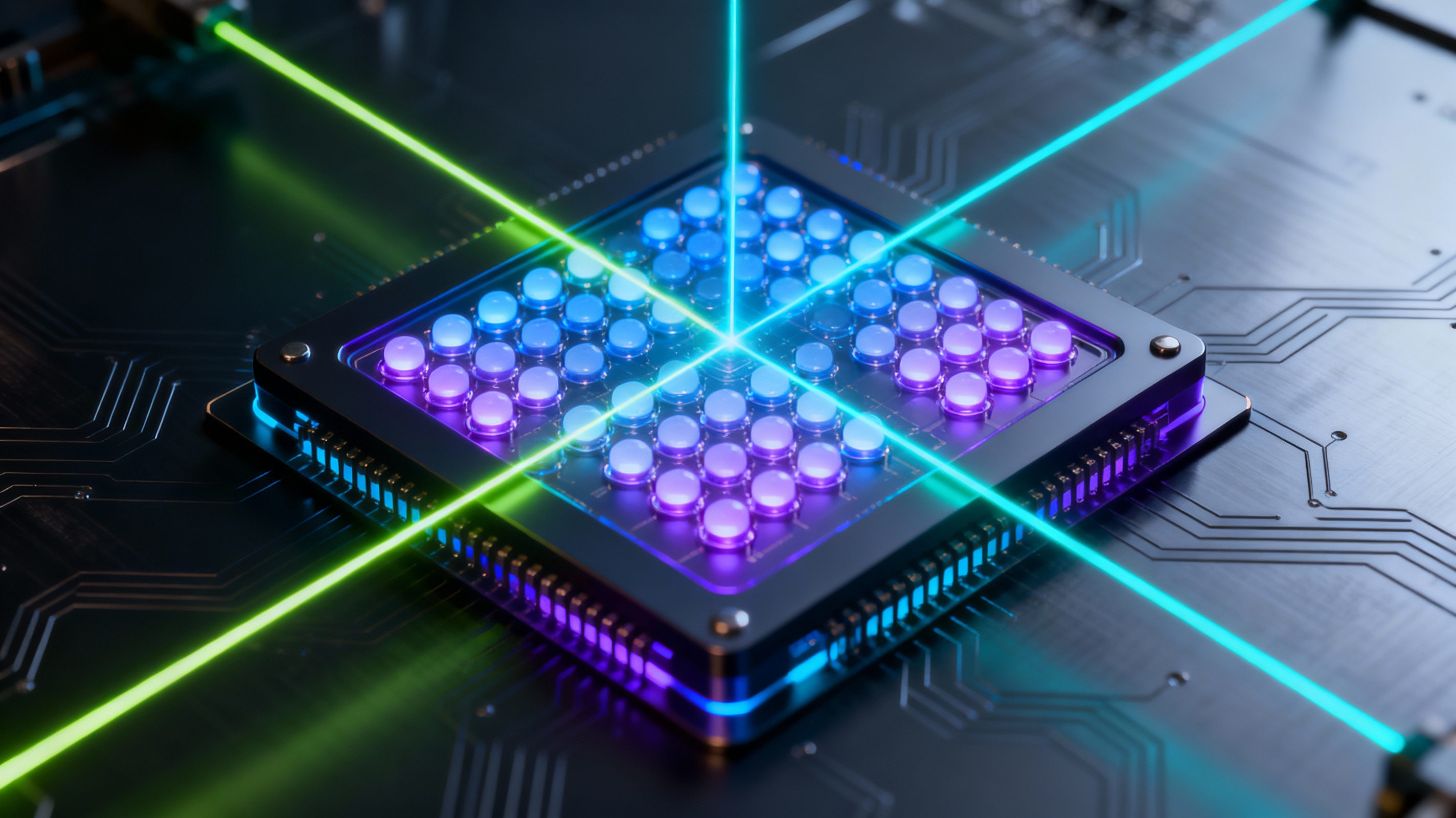
Science News from research organizations Quantum systems can remember and forget at the same time, scientists discover Quantum systems may look memoryless—but they’re secretly remembering more than we ever realized. Date: April 14, 2026 Source: University of Turku Summary: Quantum systems can secretly “remember” their past—even when they appear not to. Scientists found that whether a system shows memory depends on how you look at it: through its evolving state or its measurable properties. Each perspective uncovers different kinds of memory, meaning a system can seem memoryless and memory-filled at the same time. This discovery could change how researchers design and control quantum technologies. Share: Facebook Twitter Pinterest LinkedIN Email FULL STORY Quantum systems can hide memory in plain sight, appearing memoryless from one viewpoint but not another. This surprising discovery reveals that quantum memory is far more complex—and potentially useful—than scientists once believed. Credit: AI/ScienceDaily.com An international team of scientists has taken a closer look at how memory works in quantum systems and uncovered a surprising result. Their research shows that a quantum process can seem completely memoryless when viewed one way, yet still retain memory when examined from another angle. This unexpected finding opens the door to new lines of research in quantum science and technology. In classical physics, the idea of memory is straightforward. A system is considered memoryless if its future behavior depends only on its current state. If past states continue to influence what happens next, the system is said to have memory. Quantum physics is far less clear-cut. Quantum systems can store and transfer information in ways that have no classical counterpart, and measurements themselves play a key role in how these systems evolve. Because of this, defining memory in quantum mechanics has remained a challenge. Rethinking Memory in Quantum Systems In a study published in PRX Quantum, researchers from the University of Turku in Finland, the University of Milan in Italy, and Nicolaus Copernicus University in Toruń in Poland revisited the concept of memory in quantum systems to better understand its meaning. "Our work shows that memory is not a single concept but can manifest in different ways depending on how the evolution of a system is described," says first author, Doctoral Researcher Federico Settimo from the University of Turku. Two Perspectives in Quantum Mechanics Scientists have long studied memory by tracking how quantum states change over time, an approach rooted in the work of Erwin Schrödinger. However, quantum theory also offers another equally important framework developed by Werner Heisenberg. Instead of focusing on states, this perspective looks at how observable quantities evolve, meaning the measurable properties seen in experiments. Although both approaches produce the same experimental results, the new research shows they are not interchangeable when it comes to describing memory.
Hidden Memory Effects Revealed The team found that these two perspectives can reveal different types of memory. Some memory effects only appear when analyzing the evolution of quantum states, while others become visible only when focusing on observables. This means a quantum system can appear memoryless in one description but show clear signs of memory in another. The finding suggests that quantum memory is more complex than previously believed and cannot be fully understood by looking at quantum states alone. Implications for Quantum Technology "Our findings open up new research avenues into the dynamics of quantum systems. Moreover, our work has implications beyond its foundational significance for quantum technologies, where the external environment induces noise and memory effects. Knowing how memory can be witnessed is essential for developing strategies to mitigate noise or exploit environmental effects in realistic quantum devices," says Professor of Theoretical Physics Jyrki Piilo from the University of Turku. By clarifying how memory works in quantum systems, the study sheds new light on a fundamental aspect of quantum dynamics. It also highlights how the unique nature of quantum time evolution reshapes even basic concepts like memory, with potential consequences for future technologies. RELATED TOPICS Matter & Energy Optics Physics Telecommunications Quantum Physics Computers & Math Hacking Computer Programming Math Puzzles Information Technology RELATED TERMS Quantum entanglement Quantum computer Introduction to quantum mechanics Solar power Nanoparticle Quantum dot Quantum number Engineering Story Source: Materials provided by University of Turku. Note: Content may be edited for style and length. Journal Reference: Federico Settimo, Andrea Smirne, Kimmo Luoma, Bassano Vacchini, Jyrki Piilo, Dariusz Chruściński. Divisibility of Dynamical Maps: Schrödinger Versus Heisenberg Picture. PRX Quantum, 2026; 7 (1) DOI: 10.1103/6dt2-sq44 Cite This Page: MLA APA Chicago University of Turku. "Quantum systems can remember and forget at the same time, scientists discover." ScienceDaily. ScienceDaily, 14 April 2026. . University of Turku. (2026, April 14). Quantum systems can remember and forget at the same time, scientists discover. ScienceDaily. Retrieved April 14, 2026 from www.sciencedaily.com/releases/2026/04/260413043150.htm University of Turku. "Quantum systems can remember and forget at the same time, scientists discover." ScienceDaily. www.sciencedaily.com/releases/2026/04/260413043150.htm (accessed April 14, 2026). Explore More from ScienceDaily RELATED STORIES The Economic Life of Cells July 13, 2023 A team has combined economic theory with biology to understand how natural systems respond to change. The researchers noticed a similarity between consumers' shopping behavior and the behavior ... Cooling Matter from a Distance Feb. 2, 2022 Researchers have succeeded in forming a control loop consisting of two quantum systems separated by a distance of one meter. Within this loop, one quantum system -- a vibrating membrane -- is cooled ... Novel Way to Perform ‘general Inverse Design’ With High Accuracy Jan. 6, 2022 'Inverse design' is a design approach that reverses the traditional design process and enables the designer to discover and create materials that possess a user-defined set of properties. ...
Machine Learning Models Quantum Devices Dec. 22, 2021 Technologies that take advantage of novel quantum mechanical behaviors are likely to become commonplace in the near future. These may include devices that use quantum information as input and output ... IT Security: Computer Attacks With Laser Light Dec. 21, 2021 Computer systems that are physically isolated from the outside world (air-gapped) can still be attacked. This is demonstrated by IT security experts. They show that data can be transmitted to ... Quantum Simulation: Measurement of Entanglement Made Easier June 24, 2021 Researchers have developed a method to make previously hardly accessible properties in quantum systems measurable. The new method for determining the quantum state in quantum simulators reduces the ... TRENDING AT SCITECHDAILY.com After Decades of Searching, Astronomers Finally Track Down the Universe’s Missing Hydrogen Hidden Oceans of Magma Could Be Protecting Alien Life Saturn’s Magnetic Shield Isn’t What Scientists Expected New Study Challenges Alzheimer’s Theories: It’s Not Just About Plaques