
Quantum Computing Weekly Round-Up: Week Ending February 21, 2026
Summarize this article with:


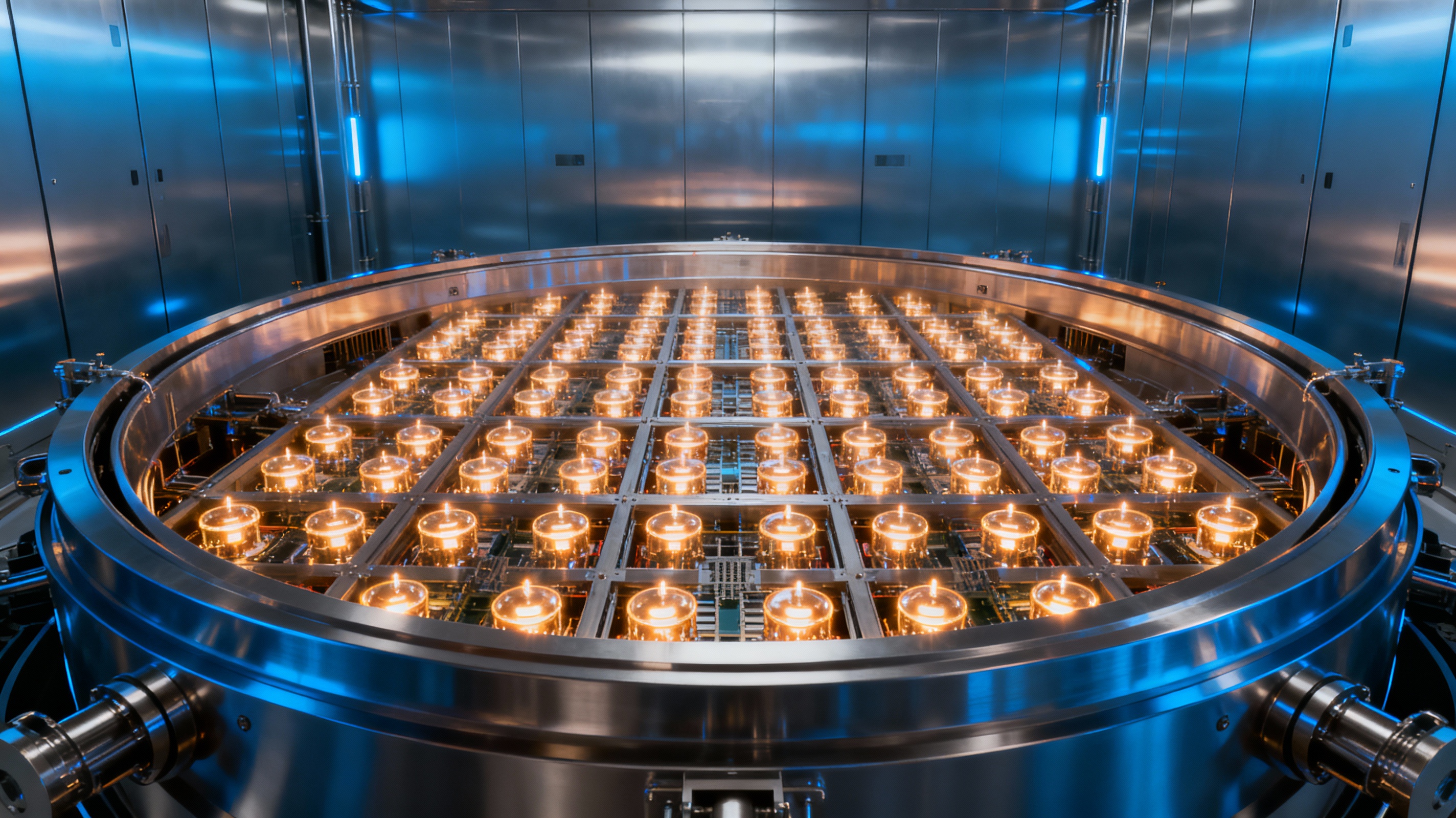
Above: Risks, threats, and vulnerabilities: Quantum computing adds to the issue. Image courtesy AI.If you’re trying to keep up with quantum without doom-scrolling 37 tabs into oblivion, this Quantum Computing Weekly Round-Up is your cheat code: Packaging gets denser, networking gets more metro-shaped, and the grown-ups keep reminding everyone that “quantum risk” is quickly becoming “board risk.”The week’s most “real engineering hours were spent here” headline came from Oxford Quantum Circuits, which says it’s pushing wafer-scale packaging toward a 500-qubit class target—the kind of packaging work that decides whether scaling is smooth or cursed. See OQC’s newsroom update via Oxford Quantum Circuits.In neutral-atom land, Pasqal delivering Italy’s first neutral-atom quantum computer is the kind of milestone turning national ambition into something you can point at in a data center or lab: Pasqal’s announcement. And in “distribution matters,” AQT partnering with Scaleway adds another lane to Europe’s cloud-access story: AQT and Scaleway.The most practical energy this week came from execution tooling: Q-CTRL is pitching a path to “utility-scale” runs with its Fire Opal workflow. It’s very much a “make today’s hardware behave better” narrative rather than a science-fair poster. Here’s the full take from Q-CTRL’s Fire Opal post.On the photonics roadmap side, PsiQuantum dropped an “actually use this” move with an open-access circuit design tool. Take a minute and read: PsiQuantum’s Circuit Designer update.Now, for the theory crowd, one of the week’s paper drops looks at classical initialization strategies for QAOA found in this arXiv preprint.If you want the clearest “this is headed toward real deployments” signal, start here: Qunnect says it demonstrated metro-scale, high-speed entanglement swapping over commercial fiber with Cisco—a phrase that’s going to show up in more decks this year. Read it straight from Qunnect’s press release.At the component layer, Harvard SEAS points to microscopic mirrors as a hardware ingredient for future quantum networks. Hawvad published the deets in Harvard SEAS.On the applied-pilot side, Europe keeps stacking receipts: LuxQuanta reports validation work in MADQuantum—see LuxQuanta’s project update—and Ireland’s national QCI activity gets a public marker via Trinity College Dublin’s IrelandQCI demo write-up.For a “secure applications meet real networks” angle, the University of Stuttgart posted its perspective in the Stuttgart update. In “big communications companies are clearly watching this,” Comcast, Classiq, and AMD highlighted a quantum algorithm demo aimed at resilience and reliability framing: Comcast’s press release.This week’s tone is post-quantum readiness is no longer just “security planning,” it’s governance and legal exposure. PQShield framed that shift directly in a PQShield conversation on legal risk.Finance is still in its long, careful inhale. McKinsey put out a banking-sector lens on quantum communication and computing in McKinsey’s banking analysis.If you want a quick awards and recognition snapshot, there’s the Quantum Security 25 winners list and a channel-facing nod to Keyfactor via the PR Newswire announcement.On the business side, here’s the capital structure story making way: Infleqtion says it completed its business combination with Churchill Capital Corp X—a meaningful step if you track who has the runway to scale. Here’s Infleqtion’s release.In security hardware land, SEALSQ posted preliminary FY2025 numbers in two releases—one focusing on key metrics in SEALSQ’s preliminary metrics update and another emphasizing revenue growth in SEALSQ’s revenue-growth statement.For a macro lens, Forbes ran a national-economy framing on Australia in Forbes’ Australia quantum piece.If you’re mapping where quantum centers are popping up, Kazakhstan and Singapore (sometimes written “S’pore” but not here, at least today) launched a quantum technology center in Almaty per The Astana Times.Canada’s “sovereign capability” narrative also sharpened, with Quantum Industry Canada responding to the Defence Industrial Strategy in QIC’s statement.Elsewhere: the Finland–India deep tech lane got a public update via Devdiscourse, and the UK highlighted progress on atomic clocks in the UK government update.For the research funding side, Stony Brook scored a Trump Administraion’s NSF grant for quantum sensing in the Stony Brook news post.If your weekend plans include “one more quantum rabbit hole,” try these. Chalmers highlighted “giant superatoms” as a toolbox angle in the Chalmers article. RIKEN posted on device-level signal/noise tradeoffs in the RIKEN research news.For experimental grit: UConn covered improved quantum degenerate cooling in UConn Today. Oh, and a simulation-flavored angle showed up from the University of Konstanz. Take a breath and see how this works in EurekAlert’s release.Not every week is expansion-only. Phoronix reports Intel ended open-source work tied to “Quantum Passes” in the Phoronix write-up.On procurement and legal reality, Quantum Computing Report covered an Italian court annulling a previous award related to IBM and a quantum computer at the University of Salerno in the QCR report.For the “human voice” perspective, Gizmodo published a first-person “I tried quantum coding” experience in the Gizmodo piece. Spoiler alert, it’s a good news piece.Yes, Helium-3 showed up again too, with a live-series announcement via The Tennessean.This week mattered. Why? Because quantum’s “next” is increasingly getting packaged, piloted, and governed into “now”. The winners will be the teams able to ship reliable systems while surviving procurement and compliance at the same time.—See the full week of articles in the Weekly Archives Pages and the Weekly Round-Ups found at The Qubit Report.This quantum computing weekly roundup captures big developments from Google’s quantum threat alarm to NASA’s space sensor launch. From research breakthroughs in Majorana qubits to This week’s quantum developments crossed from planning into validation. Q-CTRL demonstrated a commercially validated quantum navigation system operating without GPS, while Infleqtion reported 99.93% reliable This week’s roundup ties together the biggest deals, PQC adoption signals, and policy pressure around talent. Enterprise contracts got bigger, and research kept landing tangible Our MissionContact UsPrivacy PolicyWebsite Terms of UseCopyright 2017-2026 | The Qubit Report | All Rights Reserved