
Quantum Architecture Search with Unsupervised Representation Learning
Summarize this article with:


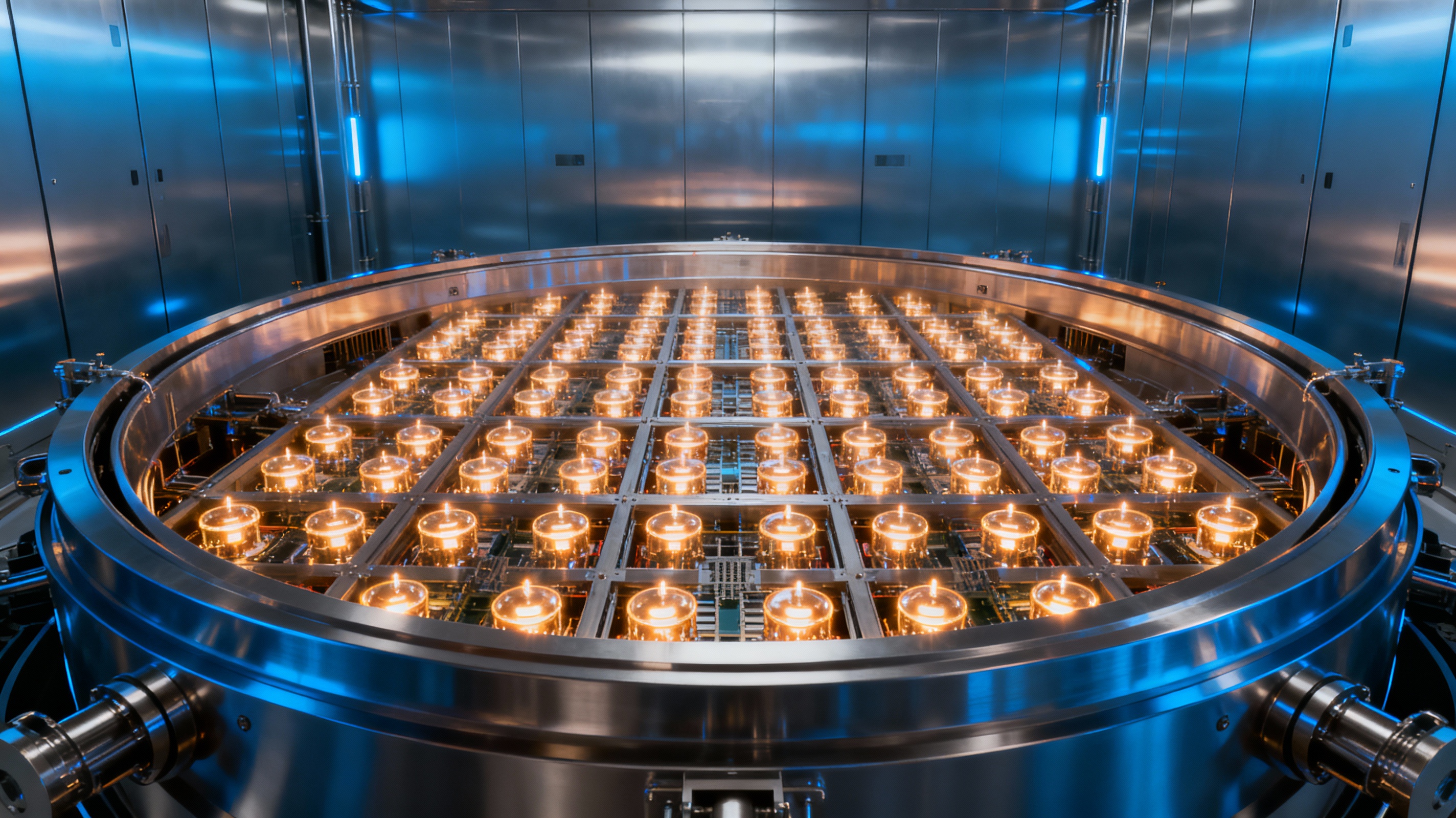
AbstractUnsupervised representation learning presents new opportunities for advancing Quantum Architecture Search (QAS) on Noisy Intermediate-Scale Quantum (NISQ) devices. QAS is designed to optimize quantum circuits for Variational Quantum Algorithms (VQAs). Most QAS algorithms tightly couple the search space and search algorithm, typically requiring the evaluation of numerous quantum circuits, resulting in high computational costs and limiting scalability to larger quantum circuits. Predictor-based QAS algorithms mitigate this issue by estimating circuit performance based on structure or embedding. However, these methods often demand time-intensive labeling to optimize gate parameters across many circuits, which is crucial for training accurate predictors. Inspired by the classical neural architecture search algorithm $Arch2vec$, we investigate the potential of unsupervised representation learning for QAS without relying on predictors. Our framework decouples unsupervised architecture representation learning from the search process, enabling the learned representations to be applied across various downstream tasks. Additionally, it integrates an improved quantum circuit graph encoding scheme, addressing the limitations of existing representations and enhancing search efficiency. This predictor-free approach removes the need for large labeled datasets. During the search, we employ REINFORCE and Bayesian Optimization to explore the latent representation space and compare their performance against baseline methods. We further validate our approach by executing the best-discovered MaxCut circuits on IBM's ibm_sherbrooke quantum processor, confirming that the architectures retain optimal performance even under real hardware noise. Our results demonstrate that the framework efficiently identifies high-performing quantum circuits with fewer search iterations.Featured image: Unsupervised representation learning for quantum circuit architecture search. Quantum circuits are encoded as graphs and mapped into a continuous latent space, enabling efficient exploration of high-performing architectures using reinforcement learning and Bayesian optimization without performance predictors.Popular summaryDesigning good quantum circuits is one of the main challenges in near-term quantum computing, where devices are noisy and resources are limited. Traditionally, finding effective circuit architectures requires evaluating a large number of candidates, which is expensive and does not scale well. In this work, we introduce a new approach that uses unsupervised machine learning to represent quantum circuit structures in a compact, continuous space. By learning these representations without performance labels, we decouple circuit representation learning from the search process. This allows standard optimization methods, such as reinforcement learning and Bayesian optimization, to efficiently explore the space of possible quantum circuits. We demonstrate that our method can discover high-performing quantum circuits with significantly fewer evaluations than existing approaches. We validate our results across several quantum computing tasks and further show that the best circuits transfer successfully from simulation to real quantum hardware. Our findings suggest that unsupervised representation learning is a powerful tool for scalable quantum circuit design on near-term quantum devices.► BibTeX data@article{Sun2026quantumarchitecture, doi = {10.22331/q-2026-02-03-1994}, url = {https://doi.org/10.22331/q-2026-02-03-1994}, title = {Quantum {A}rchitecture {S}earch with {U}nsupervised {R}epresentation {L}earning}, author = {Sun, Yize and Wu, Zixin and Tresp, Volker and Ma, Yunpu}, journal = {{Quantum}}, issn = {2521-327X}, publisher = {{Verein zur F{\"{o}}rderung des Open Access Publizierens in den Quantenwissenschaften}}, volume = {10}, pages = {1994}, month = feb, year = {2026} }► References [1] Jonas Stein, Michael Poppel, Philip Adamczyk, Ramona Fabry, Zixin Wu, Michael Kölle, Jonas Nüßlein, Daniëlle Schuman, Philipp Altmann, Thomas Ehmer, Vijay Narasimhan, and Claudia Linnhoff-Popien. ``Benchmarking quantum surrogate models on scarce and noisy data''. In Proceedings of the 16th International Conference on Agents and Artificial Intelligence. Page 352–359. SCITEPRESS - Science and Technology Publications (2024). https://doi.org/10.5220/0012348900003636 [2] Zhaobin Wang, Minzhe Xu, and Yaonan Zhang. ``Review of quantum image processing''. Archives of Computational Methods in Engineering 29, 737–761 (2022). https://doi.org/10.1007/s11831-021-09599-2 [3] Andrea Skolik, Sofiene Jerbi, and Vedran Dunjko. ``Quantum agents in the Gym: a variational quantum algorithm for deep Q-learning''. Quantum 6, 720 (2022). https://doi.org/10.22331/q-2022-05-24-720 [4] Yunpu Ma, Volker Tresp, Liming Zhao, and Yuyi Wang. ``Variational quantum circuit model for knowledge graph embedding''.
Advanced Quantum Technologies 2 (2019). https://doi.org/10.1002/qute.201800078 [5] Shi-Xin Zhang, Chang-Yu Hsieh, Shengyu Zhang, and Hong Yao. ``Differentiable quantum architecture search''. Quantum Science and Technology 7, 045023 (2022). https://doi.org/10.1088/2058-9565/ac87cd [6] Alessandro Giovagnoli, Volker Tresp, Yunpu Ma, and Matthias Schubert. ``Qneat: Natural evolution of variational quantum circuit architecture''. In Proceedings of the Companion Conference on Genetic and Evolutionary Computation. Page 647–650. GECCO ’23 Companion. ACM (2023). https://doi.org/10.1145/3583133.3590675 [7] Yuxuan Du, Tao Huang, Shan You, Min-Hsiu Hsieh, and Dacheng Tao. ``Quantum circuit architecture search for variational quantum algorithms''. npj Quantum Information 8 (2022). https://doi.org/10.1038/s41534-022-00570-y [8] John Preskill. ``Quantum computing in the nisq era and beyond''. Quantum 2, 79 (2018). https://doi.org/10.22331/q-2018-08-06-79 [9] Marco Cerezo, Andrew Arrasmith, Ryan Babbush, Simon C Benjamin, Suguru Endo, Keisuke Fujii, Jarrod R McClean, Kosuke Mitarai, Xiao Yuan, Lukasz Cincio, et al. ``Variational quantum algorithms''.
Nature Reviews Physics 3, 625–644 (2021). https://doi.org/10.1038/s42254-021-00348-9 [10] Sayantan Pramanik, M Girish Chandra, C V Sridhar, Aniket Kulkarni, Prabin Sahoo, Chethan D V Vishwa, Hrishikesh Sharma, Vidyut Navelkar, Sudhakara Poojary, Pranav Shah, and Manoj Nambiar. ``A quantum-classical hybrid method for image classification and segmentation''. In 2022 IEEE/ACM 7th Symposium on Edge Computing (SEC). Pages 450–455. (2022). https://doi.org/10.1109/SEC54971.2022.00068 [11] David Amaro, Matthias Rosenkranz, Nathan Fitzpatrick, Koji Hirano, and Mattia Fiorentini. ``A case study of variational quantum algorithms for a job shop scheduling problem''. EPJ Quantum Technology 9 (2022). https://doi.org/10.1140/epjqt/s40507-022-00123-4 [12] Jules Tilly, Hongxiang Chen, Shuxiang Cao, Dario Picozzi, Kanav Setia, Ying Li, Edward Grant, Leonard Wossnig, Ivan Rungger, George H. Booth, and Jonathan Tennyson. ``The variational quantum eigensolver: A review of methods and best practices''. Physics Reports 986, 1–128 (2022). https://doi.org/10.1016/j.physrep.2022.08.003 [13] Alberto Peruzzo, Jarrod McClean, Peter Shadbolt, Man-Hong Yung, Xiao-Qi Zhou, Peter J. Love, Alán Aspuru-Guzik, and Jeremy L. O’Brien. ``A variational eigenvalue solver on a photonic quantum processor''. Nature Communications 5 (2014). https://doi.org/10.1038/ncomms5213 [14] Alec Radford, Luke Metz, and Soumith Chintala. ``Unsupervised representation learning with deep convolutional generative adversarial networks'' (2016). arXiv:1511.06434. arXiv:1511.06434 [15] Shen Yan, Yu Zheng, Wei Ao, Xiao Zeng, and Mi Zhang. ``Does unsupervised architecture representation learning help neural architecture search?''. In Advances in Neural Information Processing Systems. Volume 33, pages 12486–12498. (2020). url: https://dl.acm.org/doi/abs/10.5555/3495724.3496771. https://dl.acm.org/doi/abs/10.5555/3495724.3496771 [16] Muhan Zhang, Shali Jiang, Zhicheng Cui, Roman Garnett, and Yixin Chen. ``D-vae: A variational autoencoder for directed acyclic graphs''. In Advances in Neural Information Processing Systems. Pages 1586–1598. (2019). url: https://dl.acm.org/doi/10.5555/3454287.3454429. https://dl.acm.org/doi/10.5555/3454287.3454429 [17] Shirui Pan, Ruiqi Hu, Guodong Long, Jing Jiang, Lina Yao, and Chengqi Zhang. ``Adversarially regularized graph autoencoder for graph embedding''. In Proceedings of the Twenty-Seventh International Joint Conference on Artificial Intelligence. Page 2609–2615. IJCAI-2018.
International Joint Conferences on Artificial Intelligence Organization (2018). https://doi.org/10.24963/ijcai.2018/362 [18] Daixin Wang, Peng Cui, and Wenwu Zhu. ``Structural deep network embedding''. In Proceedings of the 22nd ACM SIGKDD International Conference on Knowledge Discovery and Data Mining. Page 1225–1234. KDD ’16. ACM (2016). https://doi.org/10.1145/2939672.2939753 [19] Shi-Xin Zhang, Chang-Yu Hsieh, Shengyu Zhang, and Hong Yao. ``Neural predictor based quantum architecture search''. Machine Learning: Science and Technology 2, 045027 (2021). https://doi.org/10.1088/2632-2153/ac28dd [20] Zhimin He, Maijie Deng, Shenggen Zheng, Lvzhou Li, and Haozhen Situ. ``Gsqas: graph self-supervised quantum architecture search''. Physica A: Statistical Mechanics and its Applications 630, 129286 (2023). https://doi.org/10.2139/ssrn.4501980 [21] Sukin Sim, Peter D. Johnson, and Alán Aspuru‐Guzik. ``Expressibility and entangling capability of parameterized quantum circuits for hybrid quantum‐classical algorithms''.
Advanced Quantum Technologies 2 (2019). https://doi.org/10.1002/qute.201900070 [22] Yuxuan Du, Min-Hsiu Hsieh, Tongliang Liu, and Dacheng Tao. ``Expressive power of parametrized quantum circuits''.
Physical Review Research 2 (2020). https://doi.org/10.1103/physrevresearch.2.033125 [23] Marcello Benedetti, Erika Lloyd, Stefan Sack, and Mattia Fiorentini. ``Parameterized quantum circuits as machine learning models''. Quantum Science and Technology 4, 043001 (2019). https://doi.org/10.1088/2058-9565/ab4eb5 [24] Yeong-Cherng Liang, Yu-Hao Yeh, Paulo E M F Mendonça, Run Yan Teh, Margaret D Reid, and Peter D Drummond. ``Quantum fidelity measures for mixed states''. Reports on Progress in Physics 82, 076001 (2019). https://doi.org/10.1088/1361-6633/ab1ca4 [25] Svatopluk Poljak and Franz Rendl. ``Solving the max-cut problem using eigenvalues''.
Discrete Applied Mathematics 62, 249–278 (1995). https://doi.org/10.1016/0166-218x(94)00155-7 [26] Julie Jiang, Li-Ping Liu, and Soha Hassoun. ``Learning graph representations of biochemical networks and its application to enzymatic link prediction''. Bioinformatics 37, 793–799 (2020). https://doi.org/10.1093/bioinformatics/btaa881 [27] Yinghan Shen, Xuhui Jiang, Zijian Li, Yuanzhuo Wang, Chengjin Xu, Huawei Shen, and Xueqi Cheng. ``Uniskgrep: A unified representation learning framework of social network and knowledge graph''. Neural Networks 158, 142–153 (2023). https://doi.org/10.1016/j.neunet.2022.11.010 [28] Zongxi Li, Haoran Xie, Guandong Xu, Qing Li, Mingming Leng, and Chi Zhou. ``Towards purchase prediction: A transaction-based setting and a graph-based method leveraging price information''. Pattern Recognition 113, 107824 (2021). https://doi.org/10.1016/j.patcog.2021.107824 [29] M.E.J. Newman. ``The structure of scientific collaboration networks''. Page 221–226.
Princeton University Press. (2011). https://doi.org/10.1515/9781400841356.221 [30] Bryan Perozzi, Rami Al-Rfou, and Steven Skiena. ``Deepwalk: online learning of social representations''. In Proceedings of the 20th ACM SIGKDD international conference on Knowledge discovery and data mining. Page 701–710. KDD ’14. ACM (2014). https://doi.org/10.1145/2623330.2623732 [31] Aditya Grover and Jure Leskovec. ``Node2vec: Scalable feature learning for networks''. In Proceedings of the 22nd ACM SIGKDD International Conference on Knowledge Discovery and Data Mining. Page 855–864. KDD ’16. ACM (2016). https://doi.org/10.1145/2939672.2939754 [32] Jian Tang, Meng Qu, Mingzhe Wang, Ming Zhang, Jun Yan, and Qiaozhu Mei. ``Line: Large-scale information network embedding''. In Proceedings of the 24th International Conference on World Wide Web. Page 1067–1077. WWW ’15.
International World Wide Web Conferences Steering Committee (2015). https://doi.org/10.1145/2736277.2741093 [33] Thomas N. Kipf and Max Welling. ``Variational graph auto-encoders'' (2016). arXiv:1611.07308. arXiv:1611.07308 [34] William L. Hamilton, Rex Ying, and Jure Leskovec. ``Inductive representation learning on large graphs''. In Advances in Neural Information Processing Systems. Volume 30, pages 1024–1034. (2017). https://doi.org/10.48550/arXiv.1706.02216 [35] Petar Veličković, William Fedus, William L. Hamilton, Pietro Liò, Yoshua Bengio, and R Devon Hjelm. ``Deep graph infomax''.
In International Conference on Learning Representations (ICLR). (2019). url: https://openreview.net/forum?id=rklz9iAcKQ. https://openreview.net/forum?id=rklz9iAcKQ [36] Fan-Yun Sun, Jordan Hoffmann, Vikas Verma, and Jian Tang. ``Infograph: Unsupervised and semi-supervised graph-level representation learning via mutual information maximization''.
In International Conference on Learning Representations (ICLR). (2020). url: https://openreview.net/forum?id=r1lfF2NYvH. https://openreview.net/forum?id=r1lfF2NYvH [37] Zhen Peng, Wenbing Huang, Minnan Luo, Qinghua Zheng, Yu Rong, Tingyang Xu, and Junzhou Huang. ``Graph representation learning via graphical mutual information maximization''. In Proceedings of The Web Conference 2020. WWW ’20. ACM (2020). https://doi.org/10.1145/3366423.3380112 [38] Keyulu Xu, Weihua Hu, Jure Leskovec, and Stefanie Jegelka. ``How powerful are graph neural networks?'' (2019). arXiv:1810.00826. arXiv:1810.00826 [39] Boris Weisfeiler and A. A. Lehman. ``A reduction of a graph to a canonical form and an algebra arising during this reduction''. Nauchno-Technicheskaya Informatsia, Series 2 9, 12–16 (1968). url: https://www.bibsonomy.org/bibtex/2d69974889cbfc06859c224edb0c9791d/sxkdz. https://www.bibsonomy.org/bibtex/2d69974889cbfc06859c224edb0c9791d/sxkdz [40] Daniel Stilck França and Raul García-Patrón. ``Limitations of optimization algorithms on noisy quantum devices''. Nature Physics 17, 1221–1227 (2021). https://doi.org/10.1038/s41567-021-01356-3 [41] Jarrod R. McClean, Sergio Boixo, Vadim N. Smelyanskiy, Ryan Babbush, and Hartmut Neven. ``Barren plateaus in quantum neural network training landscapes''. Nature Communications 9 (2018). https://doi.org/10.1038/s41467-018-07090-4 [42] Samson Wang, Enrico Fontana, M. Cerezo, Kunal Sharma, Akira Sone, Lukasz Cincio, and Patrick J. Coles. ``Noise-induced barren plateaus in variational quantum algorithms''. Nature Communications 12 (2021). https://doi.org/10.1038/s41467-021-27045-6 [43] Mohammad Pirhooshyaran and Tamás Terlaky. ``Quantum circuit design search''.
Quantum Machine Intelligence 3, 25 (2021). https://doi.org/10.1007/s42484-021-00051-z [44] Xin Dai, Tzu-Chieh Wei, Shinjae Yoo, and Samuel Yen-Chi Chen. ``Quantum machine learning architecture search via deep reinforcement learning''. In 2024 IEEE International Conference on Quantum Computing and Engineering (QCE). Page 1525–1534. IEEE (2024). https://doi.org/10.1109/qce60285.2024.00179 [45] Mateusz Ostaszewski, Lea M. Trenkwalder, Wojciech Masarczyk, Eleanor Scerri, and Vedran Dunjko. ``Reinforcement learning for optimization of variational quantum circuit architectures''. In Advances in Neural Information Processing Systems. Volume 34, pages 1024–1034. (2021). url: https://arxiv.org/abs/2103.16089. arXiv:2103.16089 [46] Sami Khairy, Ruslan Shaydulin, Lukasz Cincio, Yuri Alexeev, and Prasanna Balaprakash. ``Learning to optimize variational quantum circuits to solve combinatorial problems''. Proceedings of the AAAI Conference on Artificial Intelligence 34, 2367–2375 (2020). https://doi.org/10.1609/aaai.v34i03.5616 [47] Thomas Fösel, Murphy Yuezhen Niu, Florian Marquardt, and Li Li. ``Quantum circuit optimization with deep reinforcement learning'' (2021). arXiv:2103.07585. arXiv:2103.07585 [48] Wenjie Wu, Ge Yan, Xudong Lu, Kaisen Pan, and Junchi Yan. ``QuantumDARTS: Differentiable quantum architecture search for variational quantum algorithms''.
In Andreas Krause, Emma Brunskill, Kyunghyun Cho, Barbara Engelhardt, Sivan Sabato, and Jonathan Scarlett, editors, Proceedings of the 40th International Conference on Machine Learning. Volume 202 of Proceedings of Machine Learning Research, pages 37745–37764. PMLR (2023). url: https://proceedings.mlr.press/v202/wu23v.html. https://proceedings.mlr.press/v202/wu23v.html [49] Lukasz Cincio, Kenneth Rudinger, Mohan Sarovar, and Patrick J Coles. ``Machine learning of noise-resilient quantum circuits''. PRX Quantum 2, 010324 (2021). https://doi.org/10.1103/PRXQuantum.2.010324 [50] D. Chivilikhin, A. Samarin, V. Ulyantsev, I. Iorsh, A. R. Oganov, and O. Kyriienko. ``Mog-vqe: Multiobjective genetic variational quantum eigensolver'' (2020). arXiv:2007.04424. arXiv:2007.04424 [51] Anqi Zhang and Shengmei Zhao. ``Evolutionary-based searching method for quantum circuit architecture''.
Quantum Information Processing 22 (2023). https://doi.org/10.1007/s11128-023-04033-x [52] Li Ding and Lee Spector. ``Evolutionary quantum architecture search for parametrized quantum circuits''. In Proceedings of the Genetic and Evolutionary Computation Conference Companion. Page 2190–2195. GECCO ’22. ACM (2022). https://doi.org/10.1145/3520304.3534012 [53] Yuhan Huang, Qingyu Li, Xiaokai Hou, Rebing Wu, Man-Hong Yung, Abolfazl Bayat, and Xiaoting Wang. ``Robust resource-efficient quantum variational ansatz through an evolutionary algorithm''. Physical Review A 105, 052414 (2022). https://doi.org/10.1103/PhysRevA.105.052414 [54] Lukas Franken, Bogdan Georgiev, Sascha Mucke, Moritz Wolter, Raoul Heese, Christian Bauckhage, and Nico Piatkowski. ``Quantum circuit evolution on nisq devices''. In 2022 IEEE Congress on Evolutionary Computation (CEC). Pages 1–8. IEEE (2022). https://doi.org/10.1109/CEC55065.2022.9870269 [55] Ho Lun Tang, V.O. Shkolnikov, George S. Barron, Harper R. Grimsley, Nicholas J. Mayhall, Edwin Barnes, and Sophia E. Economou. ``Qubit-adapt-vqe: An adaptive algorithm for constructing hardware-efficient ansätze on a quantum processor''. PRX Quantum 2 (2021). https://doi.org/10.1103/prxquantum.2.020310 [56] Yuhan Huang, Siyuan Jin, Bei Zeng, and Qiming Shao. ``Adaptive diversity-based quantum circuit architecture search''. Phys. Rev. Res. 6, 033033 (2024). https://doi.org/10.1103/PhysRevResearch.6.033033 [57] Trong Duong, Sang T. Truong, Minh Tam, Bao Bach, Ju-Young Ryu, and June-Koo Kevin Rhee. ``Quantum neural architecture search with quantum circuits metric and bayesian optimization'' (2022). arXiv:2206.14115. arXiv:2206.14115 [58] Zhimin He, Xuefen Zhang, Chuangtao Chen, Zhiming Huang, Yan Zhou, and Haozhen Situ. ``A gnn-based predictor for quantum architecture search''.
Quantum Information Processing 22, 128 (2023). https://doi.org/10.1007/s11128-023-03881-x [59] John Schulman, Filip Wolski, Prafulla Dhariwal, Alec Radford, and Oleg Klimov. ``Proximal policy optimization algorithms'' (2017). arXiv:1707.06347. arXiv:1707.06347 [60] Shengyi Huang, Anssi Kanervisto, Antonin Raffin, Weixun Wang, Santiago Ontañón, and Rousslan Fernand Julien Dossa. ``A2c is a special case of ppo'' (2022). arXiv:2205.09123. arXiv:2205.09123 [61] Ronald J. Williams. ``Simple statistical gradient-following algorithms for connectionist reinforcement learning''. Page 5–32. Springer US. (1992). https://doi.org/10.1007/978-1-4615-3618-5_2 [62] Jasper Snoek, Oren Rippel, Kevin Swersky, Ryan Kiros, Nadathur Satish, Narayanan Sundaram, Md.
Mostofa Ali Patwary, Prabhat, and Ryan P. Adams. ``Scalable bayesian optimization using deep neural networks''.
In Francis Bach and David Blei, editors, Proceedings of the 32nd International Conference on Machine Learning. Volume 37 of Proceedings of Machine Learning Research, pages 2171–2180. Lille, France (2015). PMLR. url: https://proceedings.mlr.press/v37/snoek15.html. https://proceedings.mlr.press/v37/snoek15.html [63] J. Močkus. ``On bayesian methods for seeking the extremum''. Page 400–404.
Springer Berlin Heidelberg. (1975). https://doi.org/10.1007/978-3-662-38527-2_55 [64] Jonathon Shlens. ``A tutorial on principal component analysis'' (2014). arXiv:1404.1100. arXiv:1404.1100 [65] Laurens van der Maaten and Geoffrey Hinton. ``Visualizing data using t-sne''. Journal of Machine Learning Research 9, 2579–2605 (2008). url: https://www.jmlr.org/papers/volume9/vandermaaten08a/vandermaaten08a.pdf. https://www.jmlr.org/papers/volume9/vandermaaten08a/vandermaaten08a.pdf [66] OpenAI. ``ChatGPT'' (2024). https://openai.com/chatgpt. https://openai.com/chatgpt [67] Javier Villalba-Diez, Ana González-Marcos, and Joaquín B. Ordieres-Meré. ``Improvement of quantum approximate optimization algorithm for max–cut problems''. Sensors 22, 244 (2021). https://doi.org/10.3390/s22010244Cited byCould not fetch Crossref cited-by data during last attempt 2026-02-03 12:41:37: Could not fetch cited-by data for 10.22331/q-2026-02-03-1994 from Crossref. This is normal if the DOI was registered recently. Could not fetch ADS cited-by data during last attempt 2026-02-03 12:41:37: No response from ADS or unable to decode the received json data when getting the list of citing works.This Paper is published in Quantum under the Creative Commons Attribution 4.0 International (CC BY 4.0) license. Copyright remains with the original copyright holders such as the authors or their institutions. AbstractUnsupervised representation learning presents new opportunities for advancing Quantum Architecture Search (QAS) on Noisy Intermediate-Scale Quantum (NISQ) devices. QAS is designed to optimize quantum circuits for Variational Quantum Algorithms (VQAs). Most QAS algorithms tightly couple the search space and search algorithm, typically requiring the evaluation of numerous quantum circuits, resulting in high computational costs and limiting scalability to larger quantum circuits. Predictor-based QAS algorithms mitigate this issue by estimating circuit performance based on structure or embedding. However, these methods often demand time-intensive labeling to optimize gate parameters across many circuits, which is crucial for training accurate predictors. Inspired by the classical neural architecture search algorithm $Arch2vec$, we investigate the potential of unsupervised representation learning for QAS without relying on predictors. Our framework decouples unsupervised architecture representation learning from the search process, enabling the learned representations to be applied across various downstream tasks. Additionally, it integrates an improved quantum circuit graph encoding scheme, addressing the limitations of existing representations and enhancing search efficiency. This predictor-free approach removes the need for large labeled datasets. During the search, we employ REINFORCE and Bayesian Optimization to explore the latent representation space and compare their performance against baseline methods. We further validate our approach by executing the best-discovered MaxCut circuits on IBM's ibm_sherbrooke quantum processor, confirming that the architectures retain optimal performance even under real hardware noise. Our results demonstrate that the framework efficiently identifies high-performing quantum circuits with fewer search iterations.Featured image: Unsupervised representation learning for quantum circuit architecture search. Quantum circuits are encoded as graphs and mapped into a continuous latent space, enabling efficient exploration of high-performing architectures using reinforcement learning and Bayesian optimization without performance predictors.Popular summaryDesigning good quantum circuits is one of the main challenges in near-term quantum computing, where devices are noisy and resources are limited. Traditionally, finding effective circuit architectures requires evaluating a large number of candidates, which is expensive and does not scale well. In this work, we introduce a new approach that uses unsupervised machine learning to represent quantum circuit structures in a compact, continuous space. By learning these representations without performance labels, we decouple circuit representation learning from the search process. This allows standard optimization methods, such as reinforcement learning and Bayesian optimization, to efficiently explore the space of possible quantum circuits. We demonstrate that our method can discover high-performing quantum circuits with significantly fewer evaluations than existing approaches. We validate our results across several quantum computing tasks and further show that the best circuits transfer successfully from simulation to real quantum hardware. Our findings suggest that unsupervised representation learning is a powerful tool for scalable quantum circuit design on near-term quantum devices.► BibTeX data@article{Sun2026quantumarchitecture, doi = {10.22331/q-2026-02-03-1994}, url = {https://doi.org/10.22331/q-2026-02-03-1994}, title = {Quantum {A}rchitecture {S}earch with {U}nsupervised {R}epresentation {L}earning}, author = {Sun, Yize and Wu, Zixin and Tresp, Volker and Ma, Yunpu}, journal = {{Quantum}}, issn = {2521-327X}, publisher = {{Verein zur F{\"{o}}rderung des Open Access Publizierens in den Quantenwissenschaften}}, volume = {10}, pages = {1994}, month = feb, year = {2026} }► References [1] Jonas Stein, Michael Poppel, Philip Adamczyk, Ramona Fabry, Zixin Wu, Michael Kölle, Jonas Nüßlein, Daniëlle Schuman, Philipp Altmann, Thomas Ehmer, Vijay Narasimhan, and Claudia Linnhoff-Popien. ``Benchmarking quantum surrogate models on scarce and noisy data''. In Proceedings of the 16th International Conference on Agents and Artificial Intelligence. Page 352–359. SCITEPRESS - Science and Technology Publications (2024). https://doi.org/10.5220/0012348900003636 [2] Zhaobin Wang, Minzhe Xu, and Yaonan Zhang. ``Review of quantum image processing''. Archives of Computational Methods in Engineering 29, 737–761 (2022). https://doi.org/10.1007/s11831-021-09599-2 [3] Andrea Skolik, Sofiene Jerbi, and Vedran Dunjko. ``Quantum agents in the Gym: a variational quantum algorithm for deep Q-learning''. Quantum 6, 720 (2022). https://doi.org/10.22331/q-2022-05-24-720 [4] Yunpu Ma, Volker Tresp, Liming Zhao, and Yuyi Wang. ``Variational quantum circuit model for knowledge graph embedding''.
Advanced Quantum Technologies 2 (2019). https://doi.org/10.1002/qute.201800078 [5] Shi-Xin Zhang, Chang-Yu Hsieh, Shengyu Zhang, and Hong Yao. ``Differentiable quantum architecture search''. Quantum Science and Technology 7, 045023 (2022). https://doi.org/10.1088/2058-9565/ac87cd [6] Alessandro Giovagnoli, Volker Tresp, Yunpu Ma, and Matthias Schubert. ``Qneat: Natural evolution of variational quantum circuit architecture''. In Proceedings of the Companion Conference on Genetic and Evolutionary Computation. Page 647–650. GECCO ’23 Companion. ACM (2023). https://doi.org/10.1145/3583133.3590675 [7] Yuxuan Du, Tao Huang, Shan You, Min-Hsiu Hsieh, and Dacheng Tao. ``Quantum circuit architecture search for variational quantum algorithms''. npj Quantum Information 8 (2022). https://doi.org/10.1038/s41534-022-00570-y [8] John Preskill. ``Quantum computing in the nisq era and beyond''. Quantum 2, 79 (2018). https://doi.org/10.22331/q-2018-08-06-79 [9] Marco Cerezo, Andrew Arrasmith, Ryan Babbush, Simon C Benjamin, Suguru Endo, Keisuke Fujii, Jarrod R McClean, Kosuke Mitarai, Xiao Yuan, Lukasz Cincio, et al. ``Variational quantum algorithms''.
Nature Reviews Physics 3, 625–644 (2021). https://doi.org/10.1038/s42254-021-00348-9 [10] Sayantan Pramanik, M Girish Chandra, C V Sridhar, Aniket Kulkarni, Prabin Sahoo, Chethan D V Vishwa, Hrishikesh Sharma, Vidyut Navelkar, Sudhakara Poojary, Pranav Shah, and Manoj Nambiar. ``A quantum-classical hybrid method for image classification and segmentation''. In 2022 IEEE/ACM 7th Symposium on Edge Computing (SEC). Pages 450–455. (2022). https://doi.org/10.1109/SEC54971.2022.00068 [11] David Amaro, Matthias Rosenkranz, Nathan Fitzpatrick, Koji Hirano, and Mattia Fiorentini. ``A case study of variational quantum algorithms for a job shop scheduling problem''. EPJ Quantum Technology 9 (2022). https://doi.org/10.1140/epjqt/s40507-022-00123-4 [12] Jules Tilly, Hongxiang Chen, Shuxiang Cao, Dario Picozzi, Kanav Setia, Ying Li, Edward Grant, Leonard Wossnig, Ivan Rungger, George H. Booth, and Jonathan Tennyson. ``The variational quantum eigensolver: A review of methods and best practices''. Physics Reports 986, 1–128 (2022). https://doi.org/10.1016/j.physrep.2022.08.003 [13] Alberto Peruzzo, Jarrod McClean, Peter Shadbolt, Man-Hong Yung, Xiao-Qi Zhou, Peter J. Love, Alán Aspuru-Guzik, and Jeremy L. O’Brien. ``A variational eigenvalue solver on a photonic quantum processor''. Nature Communications 5 (2014). https://doi.org/10.1038/ncomms5213 [14] Alec Radford, Luke Metz, and Soumith Chintala. ``Unsupervised representation learning with deep convolutional generative adversarial networks'' (2016). arXiv:1511.06434. arXiv:1511.06434 [15] Shen Yan, Yu Zheng, Wei Ao, Xiao Zeng, and Mi Zhang. ``Does unsupervised architecture representation learning help neural architecture search?''. In Advances in Neural Information Processing Systems. Volume 33, pages 12486–12498. (2020). url: https://dl.acm.org/doi/abs/10.5555/3495724.3496771. https://dl.acm.org/doi/abs/10.5555/3495724.3496771 [16] Muhan Zhang, Shali Jiang, Zhicheng Cui, Roman Garnett, and Yixin Chen. ``D-vae: A variational autoencoder for directed acyclic graphs''. In Advances in Neural Information Processing Systems. Pages 1586–1598. (2019). url: https://dl.acm.org/doi/10.5555/3454287.3454429. https://dl.acm.org/doi/10.5555/3454287.3454429 [17] Shirui Pan, Ruiqi Hu, Guodong Long, Jing Jiang, Lina Yao, and Chengqi Zhang. ``Adversarially regularized graph autoencoder for graph embedding''. In Proceedings of the Twenty-Seventh International Joint Conference on Artificial Intelligence. Page 2609–2615. IJCAI-2018.
International Joint Conferences on Artificial Intelligence Organization (2018). https://doi.org/10.24963/ijcai.2018/362 [18] Daixin Wang, Peng Cui, and Wenwu Zhu. ``Structural deep network embedding''. In Proceedings of the 22nd ACM SIGKDD International Conference on Knowledge Discovery and Data Mining. Page 1225–1234. KDD ’16. ACM (2016). https://doi.org/10.1145/2939672.2939753 [19] Shi-Xin Zhang, Chang-Yu Hsieh, Shengyu Zhang, and Hong Yao. ``Neural predictor based quantum architecture search''. Machine Learning: Science and Technology 2, 045027 (2021). https://doi.org/10.1088/2632-2153/ac28dd [20] Zhimin He, Maijie Deng, Shenggen Zheng, Lvzhou Li, and Haozhen Situ. ``Gsqas: graph self-supervised quantum architecture search''. Physica A: Statistical Mechanics and its Applications 630, 129286 (2023). https://doi.org/10.2139/ssrn.4501980 [21] Sukin Sim, Peter D. Johnson, and Alán Aspuru‐Guzik. ``Expressibility and entangling capability of parameterized quantum circuits for hybrid quantum‐classical algorithms''.
Advanced Quantum Technologies 2 (2019). https://doi.org/10.1002/qute.201900070 [22] Yuxuan Du, Min-Hsiu Hsieh, Tongliang Liu, and Dacheng Tao. ``Expressive power of parametrized quantum circuits''.
Physical Review Research 2 (2020). https://doi.org/10.1103/physrevresearch.2.033125 [23] Marcello Benedetti, Erika Lloyd, Stefan Sack, and Mattia Fiorentini. ``Parameterized quantum circuits as machine learning models''. Quantum Science and Technology 4, 043001 (2019). https://doi.org/10.1088/2058-9565/ab4eb5 [24] Yeong-Cherng Liang, Yu-Hao Yeh, Paulo E M F Mendonça, Run Yan Teh, Margaret D Reid, and Peter D Drummond. ``Quantum fidelity measures for mixed states''. Reports on Progress in Physics 82, 076001 (2019). https://doi.org/10.1088/1361-6633/ab1ca4 [25] Svatopluk Poljak and Franz Rendl. ``Solving the max-cut problem using eigenvalues''.
Discrete Applied Mathematics 62, 249–278 (1995). https://doi.org/10.1016/0166-218x(94)00155-7 [26] Julie Jiang, Li-Ping Liu, and Soha Hassoun. ``Learning graph representations of biochemical networks and its application to enzymatic link prediction''. Bioinformatics 37, 793–799 (2020). https://doi.org/10.1093/bioinformatics/btaa881 [27] Yinghan Shen, Xuhui Jiang, Zijian Li, Yuanzhuo Wang, Chengjin Xu, Huawei Shen, and Xueqi Cheng. ``Uniskgrep: A unified representation learning framework of social network and knowledge graph''. Neural Networks 158, 142–153 (2023). https://doi.org/10.1016/j.neunet.2022.11.010 [28] Zongxi Li, Haoran Xie, Guandong Xu, Qing Li, Mingming Leng, and Chi Zhou. ``Towards purchase prediction: A transaction-based setting and a graph-based method leveraging price information''. Pattern Recognition 113, 107824 (2021). https://doi.org/10.1016/j.patcog.2021.107824 [29] M.E.J. Newman. ``The structure of scientific collaboration networks''. Page 221–226.
Princeton University Press. (2011). https://doi.org/10.1515/9781400841356.221 [30] Bryan Perozzi, Rami Al-Rfou, and Steven Skiena. ``Deepwalk: online learning of social representations''. In Proceedings of the 20th ACM SIGKDD international conference on Knowledge discovery and data mining. Page 701–710. KDD ’14. ACM (2014). https://doi.org/10.1145/2623330.2623732 [31] Aditya Grover and Jure Leskovec. ``Node2vec: Scalable feature learning for networks''. In Proceedings of the 22nd ACM SIGKDD International Conference on Knowledge Discovery and Data Mining. Page 855–864. KDD ’16. ACM (2016). https://doi.org/10.1145/2939672.2939754 [32] Jian Tang, Meng Qu, Mingzhe Wang, Ming Zhang, Jun Yan, and Qiaozhu Mei. ``Line: Large-scale information network embedding''. In Proceedings of the 24th International Conference on World Wide Web. Page 1067–1077. WWW ’15.
International World Wide Web Conferences Steering Committee (2015). https://doi.org/10.1145/2736277.2741093 [33] Thomas N. Kipf and Max Welling. ``Variational graph auto-encoders'' (2016). arXiv:1611.07308. arXiv:1611.07308 [34] William L. Hamilton, Rex Ying, and Jure Leskovec. ``Inductive representation learning on large graphs''. In Advances in Neural Information Processing Systems. Volume 30, pages 1024–1034. (2017). https://doi.org/10.48550/arXiv.1706.02216 [35] Petar Veličković, William Fedus, William L. Hamilton, Pietro Liò, Yoshua Bengio, and R Devon Hjelm. ``Deep graph infomax''.
In International Conference on Learning Representations (ICLR). (2019). url: https://openreview.net/forum?id=rklz9iAcKQ. https://openreview.net/forum?id=rklz9iAcKQ [36] Fan-Yun Sun, Jordan Hoffmann, Vikas Verma, and Jian Tang. ``Infograph: Unsupervised and semi-supervised graph-level representation learning via mutual information maximization''.
In International Conference on Learning Representations (ICLR). (2020). url: https://openreview.net/forum?id=r1lfF2NYvH. https://openreview.net/forum?id=r1lfF2NYvH [37] Zhen Peng, Wenbing Huang, Minnan Luo, Qinghua Zheng, Yu Rong, Tingyang Xu, and Junzhou Huang. ``Graph representation learning via graphical mutual information maximization''. In Proceedings of The Web Conference 2020. WWW ’20. ACM (2020). https://doi.org/10.1145/3366423.3380112 [38] Keyulu Xu, Weihua Hu, Jure Leskovec, and Stefanie Jegelka. ``How powerful are graph neural networks?'' (2019). arXiv:1810.00826. arXiv:1810.00826 [39] Boris Weisfeiler and A. A. Lehman. ``A reduction of a graph to a canonical form and an algebra arising during this reduction''. Nauchno-Technicheskaya Informatsia, Series 2 9, 12–16 (1968). url: https://www.bibsonomy.org/bibtex/2d69974889cbfc06859c224edb0c9791d/sxkdz. https://www.bibsonomy.org/bibtex/2d69974889cbfc06859c224edb0c9791d/sxkdz [40] Daniel Stilck França and Raul García-Patrón. ``Limitations of optimization algorithms on noisy quantum devices''. Nature Physics 17, 1221–1227 (2021). https://doi.org/10.1038/s41567-021-01356-3 [41] Jarrod R. McClean, Sergio Boixo, Vadim N. Smelyanskiy, Ryan Babbush, and Hartmut Neven. ``Barren plateaus in quantum neural network training landscapes''. Nature Communications 9 (2018). https://doi.org/10.1038/s41467-018-07090-4 [42] Samson Wang, Enrico Fontana, M. Cerezo, Kunal Sharma, Akira Sone, Lukasz Cincio, and Patrick J. Coles. ``Noise-induced barren plateaus in variational quantum algorithms''. Nature Communications 12 (2021). https://doi.org/10.1038/s41467-021-27045-6 [43] Mohammad Pirhooshyaran and Tamás Terlaky. ``Quantum circuit design search''.
Quantum Machine Intelligence 3, 25 (2021). https://doi.org/10.1007/s42484-021-00051-z [44] Xin Dai, Tzu-Chieh Wei, Shinjae Yoo, and Samuel Yen-Chi Chen. ``Quantum machine learning architecture search via deep reinforcement learning''. In 2024 IEEE International Conference on Quantum Computing and Engineering (QCE). Page 1525–1534. IEEE (2024). https://doi.org/10.1109/qce60285.2024.00179 [45] Mateusz Ostaszewski, Lea M. Trenkwalder, Wojciech Masarczyk, Eleanor Scerri, and Vedran Dunjko. ``Reinforcement learning for optimization of variational quantum circuit architectures''. In Advances in Neural Information Processing Systems. Volume 34, pages 1024–1034. (2021). url: https://arxiv.org/abs/2103.16089. arXiv:2103.16089 [46] Sami Khairy, Ruslan Shaydulin, Lukasz Cincio, Yuri Alexeev, and Prasanna Balaprakash. ``Learning to optimize variational quantum circuits to solve combinatorial problems''. Proceedings of the AAAI Conference on Artificial Intelligence 34, 2367–2375 (2020). https://doi.org/10.1609/aaai.v34i03.5616 [47] Thomas Fösel, Murphy Yuezhen Niu, Florian Marquardt, and Li Li. ``Quantum circuit optimization with deep reinforcement learning'' (2021). arXiv:2103.07585. arXiv:2103.07585 [48] Wenjie Wu, Ge Yan, Xudong Lu, Kaisen Pan, and Junchi Yan. ``QuantumDARTS: Differentiable quantum architecture search for variational quantum algorithms''.
In Andreas Krause, Emma Brunskill, Kyunghyun Cho, Barbara Engelhardt, Sivan Sabato, and Jonathan Scarlett, editors, Proceedings of the 40th International Conference on Machine Learning. Volume 202 of Proceedings of Machine Learning Research, pages 37745–37764. PMLR (2023). url: https://proceedings.mlr.press/v202/wu23v.html. https://proceedings.mlr.press/v202/wu23v.html [49] Lukasz Cincio, Kenneth Rudinger, Mohan Sarovar, and Patrick J Coles. ``Machine learning of noise-resilient quantum circuits''. PRX Quantum 2, 010324 (2021). https://doi.org/10.1103/PRXQuantum.2.010324 [50] D. Chivilikhin, A. Samarin, V. Ulyantsev, I. Iorsh, A. R. Oganov, and O. Kyriienko. ``Mog-vqe: Multiobjective genetic variational quantum eigensolver'' (2020). arXiv:2007.04424. arXiv:2007.04424 [51] Anqi Zhang and Shengmei Zhao. ``Evolutionary-based searching method for quantum circuit architecture''.
Quantum Information Processing 22 (2023). https://doi.org/10.1007/s11128-023-04033-x [52] Li Ding and Lee Spector. ``Evolutionary quantum architecture search for parametrized quantum circuits''. In Proceedings of the Genetic and Evolutionary Computation Conference Companion. Page 2190–2195. GECCO ’22. ACM (2022). https://doi.org/10.1145/3520304.3534012 [53] Yuhan Huang, Qingyu Li, Xiaokai Hou, Rebing Wu, Man-Hong Yung, Abolfazl Bayat, and Xiaoting Wang. ``Robust resource-efficient quantum variational ansatz through an evolutionary algorithm''. Physical Review A 105, 052414 (2022). https://doi.org/10.1103/PhysRevA.105.052414 [54] Lukas Franken, Bogdan Georgiev, Sascha Mucke, Moritz Wolter, Raoul Heese, Christian Bauckhage, and Nico Piatkowski. ``Quantum circuit evolution on nisq devices''. In 2022 IEEE Congress on Evolutionary Computation (CEC). Pages 1–8. IEEE (2022). https://doi.org/10.1109/CEC55065.2022.9870269 [55] Ho Lun Tang, V.O. Shkolnikov, George S. Barron, Harper R. Grimsley, Nicholas J. Mayhall, Edwin Barnes, and Sophia E. Economou. ``Qubit-adapt-vqe: An adaptive algorithm for constructing hardware-efficient ansätze on a quantum processor''. PRX Quantum 2 (2021). https://doi.org/10.1103/prxquantum.2.020310 [56] Yuhan Huang, Siyuan Jin, Bei Zeng, and Qiming Shao. ``Adaptive diversity-based quantum circuit architecture search''. Phys. Rev. Res. 6, 033033 (2024). https://doi.org/10.1103/PhysRevResearch.6.033033 [57] Trong Duong, Sang T. Truong, Minh Tam, Bao Bach, Ju-Young Ryu, and June-Koo Kevin Rhee. ``Quantum neural architecture search with quantum circuits metric and bayesian optimization'' (2022). arXiv:2206.14115. arXiv:2206.14115 [58] Zhimin He, Xuefen Zhang, Chuangtao Chen, Zhiming Huang, Yan Zhou, and Haozhen Situ. ``A gnn-based predictor for quantum architecture search''.
Quantum Information Processing 22, 128 (2023). https://doi.org/10.1007/s11128-023-03881-x [59] John Schulman, Filip Wolski, Prafulla Dhariwal, Alec Radford, and Oleg Klimov. ``Proximal policy optimization algorithms'' (2017). arXiv:1707.06347. arXiv:1707.06347 [60] Shengyi Huang, Anssi Kanervisto, Antonin Raffin, Weixun Wang, Santiago Ontañón, and Rousslan Fernand Julien Dossa. ``A2c is a special case of ppo'' (2022). arXiv:2205.09123. arXiv:2205.09123 [61] Ronald J. Williams. ``Simple statistical gradient-following algorithms for connectionist reinforcement learning''. Page 5–32. Springer US. (1992). https://doi.org/10.1007/978-1-4615-3618-5_2 [62] Jasper Snoek, Oren Rippel, Kevin Swersky, Ryan Kiros, Nadathur Satish, Narayanan Sundaram, Md.
Mostofa Ali Patwary, Prabhat, and Ryan P. Adams. ``Scalable bayesian optimization using deep neural networks''.
In Francis Bach and David Blei, editors, Proceedings of the 32nd International Conference on Machine Learning. Volume 37 of Proceedings of Machine Learning Research, pages 2171–2180. Lille, France (2015). PMLR. url: https://proceedings.mlr.press/v37/snoek15.html. https://proceedings.mlr.press/v37/snoek15.html [63] J. Močkus. ``On bayesian methods for seeking the extremum''. Page 400–404.
Springer Berlin Heidelberg. (1975). https://doi.org/10.1007/978-3-662-38527-2_55 [64] Jonathon Shlens. ``A tutorial on principal component analysis'' (2014). arXiv:1404.1100. arXiv:1404.1100 [65] Laurens van der Maaten and Geoffrey Hinton. ``Visualizing data using t-sne''. Journal of Machine Learning Research 9, 2579–2605 (2008). url: https://www.jmlr.org/papers/volume9/vandermaaten08a/vandermaaten08a.pdf. https://www.jmlr.org/papers/volume9/vandermaaten08a/vandermaaten08a.pdf [66] OpenAI. ``ChatGPT'' (2024). https://openai.com/chatgpt. https://openai.com/chatgpt [67] Javier Villalba-Diez, Ana González-Marcos, and Joaquín B. Ordieres-Meré. ``Improvement of quantum approximate optimization algorithm for max–cut problems''. Sensors 22, 244 (2021). https://doi.org/10.3390/s22010244Cited byCould not fetch Crossref cited-by data during last attempt 2026-02-03 12:41:37: Could not fetch cited-by data for 10.22331/q-2026-02-03-1994 from Crossref. This is normal if the DOI was registered recently. Could not fetch ADS cited-by data during last attempt 2026-02-03 12:41:37: No response from ADS or unable to decode the received json data when getting the list of citing works.This Paper is published in Quantum under the Creative Commons Attribution 4.0 International (CC BY 4.0) license. Copyright remains with the original copyright holders such as the authors or their institutions.