
Qolab, IQCC Launch John Martinis Grants for Superconducting Qubit Research
Understand this faster with AI


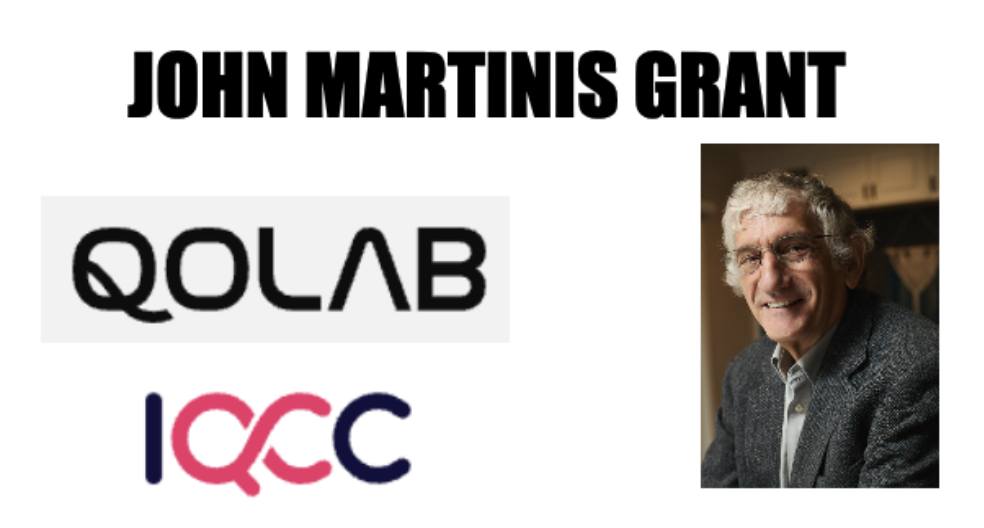
Insider Brief Qolab and IQCC have launched the John Martinis Grants to support experimental research and education in superconducting qubit physics following the 2025 Nobel Prize in Physics. The program offers research grants with processor access, a $5,000 stipend, and conference participation for advancing superconducting device control, alongside educator grants providing similar resources for classroom instruction. For 2026, two research grants and one educator grant will be awarded, with applications open from March 15 to June 15 and recipients selected by John Martinis and announced publicly in October. PRESS RELEASE — In honor of the 2025 Nobel Prize in Physics, Qolab and IQCC are proud to announce the John Martinis Grants for Experimental Superconducting Device Physics. The goal of the program is to provide research and training resources to the next generation of experimental physicists working on superconducting qubits. The first category of grants is open to researchers at academic institutions or national laboratories who are looking to advance the state of the art in superconducting device control, including characterization, calibration, and the design of novel multi-qubit gates using pulse-level control. Research grant awardees will receive up to 20 hours on Qolab’s latest processors hosted at IQCC, a $5,000 stipend from IQCC, and a ticket to the Adaptive Quantum Circuits (AQC) Conference. The second category of grants is open to educators who want to provide hands-on experience to the next generation of students through undergraduate or master’s-level courses in superconducting qubit control. Educator grant awardees will receive up to 10 hours of access to the quantum computer for classroom use, a $5,000 stipend from IQCC, and a ticket to the AQC Conference. Individuals may apply for both research and educator grants. For 2026, two research grants and one educator grant will be awarded. Grant recipients will be selected by John Martinis. Applications open March 15, 2026, and close June 15, 2026. Awardees will be notified privately in July/August, with a public announcement at the Adaptive Quantum Circuits Conference in October 2026.
Matt Swayne LinkedIn With a several-decades long background in journalism and communications, Matt Swayne has worked as a science communicator for an R1 university for more than 12 years, specializing in translating high tech and deep tech for the general audience. He has served as a writer, editor and analyst at The Quantum Insider since its inception. In addition to his service as a science communicator, Matt also develops courses to improve the media and communications skills of scientists and has taught courses. matt@thequantuminsider.com Share this article:
Tags
Source Information
Discussion
0 professional contributions
Sign in to join this professional discussion.
Be the first to add a constructive contribution.