
MIT designs computing component that uses waste heat 'as a form of information'
Understand this faster with AI


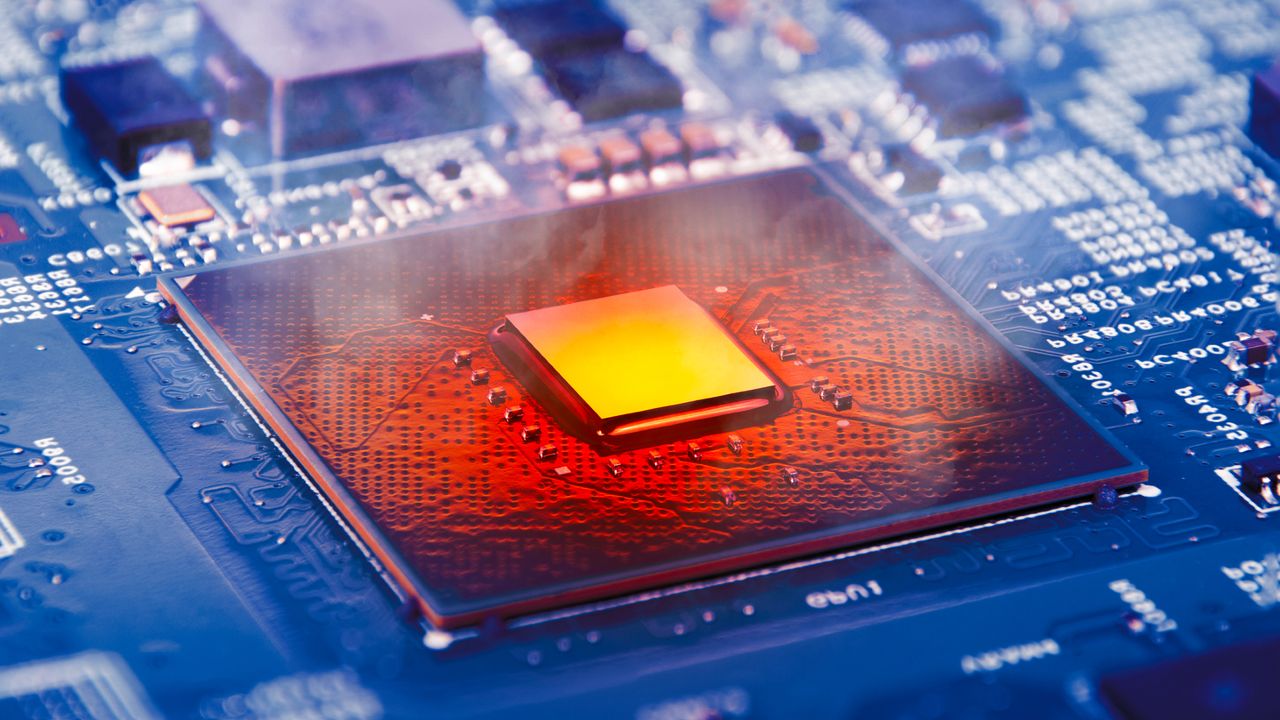
Proof of concept uses passive components to redirect heat across a chip, allowing temperature patterns to be used for data processing. When you purchase through links on our site, we may earn an affiliate commission. Here’s how it works. Get the world’s most fascinating discoveries delivered straight to your inbox.Become a Member in Seconds Unlock instant access to exclusive member features.You are now subscribedYour newsletter sign-up was successfulWant to add more newsletters?Sign up for the latest discoveries, groundbreaking research and fascinating breakthroughs that impact you and the wider world direct to your inbox.Feed your curiosity with an exclusive mystery every week, solved with science and delivered direct to your inbox before it's seen anywhere else.Sign up to our free science & technology newsletter for your weekly fix of fascinating articles, quick quizzes, amazing images, and moreBreaking space news, the latest updates on rocket launches, skywatching events and more!Sign up to our monthly entertainment newsletter to keep up with all our coverage of the latest sci-fi and space movies, tv shows, games and books.Discover this week's must-see night sky events, moon phases, and stunning astrophotos. Sign up for our skywatching newsletter and explore the universe with us!Get full access to premium articles, exclusive features and a growing list of member rewards.Scientists at MIT have published a proof of concept for new analog computing components that could allow electronic devices to process data using the heat they generate.In a study published Jan. 29 in the journal Physical Review Applied, the researchers designed microscopic silicon structures that precisely control how heat spreads across the surface of a chip.The structures, which are entirely passive and contain no electronics, use the natural laws of heat conduction to redistribute thermal energy toward points where it can be encoded as data.The approach represents a form of analog computing, in which continuous physical values — in this case, temperature and the flow of heat — are used to process information instead of binary 1s and 0s.The technique could be used to detect heat sources and measure temperature changes in electronics without increasing energy consumption. This would also eliminate the need for multiple temperature sensors that take up space on a chip, the researchers said.Provided the design can be scaled, the team hopes it could one day be embedded into microelectronic systems to make high-power computing tasks, such as artificial intelligence (AI) workloads, more energy-efficient."Most of the time, when you are performing computations in an electronic device, heat is the waste product. You often want to get rid of as much heat as you can. But here, we've taken the opposite approach by using heat as a form of information itself and showing that computing with heat is possible," lead study author, Caio Silva, a physics student at MIT, said in a statement.Get the world’s most fascinating discoveries delivered straight to your inbox.The work builds on MIT research from 2022 on the design of nanostructured materials capable of controlling heat flow.As heat flows through the silicon from hotter regions to cooler ones, the structures' internal geometry determines how much heat reaches each output point.The thermal output at these points can be measured and converted into a standard electrical signal using conventional on-chip sensors. The resulting signal can then be handled by other parts of a system, the scientists explained.In simulations, the structures performed simple matrix-vector multiplication with more than 99% accuracy, the team said in the study.—World's 1st mechanical qubit uses no light or electronics. It could lead to ultra-precise gravity-sensing tech.—Tapping into new 'probabilistic computing' paradigm can make AI chips use much less power, scientists say—MIT's chip stacking breakthrough could cut energy use in power-hungry AI processesMatrix multiplication underpins many machine learning and signal-processing tasks, though the team noted that scaling this approach to large language models (LLMs) would require millions of the linked silicon structures working together.The team next wants to explore applications in thermal management, heat-source detection and temperature-gradient monitoring in microelectronics, where the new structures could prevent chips from being damaged without requiring additional power.Study co-author Giuseppe Romano, a research scientist at MIT's Institute for Soldier Nanotechnologies, added in the statement: "We could directly detect such heat sources with these structures, and we can just plug them in without needing any digital components."Owen Hughes is a freelance writer and editor specializing in data and digital technologies. Previously a senior editor at ZDNET, Owen has been writing about tech for more than a decade, during which time he has covered everything from AI, cybersecurity and supercomputers to programming languages and public sector IT. Owen is particularly interested in the intersection of technology, life and work – in his previous roles at ZDNET and TechRepublic, he wrote extensively about business leadership, digital transformation and the evolving dynamics of remote work.You must confirm your public display name before commentingPlease logout and then login again, you will then be prompted to enter your display name.
Source Information
Discussion
0 professional contributions
Sign in to join this professional discussion.
Be the first to add a constructive contribution.