
Humans head to the moon for the first time in years
Understand this faster with AI


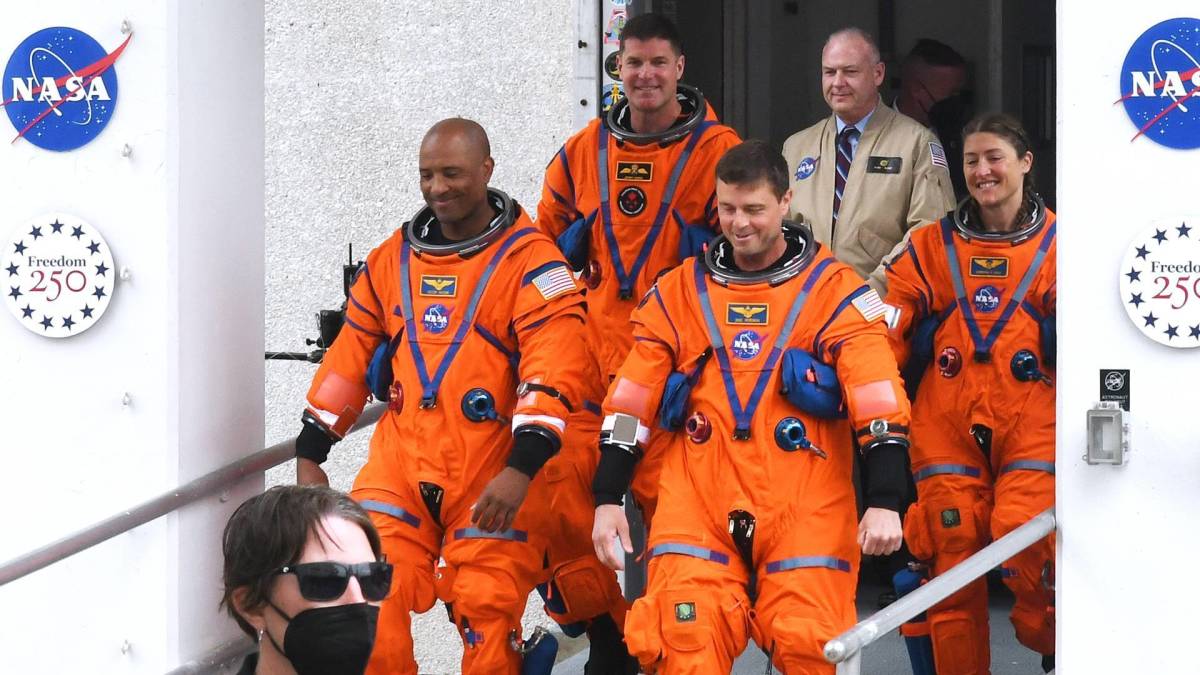
For more than half a century, the moon has been something humans could only look at. Wednesday, April 1, changed that.At 6:35 p.m. EDT, a 322-foot rocket carrying four astronauts lifted off from Kennedy Space Center in Florida and pointed toward the lunar sky, per NASA. "We have a beautiful moonrise, we're headed right at it," said Commander Reid Wiseman from inside the Orion capsule, five minutes into the flight, The Globe and Mail reported.It was the first time humans had traveled beyond low Earth orbit since the Apollo era ended in 1972. A lot has changed since then. So has the crew.Artemis II moon mission: who's on boardThe crew of four brings a historic combination of firsts.
Commander Reid Wiseman leads the mission. Victor Glover, the pilot, is the first person of color to travel beyond low Earth orbit.
Mission Specialist Christina Koch is the first woman to fly to the moon's vicinity. Jeremy Hansen of the Canadian Space Agency is the first non-American to travel beyond Earth's orbit, according to NBC News.Related: NASA watchdog says SpaceX moon landing is in trouble"Among the crew are the first woman, first person of color, and first Canadian on a lunar mission," said Vanessa Wyche, director of NASA's Johnson Space Center, noted NBC News.Koch already holds the record for the longest single spaceflight by a woman, at 328 days. Hansen will be the first Canadian to travel to the moon. Canada becomes only the second nation to send an astronaut on a lunar mission, The Globe and Mail reported.What Artemis II will actually doThis mission will not land on the moon. Artemis II is a systems validation test flight. The crew will fly a free-return trajectory around the moon's far side and return directly to Earth, indicated Al Jazeera.At its farthest point, Artemis II is expected to travel more than 250,000 miles from Earth, roughly 4,700 miles beyond the moon's far side. That will surpass the distance record set by Apollo 13 in 1970, making this crew the most remote travelers in human history, per NASA.The reentry speed of roughly 25,000 miles per hour is also expected to exceed Apollo 10's 1969 velocity record, making it the fastest crewed spacecraft return in history, NASA confirmed.Key Artemis II mission facts:Launch date: April 1, 2026, at 6:35 p.m. EDT from Kennedy Space Center, per NASA.Mission duration: Approximately 10 days, with splashdown in the Pacific Ocean off San Diego.Rocket: NASA's Space Launch System (SLS) with the Orion spacecraft.No lunar landing: The first crewed landing is now targeted for Artemis IV, according to Al Jazeera.Why this mission breaks records: Artemis II is expected to set new records for farthest distance and fastest reentry speed in crewed spaceflight history, NASA reported. Artemis II will surpass the distance record set by Apollo 13 in 1970.Paiz/Getty Images The road to the lunar missionThe mission faced two major delays. A liquid hydrogen leak during a simulated countdown pushed the launch from February to March. A helium flow issue then triggered a rollback to the Vehicle Assembly Building, pushing the launch to April, according to Fox News.More Tech Stocks:Morgan Stanley sets jaw-dropping Micron price target after eventNvidia’s China chip problem isn’t what most investors thinkQuantum Computing makes $110 million move nobody saw comingA final technical issue with the flight termination system surfaced in the final hours of the countdown but was quickly resolved, PBS NewsHour noted."The four of us, we are ready to go.
The team is ready to go. The vehicle is ready to go," Commander Wiseman said Sunday in a media briefing, NBC News reported.What comes next for ArtemisArtemis II is the test run that paves the way for everything that follows. Artemis III, now planned for mid-2027, will conduct rendezvous and docking tests with one or both lunar landers in low Earth orbit. Artemis IV, currently targeted for 2028, is when the first crewed lunar landing of the Artemis era is now expected, per Al Jazeera.SpaceX is developing the Starship Human Landing System, and Blue Origin is developing Blue Moon, as the two commercial lunar landers under consideration. Both will be tested in low Earth orbit during Artemis III before any crewed landing attempt.For now, the crew is on its way.Related: SpaceX gets the wakeup call it needs from the US government
Tags
Source Information
Discussion
0 professional contributions
Sign in to join this professional discussion.
Be the first to add a constructive contribution.