
Google’s drone hits Bay Area: Can they save stock slump?
Summarize this article with:


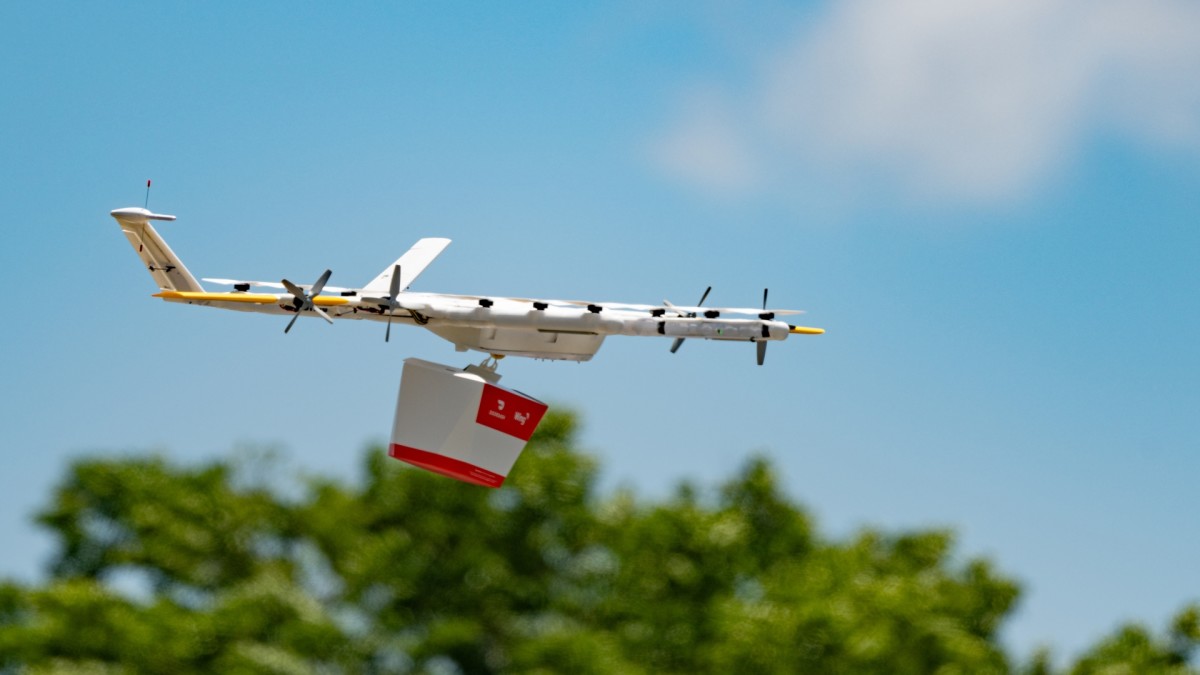
Alphabet is finally bringing its drone delivery unit, Wing, back to where it all began. In a move announced earlier this week, the company is scaling its ultra-fast residential drone service to the San Francisco Bay Area.It is a symbolic homecoming for the tech giant, as Wing was born in Google’s X, the Moonshot factory, right here in San Francisco in 2012. But while Wing is hitting major operational milestones, Alphabet’s stock is struggling to find a footing. Despite the high-tech expansion and some new updates to Gemini, like the Search Live feature, the company is facing pending lawsuits and was found liable in a social media addiction case, which is not boding well for the big tech’s stock.Scaling amidst stock slumpGoogle’s stock fell 2% on Friday, extending an 8% decline this week and a 12% drop over the past quarter. While the 69% stock price gain this past year is impressive, investors are concerned over rising Capital Expenditures and the massive energy costs associated with its AI ambitions.The Bay Area rollout is more than just a pilot, but a strategic play in the last-mile delivery market. Alphabet's stock is down 12% year to date.Shutterstock “From its founding, the Wing team recognized a global problem: that traditional last-mile delivery remained fundamentally slow, expensive, and inefficient for small, urgent, and local orders,” notes a company press release.More Tech Stocks:Morgan Stanley sets jaw-dropping Micron price target after eventNvidia’s China chip problem isn’t what most investors thinkQuantum Computing makes $110 million move nobody saw comingAnd Wing is trying to bridge the gap using its technology to deliver small packages to “homes in dense residential areas,” bypassing the Bay Area’s notorious traffic congestion.This 2026 rollout features Wing’s new logistics infrastructure. The drones are lightweight and highly automated, aiming to become a “groundbreaking technology” that makes it easier to obtain last-minute ingredients quickly.The Walmart factorWing’s growth is no longer speculative, with Alphabet bagging one of the world’s largest retailers, Walmart.Wing and Walmart are in the midst of a massive expansion, aiming for 270 drone-enabled delivery locations by 2027. This comes as Wing plans to add 150 more Walmart stores to its existing roster by next year, stretching from Los Angeles to Miami.Wing and Walmart currently provide drone delivery in the following areas:HoustonCharlotteDallas-Forth WorthAtlantaUpcoming locations:CincinnatiLos AngelesMiamiOrlandoSt. LouisTampaBay AreaGreater Houston“Whether it’s a last-minute ingredient for dinner, a must-have charger for a phone, or a late-night essential for a busy family, the strong adoption we’ve seen confirms that this is the future of convenience,” said Greg Cathey, Senior Vice President of Digital Fulfillment Transformation at Walmart in a statement.And now Wing is confident that its expansions will only continue, boasting that it's not whether “Wing and Walmart will deliver to your city, it's when,” he said.Competition: Battle for airspaceThe Bay Area is arguably one of the more challenging environments for Wing.San Francisco-based autonomous drone delivery company Zipline is Wing's biggest rival. Zipline also currently serves Pea Ridge and Dallas-Fort Worth and will soon expand to Houston, Phoenix, and Seattle-Tacoma.Zipline also recently surpassed 2 million commercial deliveries globally, raised over $600 million, and now has a valuation of $7.6 billion. But its US footprint is comparatively limited, as Zipline currently delivers in a few US cities, Japan, and five African countries.Then there’s Amazon Prime Air, which, despite having a few US cities under its belt, has not been able to expand to the Bay Area. A series of operational pauses and the 2024 closure of its California test site in Lockeford have dampened Amazon’s drone ambitions. But it is working to expand next in Houston, Chicago, Baton Rouge, and Cleveland.Meanwhile, Wing completed over 750,000 deliveries to homes and has a broad base of over 2 million customers. Wing CEO Adam Woodworth believes that “even the smallest package deserves the speed and reliability of a great delivery service,” according to reporting in Tech Times, and their partnership with Walmart will prove to be a pivotal turning point in the drone delivery industry.The expansion into the Bay Area could be significant for Wing, as its arrival would mark the first time a major logistics company brings drone delivery to the public at scale.Related: Cathie Wood sells $2.1 million of megacap tech stock