
Finnish Physicist Named European Inventor Award Finalist for Quantum Hardware Research
Summarize this article with:


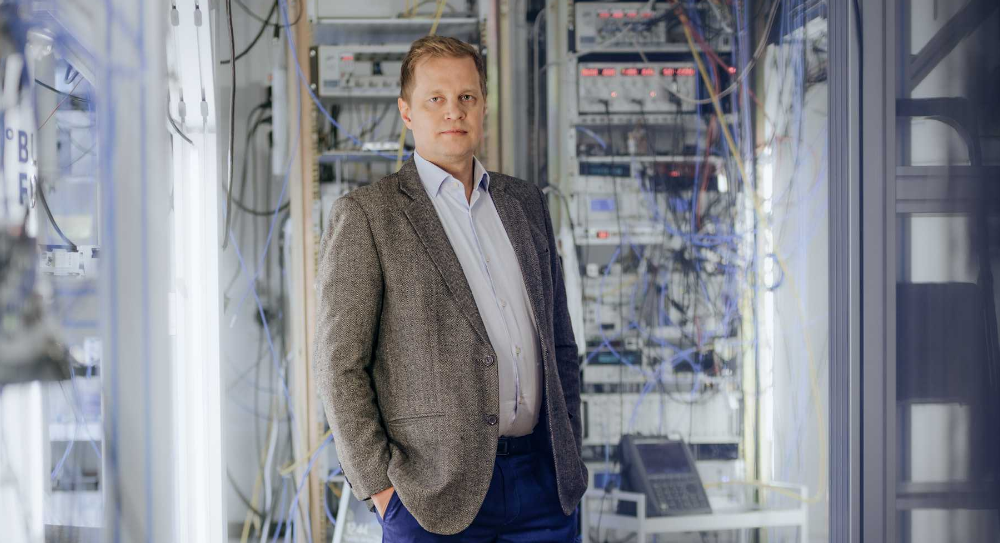
Insider Brief Finnish physicist Mikko Möttönen was named a finalist for the 2026 European Inventor Award for developing cryogenic microwave sensing technology for quantum systems. The technology helps engineers detect electromagnetic interference and power leaks that can disrupt fragile quantum states in quantum computers. Möttönen’s cryogenic analyser is designed to improve quantum hardware diagnostics, reliability, and qubit measurement at ultra-low temperatures. PRESS RELEASE — According to the European Commission, by 2040, the quantum sector is expected to create thousands of highly skilled jobs across the EU and exceed a global value of €155 billion. A recent study on quantum technology by the European Patent Office and the OECD highlighted that the number of international patent families (IPFs) – a set of patent applications filed in several countries for the same invention – in quantum increased five-fold in just the last decade. However, the sector is still in an early stage of technological maturity with limited commercialisation to date, reflecting how difficult these machines are to operate reliably outside laboratory conditions. Unlike conventional computers, which process information using bits that are either on or off, quantum computers use quantum bits, known as qubits, whose quantum states enable new types of calculations but are easily disrupted. To preserve these fragile quantum states, systems must be operated at temperatures close to absolute zero, where even minute amounts of unwanted energy can affect performance. Physicist Mikko Möttönen has developed a cryogenic microwave sensor that allows engineers to detect and measure tiny power leaks and sources of electromagnetic interference inside quantum computing systems. By making such disturbances visible at ultra-low temperatures, the device helps engineers diagnose problems and improve the reliability of quantum hardware. For this work, Möttönen has been selected as a finalist in the ‘Research’ category of the European Inventor Award 2026 by an independent jury.
Measuring Quantum Signals Without Disturbance Conventional measurement instruments can struggle to accurately capture the extremely weak signals emitted by quantum systems in these conditions, as they introduce additional heat or noise, disturbing the system they are meant to observe. Möttönen’s solution is a cryogenic analyser based on an ultra-sensitive bolometer, which acts as a highly precise power meter for microwaves. Using superconducting materials, it measures the tiny amount of heat generated by incoming signals while minimising disturbance to the quantum system. A built-in self-calibration mechanism allows the analyser to check its own accuracy without relying on external reference sources, helping engineers reliably identify radiation leakage and electromagnetic interference. “From 2027 onwards, we expect quantum computing to begin solving real industrial problems, first in limited use cases but then expanding, for example, to optimisation, whether routing ships or improving logistics,” said Möttönen.
From Fundamental Research to Quantum Diagnostics Möttönen’s work originated in long-term research at Aalto University, supported by successive European Research Council grants and funding from the Academy of Finland. While initially focused on developing ultra-sensitive bolometers for fundamental research, his team realised that these devices could also diagnose the tiny power leaks and noise that disrupt quantum hardware. This technology has since been applied in quantum computing setups to read out qubit states, detect stray radiation and improve system performance. “In an emerging field like quantum computing, you must protect your inventions to maintain a competitive edge. Quantum computers are incredibly complex machines; by the time they are commercially available, they will be built on a foundation of a huge number of individual patents,” said Möttönen. Mikko Möttönen is one of three finalists in the ‘Research’ category of the European Inventor Award 2026. The other ‘Research’ finalists are Irish-British vaccinologist Sir Adrian Hill for a malaria vaccine and Portuguese researcher Paula Videira and team for an antibody that distinguishes cancer cells from healthy tissue.
The European Patent Office will announce the winners during a livestreamed ceremony from Berlin on 2 July 2026. In addition to the four award categories, the Popular Prize will be decided through a combined vote by the public and the independent jury. Public voting opens on 12 May 2026 and will be running until the ceremony on 2 July 2026. Find more information about the technology, its impact and the inventor here.
Mohib Ur Rehman LinkedIn Mohib has been tech-savvy since his teens, always tearing things apart to see how they worked. His curiosity for cybersecurity and privacy evolved from tinkering with code and hardware to writing about the hidden layers of digital life. Now, he brings that same analytical curiosity to quantum technologies, exploring how they will shape the next frontier of computing. Share this article: