
Dutch Project Quper Results in New Leiden Cryogenics Mini-fridge, Controlled by OrangeQS Juice Operating System
Summarize this article with:


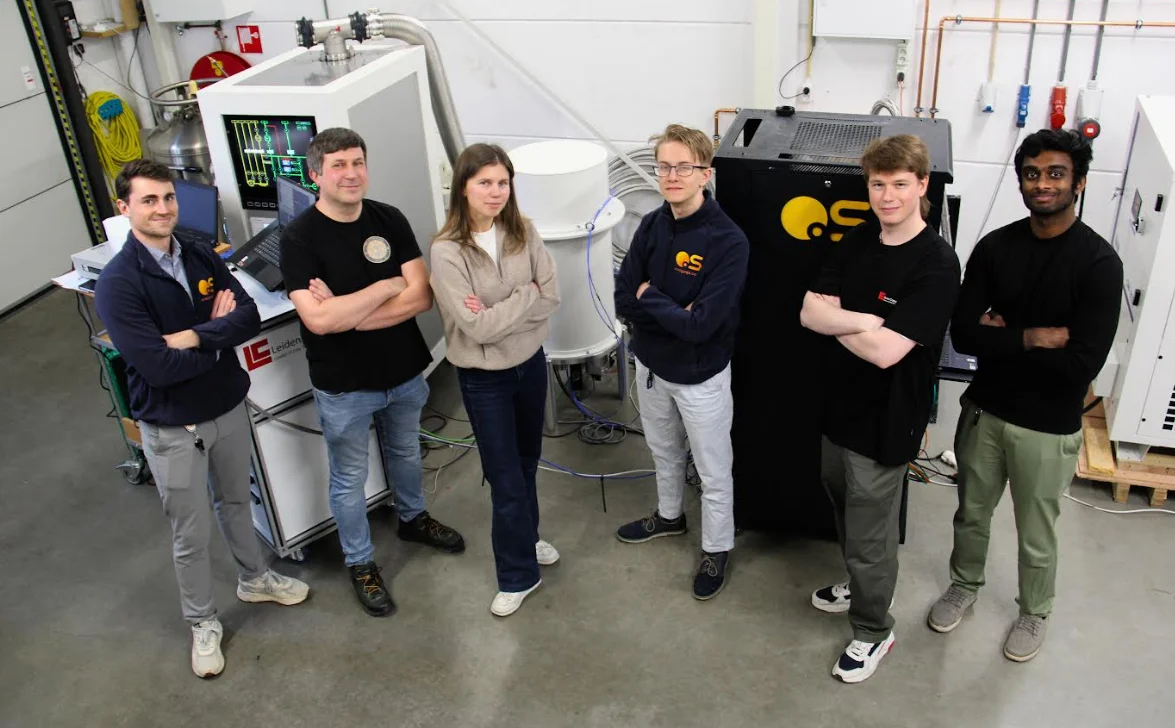
Insider Brief Leiden Cryogenics finalized a compact dilution refrigerator prototype under the Quper project, funded by Quantum Delta NL, designed for fast-turnaround quantum chip testing. The tabletop system can cool samples below 25 millikelvin and return to room temperature in under 24 hours, using reduced helium-3 and no liquid nitrogen. Project partner Orange Quantum Systems integrated remote monitoring and control via its Juice operating system and SubZero cryogenic control software. PRESS RELEASE — An inverted tabletop dilution refrigerator, that can achieve millikelvin temperatures, has long been the holy grail for fast-turnaround quantum technology development. Especially useful for fast and affordable quantum chip testing. In 2023 Quantum Delta NL, an organization funded by the Dutch National Growth Fund, awarded funding to companies Leiden Cryogenics and Orange Quantum Systems. They set out to develop a compact, fast turn-around cryostat for quantum applications. A fast turn-around ‘mini-fridge’ for quantum applications Three years after the conception of the ‘mini-fridge’ for quantum R&D, Leiden Cryogenics (LC) successfully finalized a prototype in the Quper project. At the APS Global Physics Summit, LC will unveil a new product based on the Quper project. The company is promising a compact and affordable cryogenic system, capable of cooling a sample to below 25 millikelvin and returning it to room temperature in less than 24 hours. The project tested a new inverted fridge design, allowing for ergonomic tabletop access for operators. By shrinking all components, including the heat switch and dilution unit, a much faster cooldown is possible. Achieved without the need for liquid nitrogen and with a significantly lower helium-3 requirement. Sasha Usenko, Leiden Cryogenics CTO: “Fast, compact, simple, but fully functional dilution refrigerators (be it for quantum chip testing and development, optical or beamline experiments, etc…) have been a popular request from our customers for many years and now we are finally ready to fulfill it.” Testing of quantum devices and system control In 2025, project partner Orange Quantum Systems used the prototype cryogenic system for testing Travelling Wave Parametric Amplifiers. To remotely monitor, control, and automate the Quper fridge, the project introduced a new Leiden Cryogenics back‑end for SubZero, the cryogenic control software that runs on OrangeQS Juice. This was made possible thanks to the flexible and extensible nature of the Juice OS. Koushik Kumaran, product owner at OrangeQS: “The fact that a fridge manufacturer has developed a new system with Juice as the operating system is a huge indicator of reliability.” Mohib Ur Rehman LinkedIn Mohib has been tech-savvy since his teens, always tearing things apart to see how they worked. His curiosity for cybersecurity and privacy evolved from tinkering with code and hardware to writing about the hidden layers of digital life. Now, he brings that same analytical curiosity to quantum technologies, exploring how they will shape the next frontier of computing. Share this article: