
Designing Intuitive Dashboards for Hybrid Quantum-Classical Operations
Understand this faster with AI


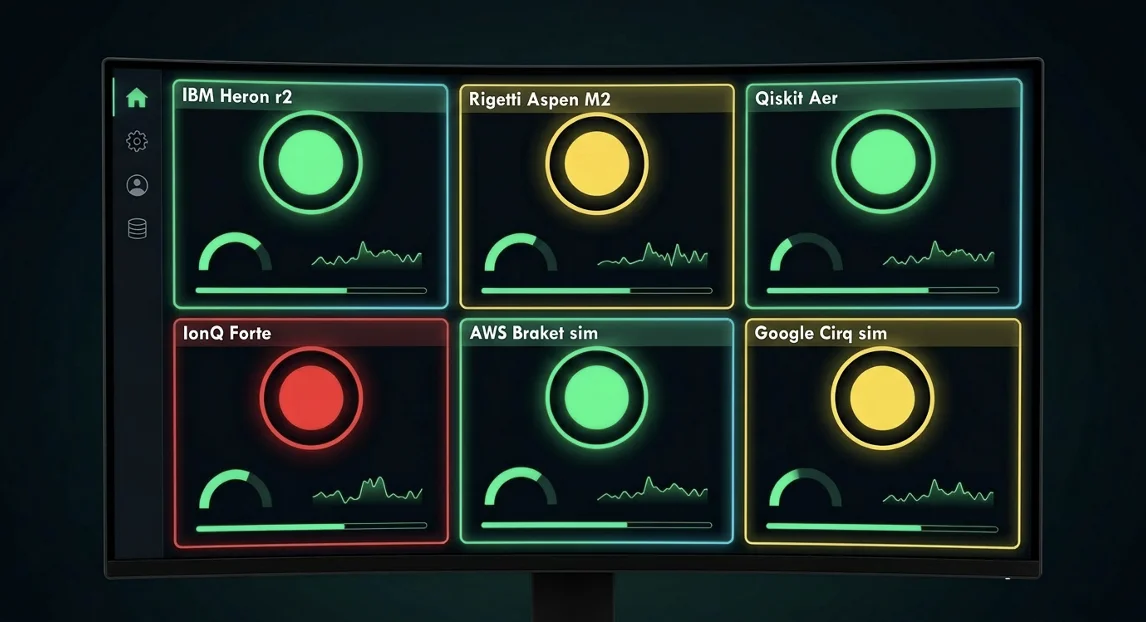
Guest Post By Baha JabarinFounder & Product Designer | mimicodesignhouse.com | bahajabarin.comHybrid quantum-classical workflows, which combine quantum and classical computing, are already being used in enterprises—not just discussed in theory. Although quantum computers still deal with significant “noise” that causes gate errors, innovative algorithms like VQE and QAOA now let quantum and classical processors collaborate. In these workflows, parts of problems are sent to a quantum processor, results come back to the classical computer, and the classical system then decides what quantum instructions to send next—eventually piecing together the final solution.This hybrid approach is being put into practice by users today. For instance, IBM’s LSF can schedule and coordinate hybrid-classical workflows across both IBM’s own systems and classical x86 compute [1]. With LSF, quantum processors (QPUs) work alongside GPUs and CPUs, expanding high-performance computing (HPC) capabilities, especially for complex tasks in optimization, many-body physics, and quantum chemistry.The Quantum Machines OPX1000 upgrades qubits into a quantum processing unit (QPU) that provides real-time orchestration, mid-circuit measurements, and quantum feedback within hundreds of nanoseconds [2]. Supporting acceleration layers built from CPU-GPU servers handle calibrations, optimizations, and quantum error correction decoding in microseconds. The third layer enables HPC clusters to schedule hybrid jobs in milliseconds, so QPU tasks integrate seamlessly with other compute accelerators.However, operations teams working on these hybrid applications often struggle with fragmented dashboards. Key information—like Qiskit logs, cloud queue metrics, and qubit telemetry—might be spread out over multiple tabs or even separate applications, sometimes costing hours to diagnose why a variational algorithm has stalled.In my exploration of various dashboard designs, I’ve found that truly understanding users’ mental models regarding hybrid workflows is key to moving forward. Dashboards tailored for hybrid quantum-classical environments do more than just display data—they clearly map timelines across multiple metrics and system health indicators. This enables users to efficiently identify trends, minimise diagnostic time, and expand access to quantum operations beyond the expert community of physicists.Hybrid quantum-classical processes integrate quantum processors with classical HPC systems. These setups allow for coordinated orchestration, scheduling, and monitoring of QPUs alongside GPUs and CPUs, helping hybrid workloads run smoothly.However, the distributed nature of these systems can fragment user context across several dashboards and apps. As a result, operators often need to switch between QPU vendor platforms, HPC dashboards, and even handwritten notes. This constant toggling can make it easy to lose track of individual runs and complicates error diagnosis at the gate level.Users of hybrid quantum-classical systems primarily need dashboards that provide [3]:These requirements align with the mental models adopted by quantum teams, who often ask: “Is the system in good health?”, “Which jobs are experiencing issues?”, or “What’s changed since the last calibration?” Ultimately, these mental models revolve around three core themes: job-centric, resource-centric, and workflow-centric perspectives.Combine workflow steps, job statuses, and resource-related events—including calibrations, outages, and queue delays—into a unified timeline. This approach enables the dashboard to illustrate how certain events, like QPU calibrations, coincide with rising error rates.Run-time displays provide real-time health data, SLA compliance, alerts, queue status, and resource usage. In contrast, design-time views present past experiments, parameter sweeps, algorithm variations, and performance comparisons. By distinguishing between these perspectives, users can concentrate on immediate operational insights without unnecessary distractions from historical or design information.Leverage colors and visual signals to link qubit-level measurements and broader health indicators. Metrics such as coherence, readout errors, and calibration drift may be synthesized into states like “Normal,” “Warning,” or “Critical.” Progressive disclosure and drill-down features allow users to explore individual qubit details as needed, keeping the overall interface manageable.Connect seamlessly with established platforms including Prometheus for live data scraping, InfluxDB for time-series storage, and Grafana for dashboard visualization, while maintaining an emphasis on quantum-related workflows and terminology.Presented below is an overview of a comprehensive Quantum Resource Health Wall dashboard that encompasses all required features.Main Components:The integration of advanced visual cues, such as intuitive color coding and clear health indicators, paired with progressive dashboard components, transforms quantum resource management into a more accessible and practical practice. These strategies empower users to quickly interpret qubit-level data and to act on emerging issues before they escalate—whether that means identifying calibration drift, noticing unusual error rates, or responding to a sudden shift in system health. The design principles discussed—from progressive disclosure and interactive drilldowns to filter bars and comprehensive legends—minimize information overload while ensuring that users remain firmly in control of their decision-making environment.As quantum computing systems continue to grow in complexity and scale, adopting these user-centric approaches will be vital for ensuring that monitoring remains actionable, scalable, and precise. Ultimately, the careful orchestration of technical integration and thoughtful interface design will empower teams to diagnose, optimize, and innovate with confidence as they navigate the evolving landscape of quantum technologies.—-Baha Jabarin is Founder of Mimico Design House, where he leads human-centered product design that transforms complex digital experiences into intuitive, impactful solutions. Drawing from his portfolio of enterprise projects, Baha blends empathy-driven research, data insights, and strategic prototyping to empower organizations and their users.His methodology simplifies workflows while maximizing engagement, as showcased across bahajabarin.com through case studies, design processes, and thought leadership content. Active on LinkedIn, YouTube, and podcasts, Baha shares practical strategies for product innovation that deliver measurable results.Share this article:Keep track of everything going on in the Quantum Technology Market.In one place.
Tags
Source Information
Discussion
0 professional contributions
Sign in to join this professional discussion.
Be the first to add a constructive contribution.