
D-Wave Reports 179% Revenue Jump in 2025 as Bookings Accelerate
Understand this faster with AI


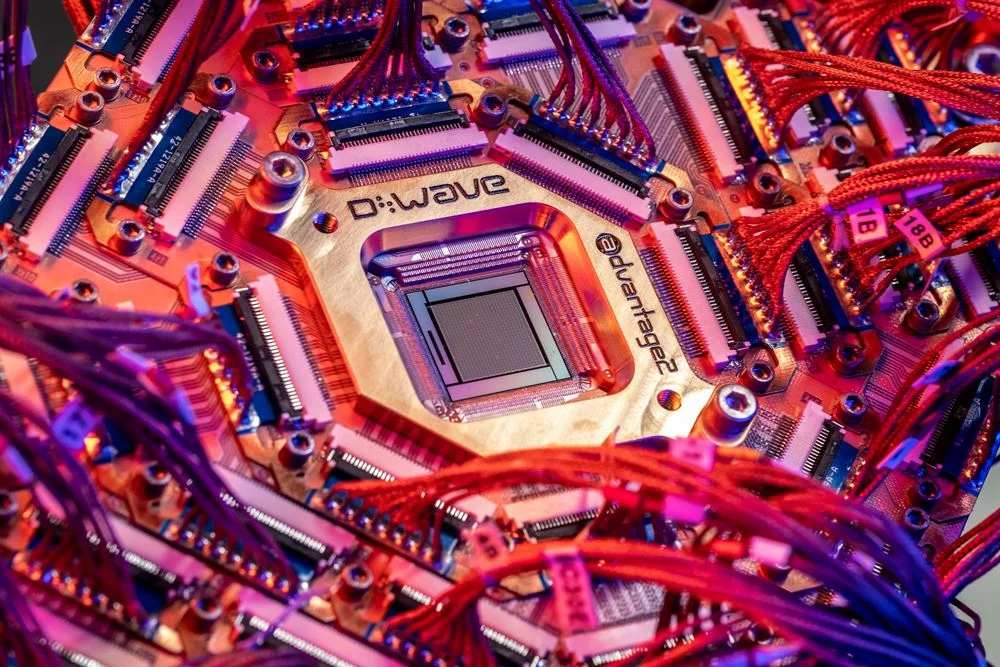
Insider BriefD-Wave Quantum reported sharply higher revenue and gross margins in 2025, underscoring growing commercial traction for its quantum systems even as operating losses widened amid stepped-up investment and accounting charges.According to a statement, the Palo Alto-founded company, now trading on the New York Stock Exchange under the ticker QBTS, said revenue for the year ended Dec. 31, 2025 rose 179% to $24.6 million, up from $8.8 million in 2024, according to a company news release. Gross profit and gross margin also climbed, reflecting a higher-margin system sale during the year.“Our 2025 results mark one of the most successful and transformative years in D-Wave’s history, with meaningful growth across every key business metric — revenue, Bookings, technical milestones, and scientific breakthroughs,” said Dr. Alan Baratz, CEO of D-Wave, said in the statement. “We are entering 2026 with exceptional momentum: generating over $30 million in Bookings in January alone, expanding our market leadership through the acquisition of gate-model quantum computing company Quantum Circuits, Inc., and securing an eight-figure enterprise QCaaS agreement that underscores growing customer confidence in our technology’s power to transform enterprise operations. 2026 is shaping up to be a defining year for D-Wave.”Overall, the results offer a mixed but improving financial picture for one of the quantum industry’s pioneering players. D-Wave develops two types of quantum computers — annealing systems designed primarily for optimization problems and gate-model systems aimed at broader algorithms — along with related software and cloud services.D-Wave said bookings for the fourth quarter totaled $13.4 million, up 471% from the prior quarter. That included a €10 million booking for 50% of the capacity of a forthcoming Advantage2 annealing quantum computer to support a new research facility in Lombardy, Italy.For the full year, bookings were $18.7 million, down 22% from $23.9 million in 2024. The prior year figure included an eight-figure sale of the company’s first quantum computer system, likely making apples-to-apples comparisons uneven. After year-end, D-Wave reported more than $32.8 million in additional bookings through Feb. 25, 2026, including a $20 million system purchase by Florida Atlantic University and a $10 million, two-year enterprise license agreement for quantum computing as a service with a Fortune 100 company.The Florida Atlantic system is expected to be deployed by the end of 2026. The enterprise agreement reflects a growing model in which customers access D-Wave’s systems through the cloud rather than purchasing hardware outright.D-Wave said it recognized revenue from more than 135 customers in 2025, including over 70 commercial enterprises and more than two dozen Forbes Global 2000 companies. New and renewed engagements included LG CNS in South Korea, Sharp Corp. in Japan and Italy’s CINECA consortium, one of Europe’s largest high-performance computing centers.Gross profit under generally accepted accounting principles, or GAAP — the standard U.S. accounting framework — rose to $20.3 million from $5.6 million a year earlier. GAAP gross margin increased to 82.6% from 63%. On a non-GAAP basis, which excludes certain non-cash expenses such as stock-based compensation and depreciation, gross margin reached 86%.Operating expenses also increased. GAAP operating expenses rose 46% to $120.7 million, driven largely by higher salaries, research and development costs, fabrication expenses and marketing. Non-GAAP adjusted operating expenses rose 49% to $92.9 million.The company posted a net loss of $355.1 million, or $1.11 per share, compared with a $143.9 million loss in 2024. D-Wave said the increase was primarily due to $270.5 million in non-cash, non-operating charges related to the remeasurement of its warrant liability, along with losses from warrant exercises. Such charges are tied to fluctuations in the company’s share price and do not reflect cash outflows from core operations.Adjusted net loss, which excludes those warrant-related items, was $84.5 million, compared with $75.6 million a year earlier. Adjusted EBITDA loss widened to $71.8 million from $56 million, reflecting higher operating expenses partly offset by improved gross profit.Beyond financial metrics, D-Wave reported a series of technical and strategic developments in 2025.The company completed its acquisition of Quantum Circuits, a developer of superconducting gate-model quantum computers. Quantum Circuits’ dual-rail qubit design incorporates erasure detection, a technique that identifies when certain types of quantum errors occur. According to D-Wave, the technology detects roughly 90% of such errors and achieves gate fidelities exceeding 99.9%, a measure of how accurately quantum operations are executed.Higher fidelity and built-in error detection are viewed as prerequisites for building logical qubits — more stable units of quantum information formed by combining many physical qubits. D-Wave said the approach can reduce the number of physical qubits required to create a logical qubit compared with architectures lacking erasure detection.The company also demonstrated what it described as the first scalable on-chip cryogenic control system for gate-model qubits. By using multiplexed digital-to-analog converters, the system can control tens of thousands of qubits and couplers using about 200 control wires. Reducing wiring complexity is considered essential as quantum processors scale, since excess wiring can introduce heat and noise that degrade performance.D-Wave said in the statement that the combination of high-fidelity qubits, erasure detection and cryogenic control positions it to pursue scaled, error-corrected superconducting gate-model systems, complementing its established annealing platform.D-Wave continues to emphasize its dual-platform strategy, pairing annealing systems with gate-model development.The company reported enhancements to its Stride hybrid solver, which combines classical computing resources with quantum processing units. The updated capabilities allow customers to integrate machine learning models directly into quantum workflows. Hybrid systems are designed to tackle complex optimization tasks by dividing work between conventional and quantum hardware.In collaboration with Davidson Technologies and Anduril Industries, D-Wave applied its hybrid solver to U.S. air and missile defense planning simulations. In an initial proof-of-concept involving a 500-missile attack scenario, the company said its approach delivered at least 10 times faster time-to-solution than classical-only methods and improved threat mitigation rates by 9% to 12%, enabling interception of an additional 45 to 60 missiles.The company also reported on the introduction of new annealing features, including multicolor annealing, which gives researchers more control over how quantum states evolve over time, and fast-reverse anneal, which allows the system to move back and forth through the annealing process while maintaining coherence. Coherence refers to the fragile quantum state that enables quantum systems to explore many possibilities at once.D-Wave reiterated that its Advantage2 annealing system previously demonstrated quantum supremacy on what it characterized as a useful real-world problem, with the result remaining unchallenged nearly two years after publication in March 2024.D-Wave announced the formation of a new business unit focused on U.S. government customers, led by Jack Sears Jr., an executive with more than 25 years of experience in federal defense and aerospace markets. The move reflects broader efforts across the quantum sector to secure defense and national security contracts.The company also said it will relocate its corporate headquarters to Boca Raton, Fla., from Palo Alto, Calif., by the end of 2026. Boca Raton will serve as both the new headquarters and a key U.S. research and development site.In January, D-Wave hosted its Qubits 2026 conference in Boca Raton, reporting a 63% increase in in-person attendance compared with the prior year. Speakers included representatives from Anduril, AT&T and other commercial and public-sector organizations.Share this article:Keep track of everything going on in the Quantum Technology Market.In one place.
Tags
Source Information
Discussion
0 professional contributions
Sign in to join this professional discussion.
Be the first to add a constructive contribution.