
Cosmic voids look empty but they may be tearing the universe apart
Understand this faster with AI


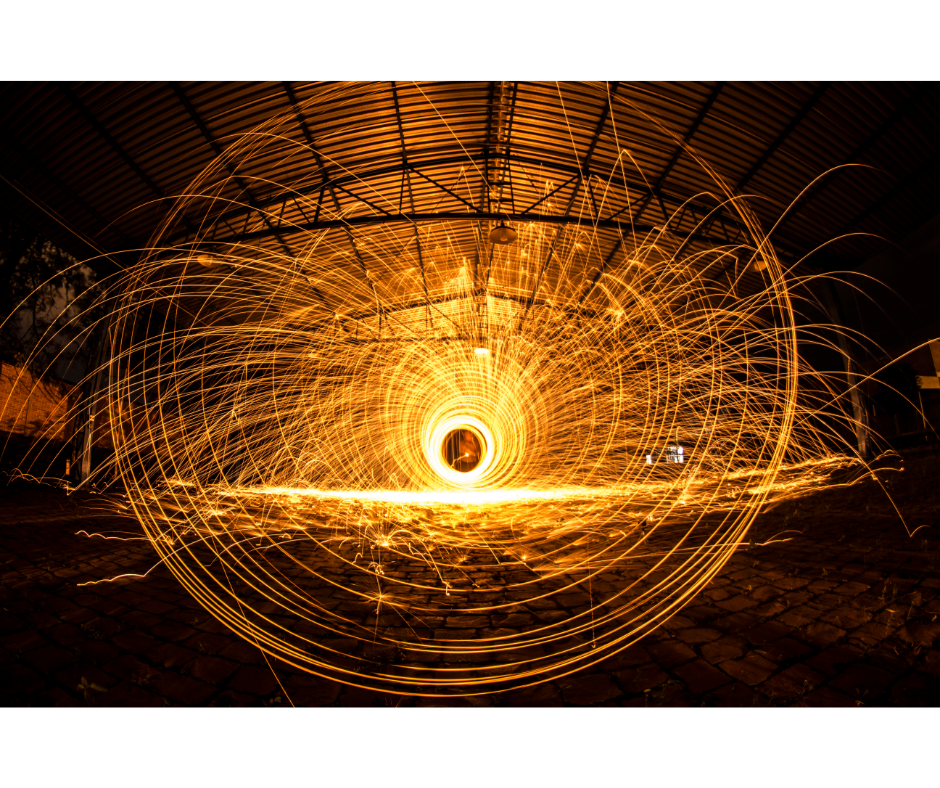
Science News from research organizations Cosmic voids look empty but they may be tearing the universe apart Date: March 10, 2026 Source: Universe Today Summary: Cosmic voids may seem like the emptiest places in the universe, stripped of matter, radiation, and even dark matter. But they’re far from nothing. Even in these vast empty regions, the fundamental quantum fields that fill all of space remain, carrying a small but real amount of energy known as vacuum energy, or dark energy. While this energy is overwhelmed by matter in galaxies and clusters, in the deep emptiness of cosmic voids it becomes dominant. Share: Facebook Twitter Pinterest LinkedIN Email FULL STORY The universe’s emptiest regions aren’t truly empty. In cosmic voids, dark energy dominates, quietly driving the expansion of the universe and slowly tearing the cosmic web apart. Credit: AI/ScienceDaily.com Imagine removing everything from the deepest regions of cosmic voids. Take away ordinary matter, neutrinos, dark matter, cosmic rays, and radiation. What remains appears to be nothing but empty space. It may sound contradictory, but these enormous voids are filled with the vacuum of spacetime. And importantly, that vacuum is not truly nothing. The vacuum of spacetime contains something fundamental. It is difficult to describe precisely with everyday language, but physicists refer to these underlying ingredients as quantum fields. In quantum field theory, the particles that make up our world such as electrons, top quarks, neutrinos, and even dark matter are not independent objects in the usual sense. What we call a particle is actually a visible expression of something deeper. These deeper structures are the fields themselves. Every type of particle has a corresponding field. These fields permeate every cubic centimeter of space and time. They have existed since the big bang and extend throughout the entire universe. When we observe a particle, such as an electron moving through space, we are really detecting a ripple or vibration in its underlying field. The particle is a traveling excitation of that field. Even if all particles were removed, the fields would still remain. Vacuum Energy and the Origin of Dark Energy These fields also contain energy. Because of the Heisenberg uncertainty principal, the vacuum cannot be completely devoid of energy. When physicists attempt to calculate how much energy exists in empty space, the results can range from extremely large values to theoretically infinite ones…which is also another episode. What matters is that this vacuum energy produces a measurable effect. That effect is known as "dark energy," the name scientists use to describe the accelerated expansion of the universe. Observations show that the actual amount of vacuum energy is relatively small, though it is not zero. In most environments across the universe, its influence is negligible. Regions filled with matter completely dominate the local behavior of space. Here on Earth, for example, matter is so dense that dark energy has no noticeable impact. If dark energy suddenly vanished, everyday physics would remain unchanged. The path of a thrown baseball would be identical. Your burrito would still cook in the microwave at exactly the same rate. Nothing about daily life would be different.
Where Dark Energy Dominates the Universe The same situation applies across much of the cosmos. Galaxies, galaxy clusters, filaments, and walls of the cosmic web are all regions packed with matter. In these environments, dark energy plays almost no role. Cosmic voids are different. Voids are enormous regions where matter is largely absent. In these areas, the vacuum of space-time itself becomes the dominant influence. If you could place yourself in the middle of a cosmic void, you would effectively be surrounded by dark energy. In fact, voids are where dark energy carries out its most important work. The accelerated expansion of the universe does not occur inside dense regions such as galaxies or clusters. Instead, it takes place within the vast empty voids.
Cosmic Voids Are Expanding Cosmic voids are not just empty gaps between structures in the universe. They are actively growing. As dark energy pushes space outward, the voids expand and press against the surrounding cosmic web. Over immense spans of time, this process gradually pulls the universe's large-scale structure apart. The intricate network of galaxies, clusters, and filaments that astronomers see today will not last forever. Over the next 5-10-20 billion years the exact number doesn't matter the cosmic web will slowly fade as expanding voids stretch everything farther apart.
Why Empty Space Is Never Truly Empty In that sense, cosmic voids are far from empty. They are filled with the subtle energy of quantum fields. That energy influences the entire universe by driving its accelerating expansion. Voids are the only regions where this effect becomes dominant, precisely because they contain almost nothing else. So yes, cosmic voids are empty of matter. That is how astronomers identify and measure them. But their lack of matter means they are filled with dark energy. Wherever you travel in the universe, whether to a nearby galaxy or to the deepest interior of the emptiest void, you will never truly be alone. RELATED TOPICS Space & Time Galaxies Dark Matter Cosmology Cosmic Rays Matter & Energy Quantum Physics Physics Detectors Acoustics RELATED TERMS Dark matter Galaxy Dark energy Globular cluster Big Bang Quantum computer Large-scale structure of the cosmos Introduction to quantum mechanics Story Source: Materials provided by Universe Today. Original written by Paul Sutter. Note: Content may be edited for style and length.
Cite This Page: MLA APA Chicago Universe Today. "Cosmic voids look empty but they may be tearing the universe apart." ScienceDaily. ScienceDaily, 10 March 2026. . Universe Today. (2026, March 10). Cosmic voids look empty but they may be tearing the universe apart. ScienceDaily. Retrieved March 10, 2026 from www.sciencedaily.com/releases/2026/03/260309225236.htm Universe Today. "Cosmic voids look empty but they may be tearing the universe apart." ScienceDaily. www.sciencedaily.com/releases/2026/03/260309225236.htm (accessed March 10, 2026). Explore More from ScienceDaily RELATED STORIES Astronomers Discover Giant Cosmic Sheet Around the Milky Way Mar. 6, 2026 For decades, astronomers wondered why most nearby galaxies are speeding away from the Milky Way instead of being pulled in by its gravity. New simulations reveal the answer: our galaxy sits in a ...
Dark Matter Formed When Fast Particles Slowed Down and Got Heavy, New Theory Says May 14, 2025 Researchers propose a new theory for the origin of dark matter, the invisible substance thought to give the universe its shape and structure. Their mathematical models show that dark matter could ...
Cosmic Wrestling Match July 15, 2024 Our universe is around 13.8 billion years old. Over the vastness of this time, the tiniest of initial asymmetries have grown into the large-scale structures we can see through our telescopes in the ...
Bright Galaxies Put Dark Matter to the Test Jan. 31, 2024 The earliest galaxies are thought to have formed as the gravitational pull of dark matter, which has been impossible to study directly, slowly drew in enough hydrogen and helium to ignite stars. But ...
Hubble Finds That Ghost Light Among Galaxies Stretches Far Back in Time Jan. 4, 2023 In giant clusters of hundreds or thousands of galaxies, innumerable stars wander among the galaxies like lost souls, emitting a ghostly haze of light. These stars are not gravitationally tied to any ... Physicists Invoke the Cosmological Collider to Explain Why Matter, and Not Antimatter, Dominates the Universe Sep. 8, 2022 Early in its history, shortly after the Big Bang, the universe was filled with equal amounts of matter and 'antimatter' -- particles that are matter counterparts but with opposite charge. ... TRENDING AT SCITECHDAILY.com These Tiny Teeth Could Change What We Know About Human Origins Hormone Therapy May Supercharge Popular Weight-Loss Drugs After Menopause Nearly Half of Americans Don’t Know This Popular Food Increases Colon Cancer Risk Popular Weight-Loss Drugs May Also Treat Addiction
Tags
Source Information
Discussion
0 professional contributions
Sign in to join this professional discussion.
Be the first to add a constructive contribution.