
Cisco Unveils Prototype to Link Quantum Computers Into a Network
Understand this faster with AI


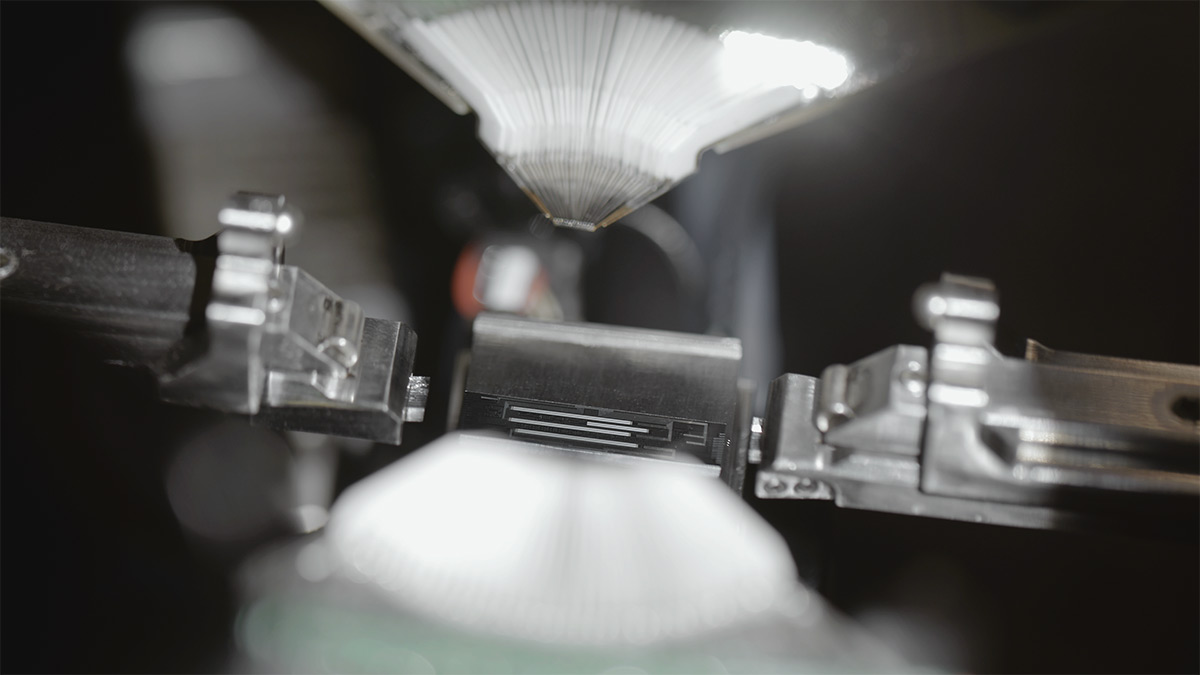
Insider BriefCisco is testing a prototype device designed to connect different quantum machines into a single network, a step that could help the technology scale beyond today’s hardware limits.The system, developed by Cisco and discussed in a company blog post, is called a universal quantum switch. It is intended to link quantum computers and sensors built on different technologies and allow them to share quantum information without breaking it. The company says the approach could mean that the industry no longer needs to rely on larger individual machines to building networks of smaller ones that work together.Quantum computing is widely expected to help solve complex problems in areas such as drug discovery, logistics and cybersecurity. But current machines remain far from the scale needed for those uses. Industry projections suggest quantum processors may reach thousands or tens of thousands of qubits in the near term, while many useful applications are expected to require millions.Cisco’s prototype reflects a different strategy for closing that gap. Instead of focusing only on building bigger quantum computers, the company is working on connecting them. The idea is similar to how classical computing evolved: when single machines reached limits, networks allowed many systems to share workloads.“Reaching this milestone is a pivotal moment for our quantum program and a testament to the transformative potential of quantum networking,” said Vijoy Pandey, SVP/GM of Outshift, Cisco’s Emerging Technologies and Incubation Group, in a company news release. “We’ve long recognized that connecting quantum systems is the key to achieving true scalability, and now we’ve taken a critical step toward making that vision a reality. While this is a significant achievement, it’s just the beginning. The road ahead is long, yet the impact of what we are building—and what is still to come—will be nothing short of profound.”The quantum switch routes information carried by entangled photons, which are the basic units of quantum communication. These signals are fragile. If they are measured directly, the quantum state collapses and the information is lost. That makes standard networking equipment unusable.Cisco’s device avoids this problem by never measuring the quantum signal. Instead, it converts incoming signals into a common internal format, routes them through the network and then converts them again into the format required by the receiving system. This allows different types of quantum hardware to communicate without changing how they operate.The system is designed to support several common ways of encoding quantum data. Today’s quantum machines use different methods based on their underlying physics. These include polarization, time-based encoding, frequency-based encoding and path-based encoding. By translating between these formats, the switch can connect systems that would otherwise be incompatible.One of the main problems the switch aims to solve is the complexity of connecting many quantum devices. Without a switching layer, each system would need a direct connection to every other system. That approach becomes impractical as networks grow.For example, a large facility with hundreds or thousands of quantum nodes would require a massive number of direct links under a point-to-point model. A switch reduces that complexity by acting as a central hub, allowing systems to connect through a shared network instead of dedicated lines.The design also allows expensive hardware to be shared. Components such as photon detectors and entanglement sources are difficult and costly to deploy. In a point-to-point setup, they must be duplicated across many links. A network approach allows those resources to be pooled and used more efficiently.Cisco says the prototype is designed to operate under real-world conditions rather than specialized lab setups. It runs at room temperature and uses standard telecommunications fiber, the same type of fiber used in existing internet infrastructure.That choice could lower the barrier to deployment. Many quantum systems today require extreme cooling and custom setups, which limit where they can be used. A device that works with existing fiber networks could make it easier to integrate quantum systems into current data centers.The company also reports that the switch introduces only a small amount of signal loss while maintaining the quality of entanglement, which is critical for reliable communication.While large-scale quantum computing may still remain years away, Cisco points to early uses that could deliver value sooner, including to areas such as security. The company is exploring a system that uses entangled photons to detect eavesdropping on fiber networks. Any attempt to intercept the signal would disrupt the quantum state and trigger an alert.Another area involves coordinating systems across different locations. Quantum correlations could allow distributed systems to act in sync in ways that are not possible with standard communication methods, though this remains experimental.The work reflects the quantum industry’s move toward building supporting infrastructure, not just improving individual processors. Companies are starting to focus on how quantum systems can be connected, managed and scaled as part of larger networks.Cisco is developing this technology as part of a wider effort within its research group to build a full quantum networking stack, from hardware to software. The company is also working with partners across the quantum ecosystem to ensure compatibility between different platforms.The approach mirrors the early development of the internet, where the ability to connect many devices proved as important as the performance of each one. In the same way, networking may play a key role in making quantum computing useful at scale.The universal quantum switch remains a research prototype and challenges likely remain, including improving the reliability of quantum connections, extending networks over long distances and handling errors across distributed systems.However, according to the news release, early indications point to promising performance. The company reports that “in proof-of-concept experiments, the switch preserved quantum information with an average of less than or equal to 4% degradation in encoding and entanglement fidelity.” They expect to release complete findings in an upcoming research paper that will be posed on the pre-print server, ArXiv.Share this article:Keep track of everything going on in the Quantum Technology Market.In one place.
Tags
Source Information
Discussion
0 professional contributions
Sign in to join this professional discussion.
Be the first to add a constructive contribution.