
Brooklyn-based Pizza Makers Declare Quantum Supremacy in Qulinary™ Breakthrough
Summarize this article with:


Insider Brief Aleesia and Roberto’s Fine Italian Diner and Pizzeria claims to have used a quantum algorithm to design an optimized multi-topping pizza that would take classical computing impractically long to replicate.
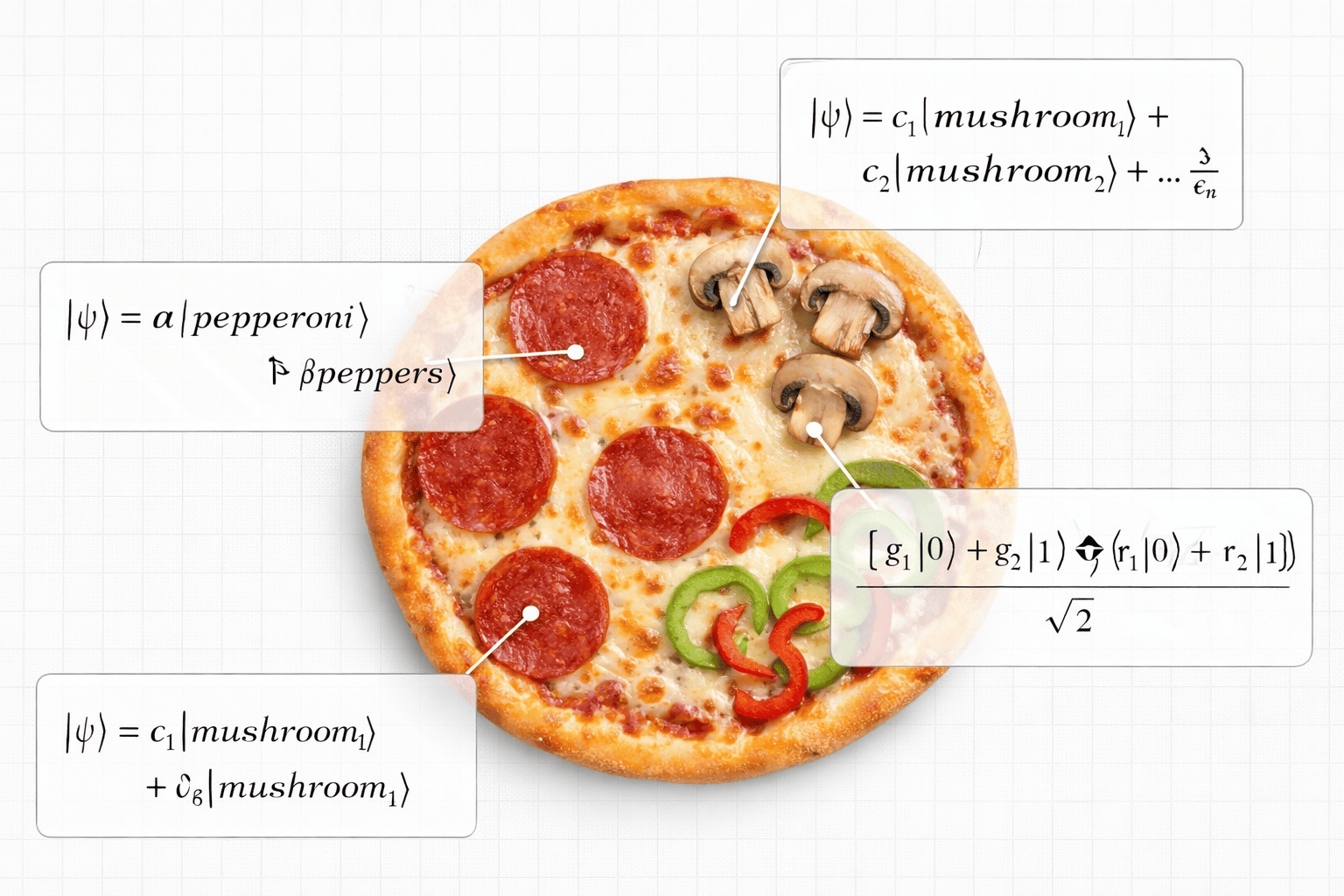
The team applied quantum-style simulation and optimization to model ingredients at a chemical level and determine an ideal topping combination, while humorously noting limits such as missing samples and rejecting pineapple as fundamentally incompatible. The restaurant plans to expand into a full “quantum menu” and pursue commercialization by 2030, including a potential SPAC listing to fund quantum-enhanced Italian food products. PRESS RELEASE — Sure, quantum science can be complex and intense, but now it can also be delicious, according to pizza makers from Brooklyn-based Aleesia and Roberto’s Fine Italian Diner and Pizzeria. In a study published on the premier pre-print server for the pizza industry, anXovi, a team of pizza scientists reported they were able to use a quantum algorithm to create one of Aleesia and Roberto’s regionally famous multi-topping pizzas, or, put scientifically, a complex, thermally transformed carbohydrate matrix supporting a heterogeneous distribution of proteins, lipids and plant-derived compounds. Now referred to as a Qulinary™ breakthrough, the quantum pizza supremacy experiment addresses two long-standing challenges in the pizza industry: how many green peppers on a pizza is just too much and what’s the deal with black olives on a pizza anyway. The resulting quantum-enhanced pizza recipe would take a classical super computer 10,000 years to formulate and make, the team reported. “And that’s not even including the time in the oven!” said Roberto Fermi, lead author of both the study and the menu. The experimental focus on pizza is ideal for quantum devices because it focuses on simulation and optimization, two calculations that quantum computers can theoretically master that often overwhelm their classical counterparts.
The team simulated all the ingredients of their pizza down to their chemical level. Then, they used an optimization algorithm to find the right blend of toppings to create the quantum supreme pizza. In a follow-up qualitative analysis, both Eric, the UPS driver and Sherry, the florist — regular Alessia and Roberto customers — declared the quantum-enhanced pizza to be the most delicious pizza they ever tasted… Sober. Aleesia and Roberto’s Quantum Roadmap sets a goal of Full Quantum Dining in 2030. There are, of course, limitations.
The team reports that the first trial was hampered by the sudden disappearance of the pizza sample that was left in the same room for, like, six seconds with three hungry quantum science graduate students from a nearby university. Improved security helped with the next series of experiments, the researchers added. In addition, the algorithm could not devise a recipe for a quantum supreme pizza with pineapples. Roberto said that this is likely because pineapples on any pizza is “an abomination that defies both classical and quantum realms”. As for next steps, the restaurant has produced a quantum commercialization roadmap that will eventually include quantum-enhanced Strombolis, Calzonnes, Pepperoni Rolls and their famous Pizza Pockets.
The team expects full quantum commercialization and full quantum dining by 2030. To get there, the company expects additional capital will be required. They are currently in talks with Special Pizzeria Acquisition Company — or SPAC — to go public, which would make it the first publicly traded quantum pizza maker. For more information, please visit Aleesia and Roberto’s Fine Italian Diner and Pizzeria – Qulinary division. For a deeper, more technical dive, please review the paper on anXovi. It’s important to note that anXovi is a pre-print server, which allows researchers to receive quick feedback on their pizza. However, it is not — nor is this article, itself — official peer-review publications. Peer-review is an important step in the pizza-making process to verify results.
Matt Swayne LinkedIn With a several-decades long background in journalism and communications, Matt Swayne has worked as a science communicator for an R1 university for more than 12 years, specializing in translating high tech and deep tech for the general audience. He has served as a writer, editor and analyst at The Quantum Insider since its inception. In addition to his service as a science communicator, Matt also develops courses to improve the media and communications skills of scientists and has taught courses. matt@thequantuminsider.com Share this article: