
Atomic-scale devices and quantum platforms
Understand this faster with AI


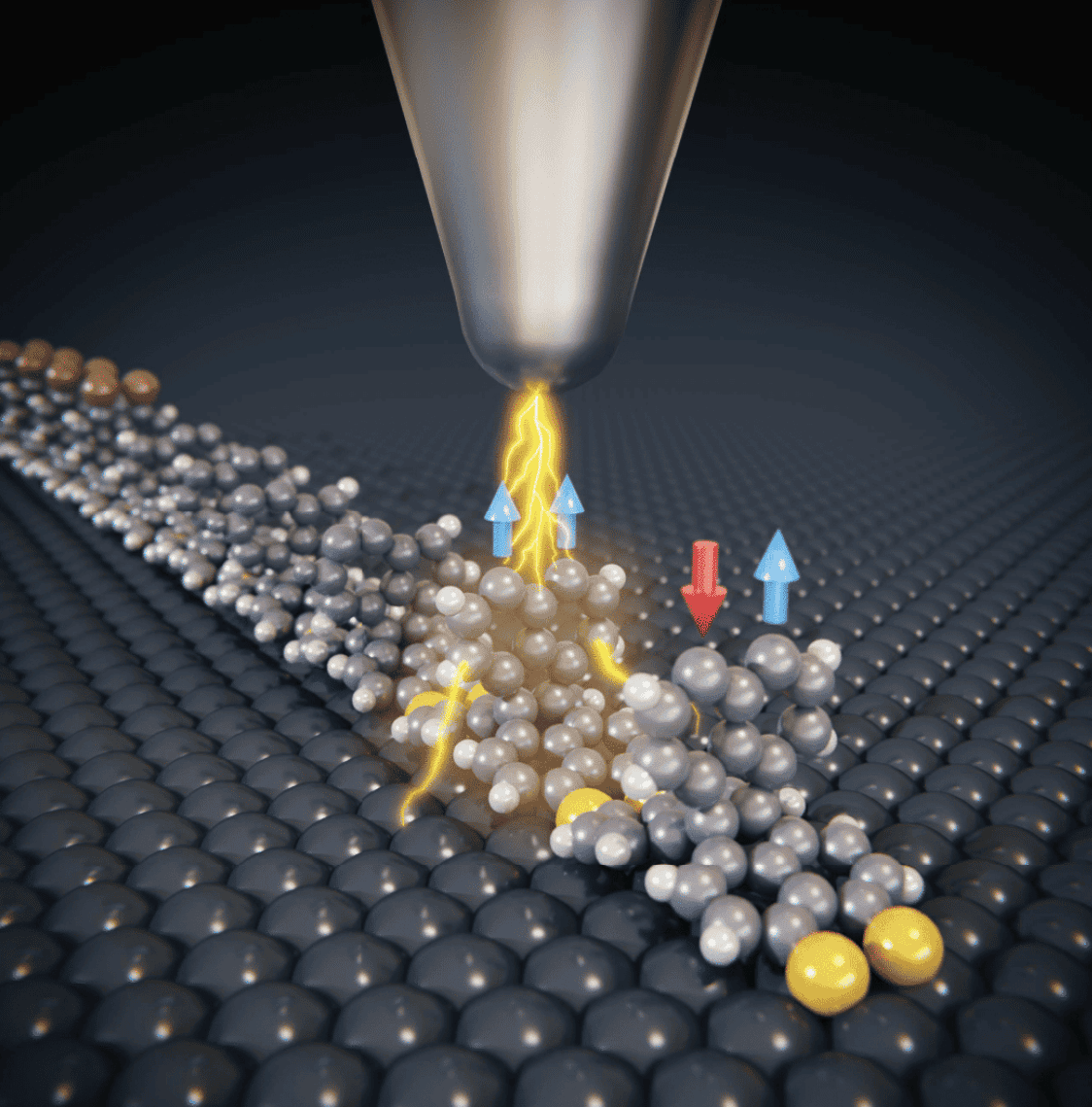
Join the audience for a live webinar at 8 a.m. BST/5 p.m. AEST on 13 May 2026, sponsored by the IOP Publishing journal, Nano Futures, to explore the very latest developments concerning atomic-scale devices and quantum platforms Want to take part in this webinar?Join the audience (Courtesy: Dr Shigeki Kawai) We are pleased to announce a forthcoming webinar that presents the very latest developments concerning atomic-scale devices and quantum platforms, and following on from two roadmap publications in Nano Futures that map out the potential pathways of these technologies. The webinar will feature four speakers who will present the status of four distinct research disciplines together with the key challenges and methodologies by which these may be overcome as quantum platforms and single-atomic devices are translated to the level of scalable quantum technologies. Want to take part in this webinar?Join the audience Meet the esteemed panel of experts: Left to right: Vincenzo Pecunia, Steven Schofield, Joris Keizer, Soo-hyon Phark, Franz Giessibl Chair and moderator Vincenzo Pecunia, Simon Fraser University, Canada Vincenzo is an associate professor and the head of the Sustainable Optoelectronics Research Group at Simon Fraser University, Canada. His research focuses on printable semiconductors and their applications in photovoltaics and sensing. He earned his PhD in physics and conducted postdoctoral research at the Cavendish Laboratory, University of Cambridge, UK, from 2009 to 2016. Before that, he earned his BSc and MSc in electronic engineering at Politecnico di Milano, Italy. His research breakthroughs include pioneering lead-free-perovskite-based indoor photovoltaics, ultra-low-power printed-thin-film-transistor electronics, and advanced spectrally selective printable light sensors. In recognition of his contributions, Vincenzo has received many awards and honours, including the Fellowship of the Institute of Materials, Minerals & Mining (FIMMM), the Fellowship of the Institution of Engineering and Technology (FIET), and the Fellowship of the Institute of Physics (FInstP).
Speakers Steven Schofield, University College London, UK Steven studied physics in Australia at the University of Newcastle (BSc) and the University of New South Wales, Australia (PhD). Following his PhD, he was awarded an Australian Postdoctoral Fellowship, which launched his independent research career. In 2008, he moved to the UK and in 2009 was awarded a five-year EPSRC Career Acceleration Fellowship. He joined UCL as a lecturer in 2012 and has since progressed to professor of physics, with a joint appointment at the London Centre for Nanotechnology and the Department of Physics and Astronomy. His research focuses on understanding and controlling the quantum properties of materials at the atomic scale, combining scanning tunnelling microscopy, synchrotron-based experiments, and theoretical modelling, with a particular interest in how these properties can be harnessed for future electronic and quantum technologies. Joris Keizer, University of New South Wales, Australia Joris is a tenured associate professor at the School of Physics at the University of New South Wales, Sydney, Australia. Joris is widely respected as an expert in atomic-scale quantum device fabrication. He is currently the team lead for developing deterministic atomic-precise dopant placement and 3D fabrication techniques for error-correction at Silicon Quantum Computing (SQC). His work to date (six years in academia, seven years in industry) has focused on the fabrication of atomic-scale devices with the goal of realizing a surface code architecture in silicon. Soo-hyon Phark, Center for Quantum Nanoscience, Institute for Basic Science, Republic of Korea Soo-hyon is currently working as a PI at Center for Quantum Nanoscience (QNS) of Institute for Basic Science (IBS), where he is leading the research group “Atomic spin qubits on surfaces”. He got his PhD in solid-state physics from Seoul National University (SNU), South Korea, in 2006, for an experimental research on single molecule magnets on surface using scanning probes. He joined QNS in October 2016 and has been leading the project “Electron Spin Qubits on Surfaces” from 2019, using STM equipped with electron spin resonance. He has developed a novel qubit platform using atomic spins on a solid surface for the first time and demonstrated quantum-coherent manipulation of multi-qubit systems (2023). In recognition of these pioneering contributions to the quantum-coherent nanoscience field, he has been awarded the Minister’s Commendation for Outstanding Scientists of the Year 2024, The Best Award in Sciences and Infrastructures of the 100 National R&D Achievements, from Korean Ministry of Science and ICT in 2025, and The 1st ACS Nano Impact Awards from American Chemical Society in 2025. Currently, he continues and extends the projects using various atomic/molecular single spins towards quantum information science/technology using the bottom-up approach. Franz Giessibl, University of Regensburg, Germany Franz is the chair for Quantum Nanoscience at University of Regensburg in Germany. He obtained his diploma in physics after studies at the Technical University of Munich and ETH Zürich. He was the PhD student of Nobel laureate Prof. Gerd Binnig with the IBM Physics Group Munich at the Ludwig-Maximilians University, where he built the first atomic-force microscope (AFM) for ultrahigh vacuum and low temperatures. He continued his work on AFM at Park Scientific Instruments, a Stanford spinoff, where he established AFM as a surface science tool by obtaining for the first time the atomically resolved Si(111)-(7×7) reconstruction published in Science 267, 68 in 1995. During a two-year break from science, as a management consultant with McKinsey & Company, he invented the qPlus sensor, a new core for AFM, in his home laboratory and returned to academia. The qPlus sensor enabled transformative works in science since and Giessibl has been awarded 10 international science prizes for his work on AFM so far, including the Keithley award of APS, the Feynman Prize of Nanotechnology, the Heinrich Rohrer Grand Medal and the NIMS award of Japan. About this journal Nano Futures is a multidisciplinary, high-impact journal publishing fundamental and applied research at the forefront of nanoscience and technological innovation. Editor-in-chief: Vincenzo Pecunia is an associate professor and the head of the Sustainable Optoelectronics Research Group at Simon Fraser University, Canada. Want to read more? Registration is free, quick and easy Note: The verification e-mail to complete your account registration should arrive immediately. However, in some cases it takes longer. Don't forget to check your spam folder. If you haven't received the e-mail in 24 hours, please contact customerservices@ioppublishing.org. E-mail Address Register
Source Information
Discussion
0 professional contributions
Sign in to join this professional discussion.
Be the first to add a constructive contribution.