
Ask me anything: Andrew Lamb – ‘Being flexible and curious matters far more than having everything mapped out from the beginning’
Summarize this article with:


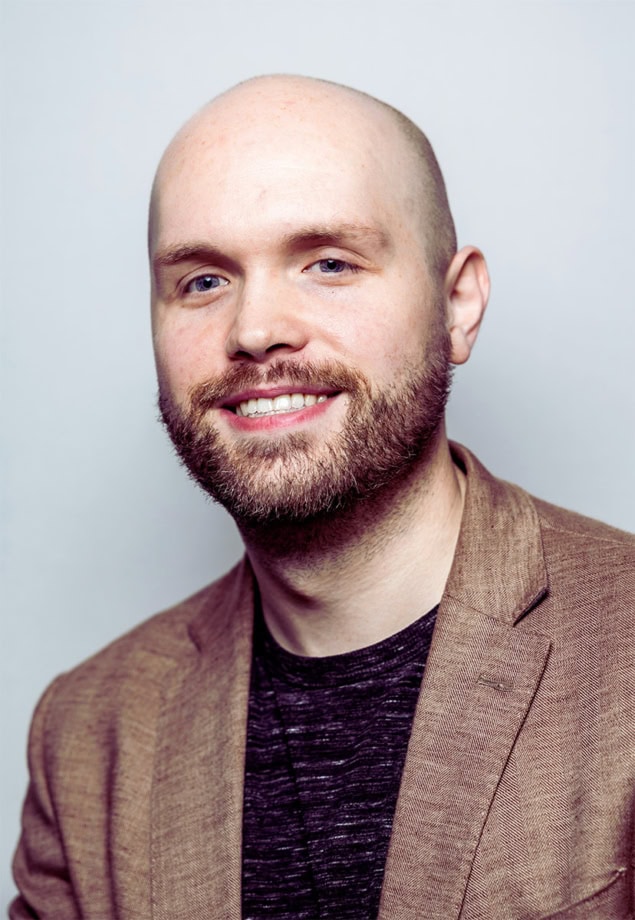
Andrew Lamb is the chief technology officer (CTO) and co-founder of Delta.g – a Birmingham-based quantum gravity sensor company. Lamb has been key to the development of quantum gravity gradiometers, from world-first demonstrations in the lab, to delivering the first industry-developed device under contract to the UK Department for Transport. Delta.g was awarded the Institute of Physics’ 2025 qBIG prize, which celebrates and promotes the innovation and commercialization of quantum technologies in the UK and Ireland. Lamb, along with Delta.g colleagues Jonathan Winch and Benjamin Adams, was also awarded the 2025 Institute of Physics’ Clifford Paterson Medal and Prize, for “the realization of the first commercialized quantum sensor of gravity gradients under commercial contract and demonstrating its relevance to transport applications” Be curious As CTO of a quantum tech company, Andrew Lamb values evidence-based decision making and being surrounded by experts. (Courtesy: Delta.g) What skills do you use every day in your job? A quantum sensor is a combination of lots of different parts working together in harmony: a sensor head containing the atoms and isolating them from the environment; a laser system to probe the quantum structure and manipulate atomic states; electronics to drive the power and timing of a device; and software to control everything and interpret the data. As the person building, developing and maintaining these devices you need to have expertise across all these areas. In addition to these skills, as the CTO my role also requires me to set the company’s technical priorities, determine the focus of R&D activities and act as the top technical authority in the firm. In a developing field like quantum metrology, evidence-based decision making is crucial as you critically assess information, disregarding what is irrelevant and making an informed choice – especially when the “right answer” may not be obvious for months or even years. Challenges arise that may never have been solved before, and the best way to do so is to dive deep into the “why and how” something happens. Once the root cause is identified a creative solution then needs to be found; whether it is something brand new, or implementing an approach from an entirely different discipline. What do you like best and least about your job? The best thing about my job is the way in which it enables me to grow my knowledge and understanding of a wide variety of fields, while also providing me opportunities for creative problem solving. When you surrounded yourself with people who are experts in their field, there is no end to the opportunities to learn. Before co-founding Delta.g I was a researcher at the University of Birmingham where I learnt my technical skills. Moving into a start-up, we built a multidisciplinary team to address the operational, regulatory and technical barriers to establish a disruptive product in the marketplace. The diversity created within our company has afforded a greater pool of experts to learn from. As the CTO, my role sits at the intersection of the technical and the commercial within the business. That means it is my responsibility to translate commercial milestones into a scientific plan, while also explaining our progress to non-experts. This can be challenging and quite stressful at times – particularly when I need to describe our scientific achievements in a way that truly reflects our advances, while still being accessible. What do you know today that you wish you knew when you were starting out in your career? For a long time, I didn’t know what direction I wanted to take, and I used to worry that the lack of a clear purpose would hold me back. Today I know that it doesn’t. Instead of fixating on finding a perfect path early on, it’s far more valuable to focus on developing skills that open doors. Whether those skills are technical, managerial or commercial, no knowledge is ever wasted. I’m still surprised by how often something I learned as far back as GCSE ends up being useful in my work now. Read more How civil engineering is bringing quantum physics down to earth I also wish I had understood just how important it is to stay open to new opportunities. Looking back, every pivotal point in my career – switching from civil engineering to a physics degree, choosing certain undergraduate modules, applying for unexpected roles, even co-founding Delta.g – came from being willing to make a shift when an opportunity appeared. Being flexible and curious matters far more than having everything mapped out from the beginning. Want to read more? Registration is free, quick and easy Note: The verification e-mail to complete your account registration should arrive immediately. However, in some cases it takes longer. Don't forget to check your spam folder. If you haven't received the e-mail in 24 hours, please contact customerservices@ioppublishing.org. E-mail Address Register