
Alice & Bob Unveils First Quantum System Available For Research Partners
Summarize this article with:


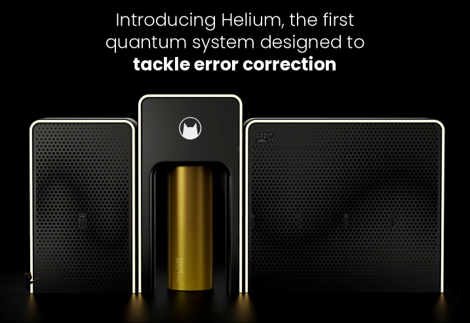
Insider Brief Alice & Bob unveiled the Helium Quantum System, expanding from cat-qubit chip development to offering a complete on-premise quantum computing platform designed for fault-tolerant research. The Helium system is engineered to encode the company’s first logical qubit using as few as 18 cat-qubits and is designed to support future upgrades, including a planned 48 cat-qubit processor featuring multiple logical qubits. The platform integrates with existing high-performance computing environments through tools such as Slurm compatibility, the open-source QRMI library and Alice & Bob’s Felis software framework, while the new Starboard interface provides system monitoring and workload management capabilities. PRESS RELEASE — Alice & Bob, a leader in fault-tolerant quantum computing, today unveiled the Helium Quantum System, marking the company’s expansion from developing cat-qubit chips to delivering a complete quantum computing system for on-premise deployment.
The Helium Quantum System has been engineered to encode Alice & Bob’s first logical qubit with as few as 18 cat-qubits. From the processor architecture to the cabling, control electronics and software stack, the entire system is optimized for quantum error correction. Designed as an upgradeable platform, the quantum system will also support the next 48 cat-qubit chip on Alice & Bob’s roadmap – expected to feature multiple logical qubits. Alice & Bob is inviting research partners to conduct experiments on the Helium Quantum System and collaborate with the company on advancing fault tolerant quantum computing research. The system enables researchers to integrate quantum and classical computing resources within a single computing infrastructure, such as those found at high-performance computing (HPC) centers. By providing direct access to cat-qubit architecture, Alice & Bob offers a platform for research into quantum error correction, logical qubits and the path to fault-tolerant quantum computing. “Alice & Bob has focused on fault tolerance from the outset. Our cat-qubit architecture is designed to dramatically reduce the error-correction overhead – one of the industry’s largest technical and economic barriers. We believe the defining race in quantum computing is building better qubits that can reach fault tolerance with the fewest resources.
The Helium Quantum System is an important milestone on that journey, giving researchers direct access to the architecture underpinning our roadmap to universal, fault-tolerant quantum computing,” said Théau Peronnin, CEO and co-founder of Alice & Bob.
The Helium Quantum System is designed with operational efficiency in mind, requiring approximately 40 kW of power to run, helping lower the cost of deploying advanced quantum systems, one of the key bottlenecks in quantum computing today. As part of launch, Alice & Bob is releasing Starboard a custom monitoring interface that gives administrators visibility over the 18-cat qubit system. Through a single dashboard, administrators can visualize system behavior, monitor individual qubit performance, schedule workloads, and track live hardware metrics. Starboard features highly automated software designed by Alice & Bob. Starboard brings together the tools needed to monitor, run, and optimize the Helium quantum system.
The Helium Quantum System features compatibility with the most common HPC schedulers (including Slurm) through the open-source QRMI library, and other third-party solutions. Users can connect to the Helium Quantum System with Alice & Bob’s dedicated Felis software framework, providing custom instructions tailored to the Helium chip while maintaining compatibility with major quantum programming frameworks.
Matt Swayne LinkedIn With a several-decades long background in journalism and communications, Matt Swayne has worked as a science communicator for an R1 university for more than 12 years, specializing in translating high tech and deep tech for the general audience. He has served as a writer, editor and analyst at The Quantum Insider since its inception. In addition to his service as a science communicator, Matt also develops courses to improve the media and communications skills of scientists and has taught courses. matt@thequantuminsider.com Share this article: