
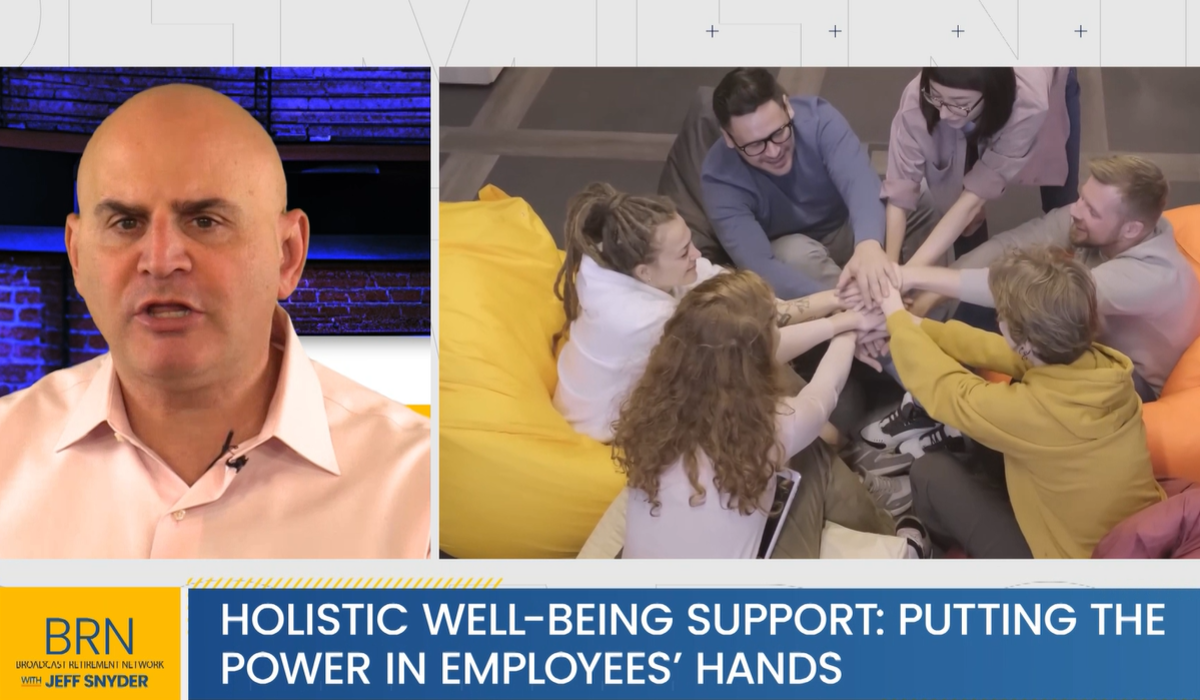
Holistic Well-Being Support: Putting the Power in Employees' Hands
Summarize this article with:


Holistic Well Being Support: Putting the Power in Employees’ Hands (12:23) Assisting Employees at Every Life Stage, and Giving them the Confidence to Make Financial Decisions for their Personal SituationsBroadcast Retirement Network's Jeffrey Snyder discusses employers' shift to offering more than just retirement and healthcare benefits to employees with Sharon Scanlon of Lincoln Financial.Jeffrey Snyder, Broadcast Retirement NetworkThis morning, holistic well-being support, putting the power back in employees' hands. Joining me now to help break it all down is Sharon Scanlon. She's a senior vice president at the Lincoln Financial.Sharon, always great to see you. Thanks for joining us in the program this morning.Sharon Scanlon, Lincoln FinancialThanks for having me.Jeffrey Snyder, Broadcast Retirement NetworkIt's always great to talk about with you and your colleagues about the latest Lincoln research and everything that's happening in the world of not just retirement, but employee benefits. I want to ask you about, in particular, employees increasingly looking to their employer for support managing not just their finances, but also physical and mental health. Are you seeing this in the work that you're doing over at Lincoln?Sharon Scanlon, Lincoln FinancialThis is absolutely a trend we're seeing more and more of across all industries, and our customers are looking for solutions that help them provide that support for their employees. Based on Lincoln's proprietary research study, Wellness at Work, we engage over 2,500 consumers, and we found that enabling employees to be healthier, more secure, and more supported is no longer just a nice to have. It's critical for employers to meet their employees' holistic needs.Also, the data showed us that less than half, 48% of employees surveyed, indicated they felt completely or mostly at peace financially. And because of this, we believe employers have opportunities to create meaningful impact to help their people make smarter, more confident decisions. Benefits play a key role in this.Traditionally, we've thought of benefits as being health insurance, but that really expanded to include supplemental health offerings like critical illness, accident, and hospital indemnity insurance. But we're increasingly seeing the definition of holistic benefits expand to include mental health support and financial wellness. The impact these benefits can have on employees, and in turn on employers, is huge.First, we see employers with better benefits attract more talent and retain that talent, and when employees are less stressed in their personal lives, they are able to be more productive at work, which ultimately impacts a company's bottom line.Jeffrey Snyder, Broadcast Retirement NetworkYou know, Sharon, you've hit on a really interesting point. It's not just about supporting employees, and employees do want a lot more from their employer, but this also, as you said, has an impact on ultimately on the business, the success of the business.Sharon Scanlon, Lincoln FinancialYou're right. With the rising debt, cost of living pressures, and competing priorities, confidence and financial wellness is the new workplace currency for employers. Financial confidence isn't just a personal win for the employee, it also fosters stronger engagement, satisfaction, and retention for the employer.Our research shows that financially secure employees are twice as likely to express a strong desire to stay with their employer and rate their benefits favorably. The data also showed us that employees that prioritize their overall financial well-being through solutions like student loan services, emergency savings account, and other wellness benefits may experience less stress, which in turn may result in increased productivity at work and less absenteeism, positively impacting an employer's bottom line.Jeffrey Snyder, Broadcast Retirement NetworkAnd Sharon, kind of to follow up on that, I mean, employer-offered wellness programs, as you said, benefit both the employees and the business, I should say, the employer in several ways. Are there any insights from the Wellness at Work study that kind of lean into that, that really demonstrate that?Sharon Scanlon, Lincoln FinancialAbsolutely. First and very importantly, offering expanded wellness solutions can help employers reinforce their commitment to caring for the whole person. But the impact of that caring is extended to nearly all aspects of business.Only 38% of employees surveyed indicated that their employer does well in offering wellness benefits, and they're more loyal for it. 89% of those employees who said their employer does offer wellness benefits indicated they are more loyal as a result. For those employees who have employers that offer wellness resources, 9 in 10 indicated they had a positive impact from using them.When employers partner with a carrier like Lincoln, they benefit from working with a single provider who can offer a broad range of solutions with streamlined administration, saving them time to focus on matters most, running their business. Our broad marketplace of offerings across retirement planning, employee benefits, and wellness solutions allows our employer clients to deliver a robust, competitive benefits package that helps them attract and retain top talent.Jeffrey Snyder, Broadcast Retirement NetworkWell, Sharon, there's definitely in the numbers, there's a benefit, and I think everyone agrees with that. But do you get a sense that there may be some hesitancy as to what these types of benefits may mean to the bottom line for the employer?Sharon Scanlon, Lincoln FinancialFirst, I think it is important to acknowledge voluntary benefits. In today's world, we can take those for granted, but having access to insurance solutions like accident, critical illness, or hospital indemnity coverage can help protect employees from unexpected expenses and debt. Those benefits may be part of your benefits package, and increasing education may help employees adopt and use those solutions.But when we talk about expanding benefits like debt solutions and other wellness tools, that doesn't have to come at a significant cost. With the right benefits partner, there are options that can provide a lot of value as part of the benefits an employer already offers through that provider. One example of this is Lincoln's Wellness Path.This tool is something we offer our customers at no additional cost as part of a holistic approach to benefits.
Lincoln Wellness Path provides personalized steps and access to solutions through our Wellness Path Marketplace to help users manage their financial lives. From creating a budget, to building an emergency fund, to paying down debt, this easy-to-use tool helps turn information into action, making it easy to focus on both short and long-term goals, such as saving for retirement or providing protection for loved ones.In today's workforce, employees are navigating more than just their jobs. They're also juggling physical health challenges, mental stressors, financial uncertainty, and more. 82% of workers surveyed were carrying debt, and nearly 2 in 3 said they have a problem with debt.More than 3 in 4 have at least three competing financial priorities other than saving for retirement. Having problematic debt is a significant driver of overall financial confidence. Only 25% of those with major debt are completely or mostly confident of their financial situation and future, versus 73% who do not have a debt problem.Those employees who have used financial wellness resources at work are much more likely, in fact, 63% to be more confident in their financial situation and future. A tool like Wellness Path puts the power in an employee's hands to find the right solution for them, whether that's finding a student loan solution, managing debt, navigating big purchases like saving for a home, and so much more. Employees are looking to their employer for help because they don't know where to start.By providing resources, employers can help satisfy that need without overtaxing their internal benefit support team.Jeffrey Snyder, Broadcast Retirement NetworkWell, Sharon, there's clearly a lot, a large demand for these types of tools, but do you get the sense that, or do employers get the sense that these tools may be underutilized by their employees, even if they're added, and does it make sense to add or bolt on these tools to their existing offerings?Sharon Scanlon, Lincoln FinancialYes, it certainly does. Educating employees about the benefits available to them is critical to improving utilization and to increasing the perceived and actual value of a benefits program. Benefit familiarity is strongly linked with employees' perceived value of the benefits.56% of workers who are very familiar with the benefits available say they get a lot of value from them versus 20% who are less familiar. Only 50% of employees say they are familiar with the benefits they are offered, including just 38% Gen Z. Employees aren't underutilizing their benefits on purpose.The reality is that they may not know they have access to those benefits at all or fully understand how those benefits can support their health, finances, or overall well-being. A majority of all generations, 58%, believe they are in a phase of life where they are starting to reevaluate what benefits they should be enrolled in. We all know that benefits you don't use aren't helpful to you, so it's really important that we help employees evaluate their options and activate the benefits that are most beneficial to their personal circumstances.In fact, of the employees who have indicated they spend a lot on benefits, only 28% said they get a lot of value in return. Instead, 53% say they get some value and 19% get little to no value. By helping employees understand their benefit offerings, employers can improve the way employees view and experience their benefits.And when we talk about adding value through wellness services, that often can be done without any increase in cost to the employer. Showcasing a wide range of benefits and providing wellness solutions gives employers the opportunity to drive higher engagement, foster loyalty, and support their workforce in a meaningful way. Given that connection between employee loyalty and their perception of the strength of their employer's benefits package, it's critical to bridge the education and awareness gap by promoting what's available to support their holistic needs.All those educational needs can feel like an increased burden for an employer, and that's where having the right benefits partner can be a competitive advantage. Lincoln partners with employers to drive education and awareness of their benefits, offering a spectrum of customized communication, marketing, and engagement support depending upon their unique needs and goals. It's a true partnership in helping employees understand and use their benefits.Jeffrey Snyder, Broadcast Retirement NetworkWell, Sharon, wellness benefits and benefits in general continue to evolve. Are there any additional trends there?Sharon Scanlon, Lincoln FinancialDefinitely. Wellness has always been important, but we are seeing more emphasis on holistic benefits among our employer customers. Our model is really based around serving customer needs and evolving as those needs change.We've been in the wellness space for a significant amount of time already because we've been having those conversations with our clients and identified the need early on.Jeffrey Snyder, Broadcast Retirement NetworkSo Sharon, will expanded workplace offerings become more important to more customers in the near future?Sharon Scanlon, Lincoln FinancialYes. I mean, our customers are telling us absolutely, which is why we're investing in more benefit services like Wellness Path and our Wellness Path Marketplace. We're also invested in expanding voluntary benefit offerings like dental, vision, and supplemental health to ensure that we can meet their needs and that they can meet the needs of their employees.Jeffrey Snyder, Broadcast Retirement NetworkWell, Sharon, a lot of great work went into Wellness at Work, the Wellness at Work survey. It's also gone into all the great solutions Lincoln Financial is offering. Thanks so much for joining us.And look, when you have the next survey and the next set of results, we look forward to having you back on the program again very soon.Sharon Scanlon, Lincoln FinancialJeff, thank you for having me, and I appreciate your partnership.Jeffrey Snyder, Broadcast Retirement NetworkThat's all for this morning's episode. But guess what? We're back again tomorrow for another great edition and a great topic.Until then, I'm Jeff Snyder. Stay safe, keep on saving, and don't forget, roll with the changes.